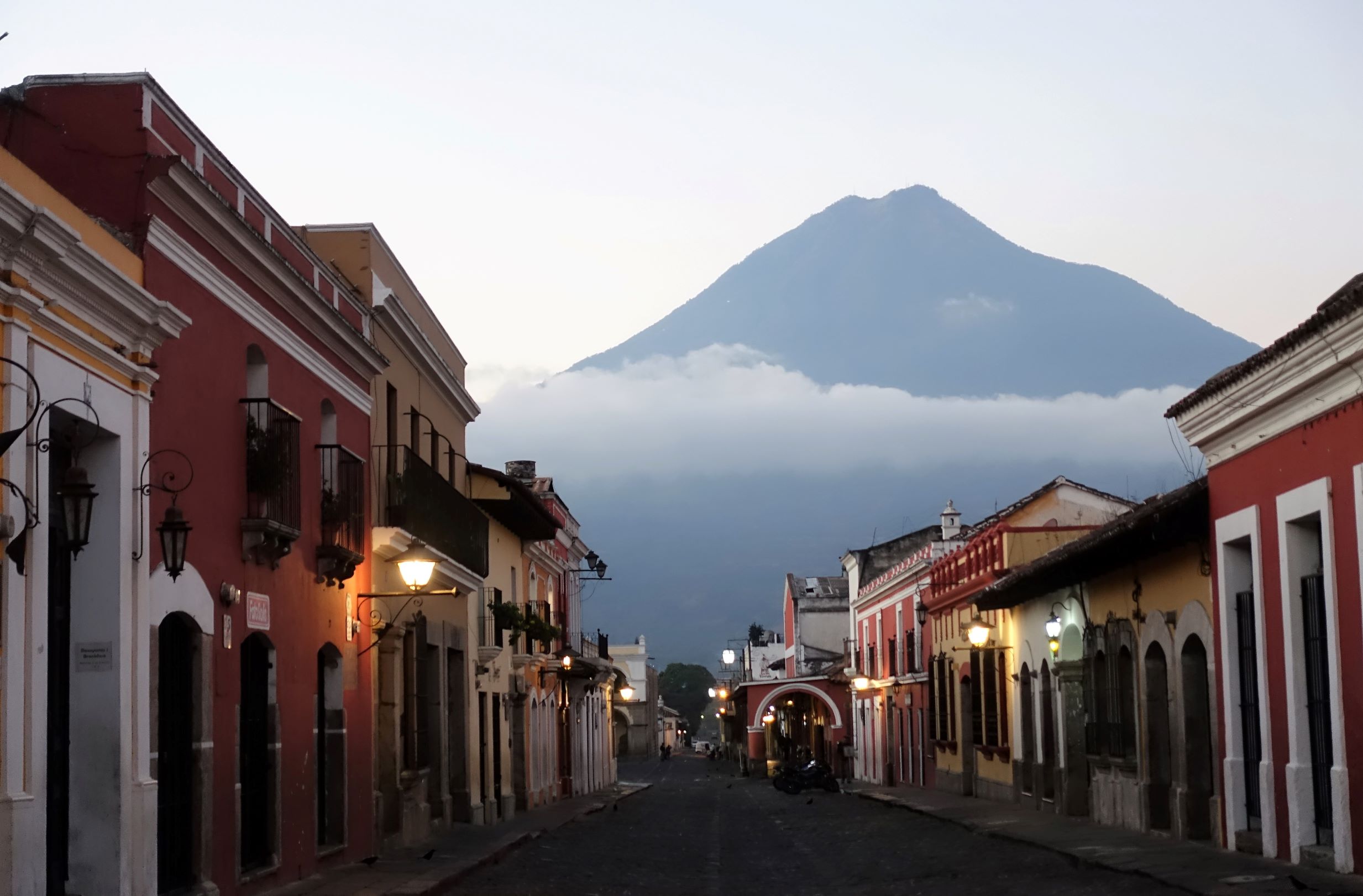
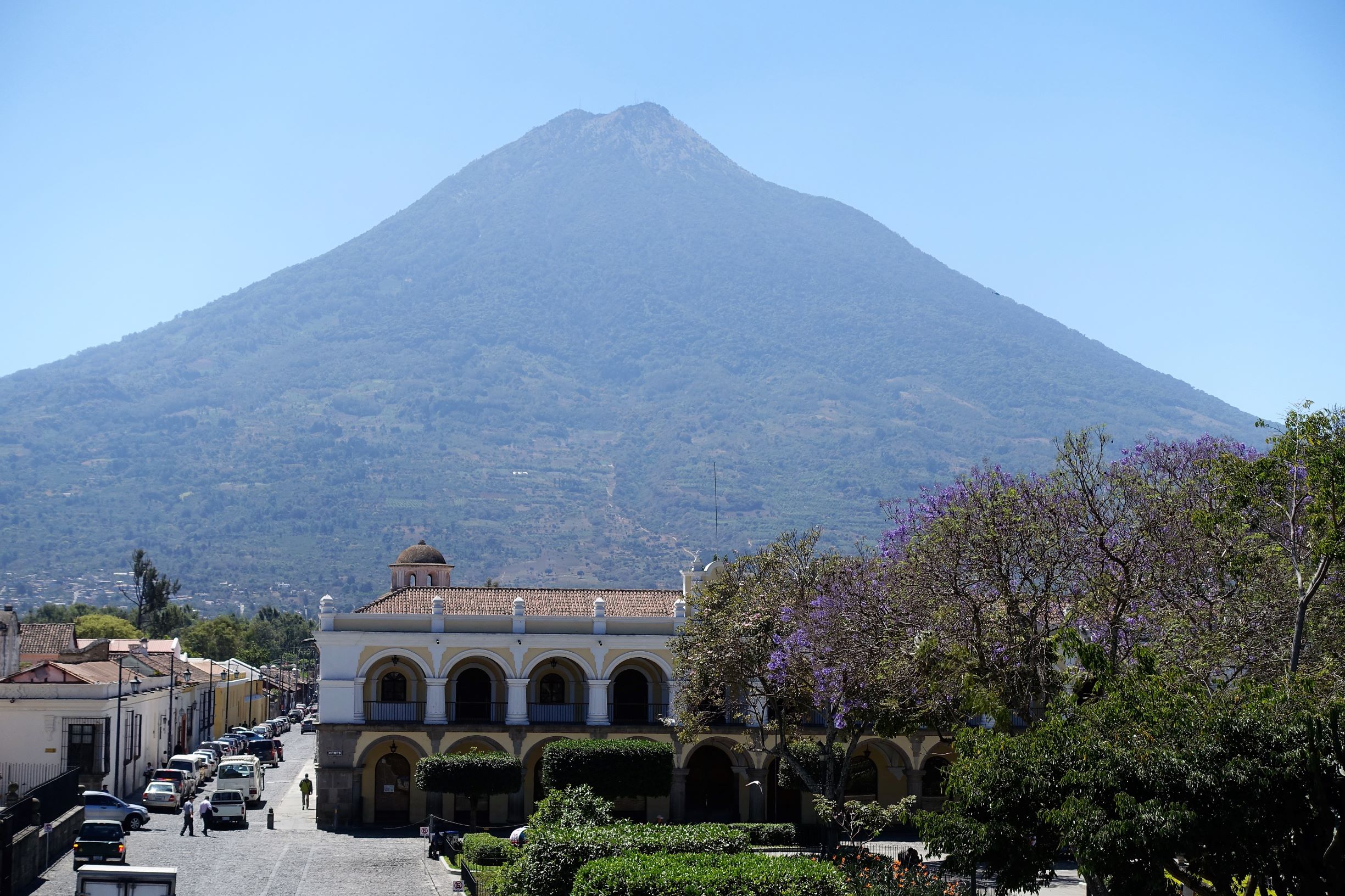
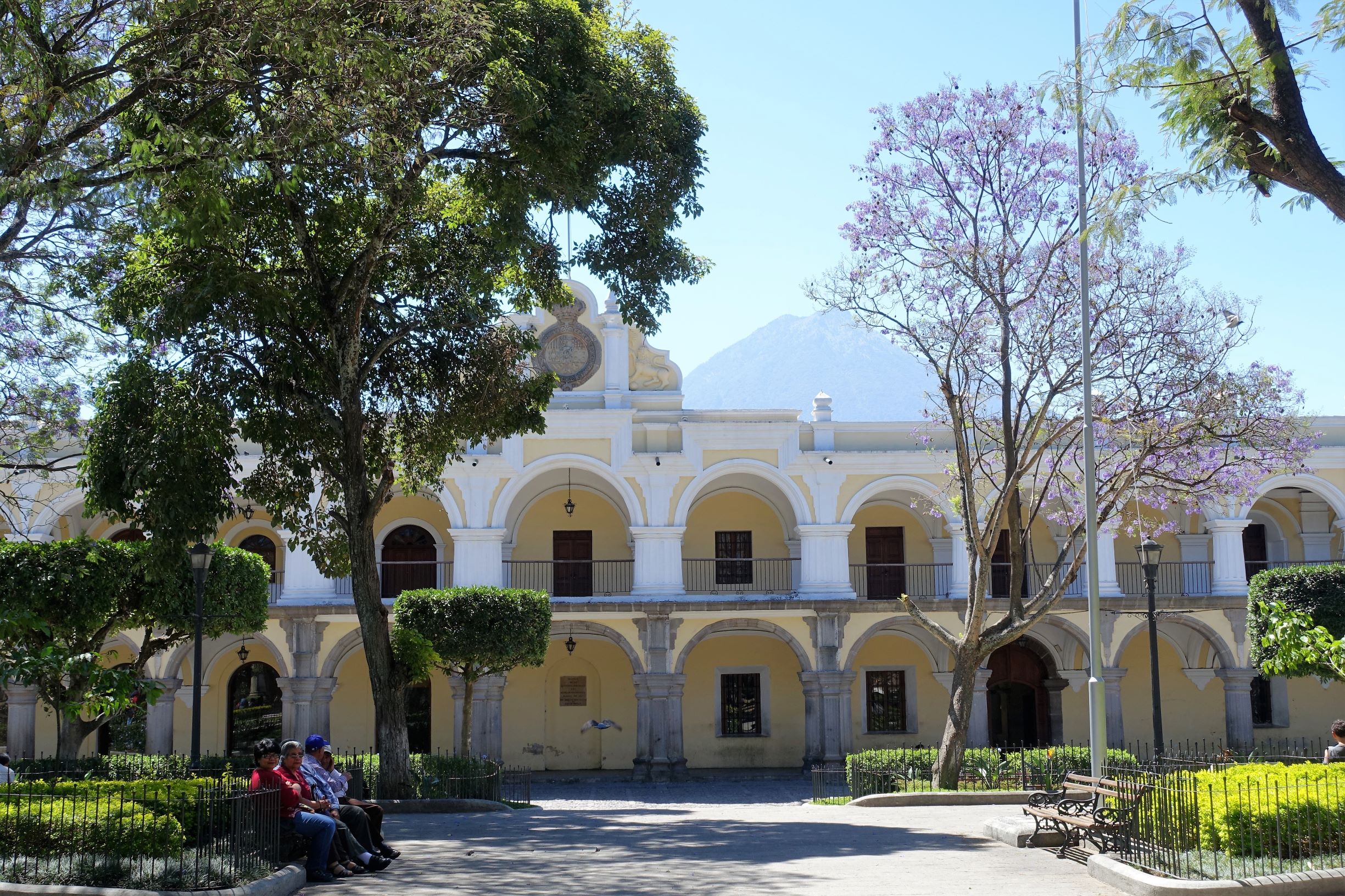
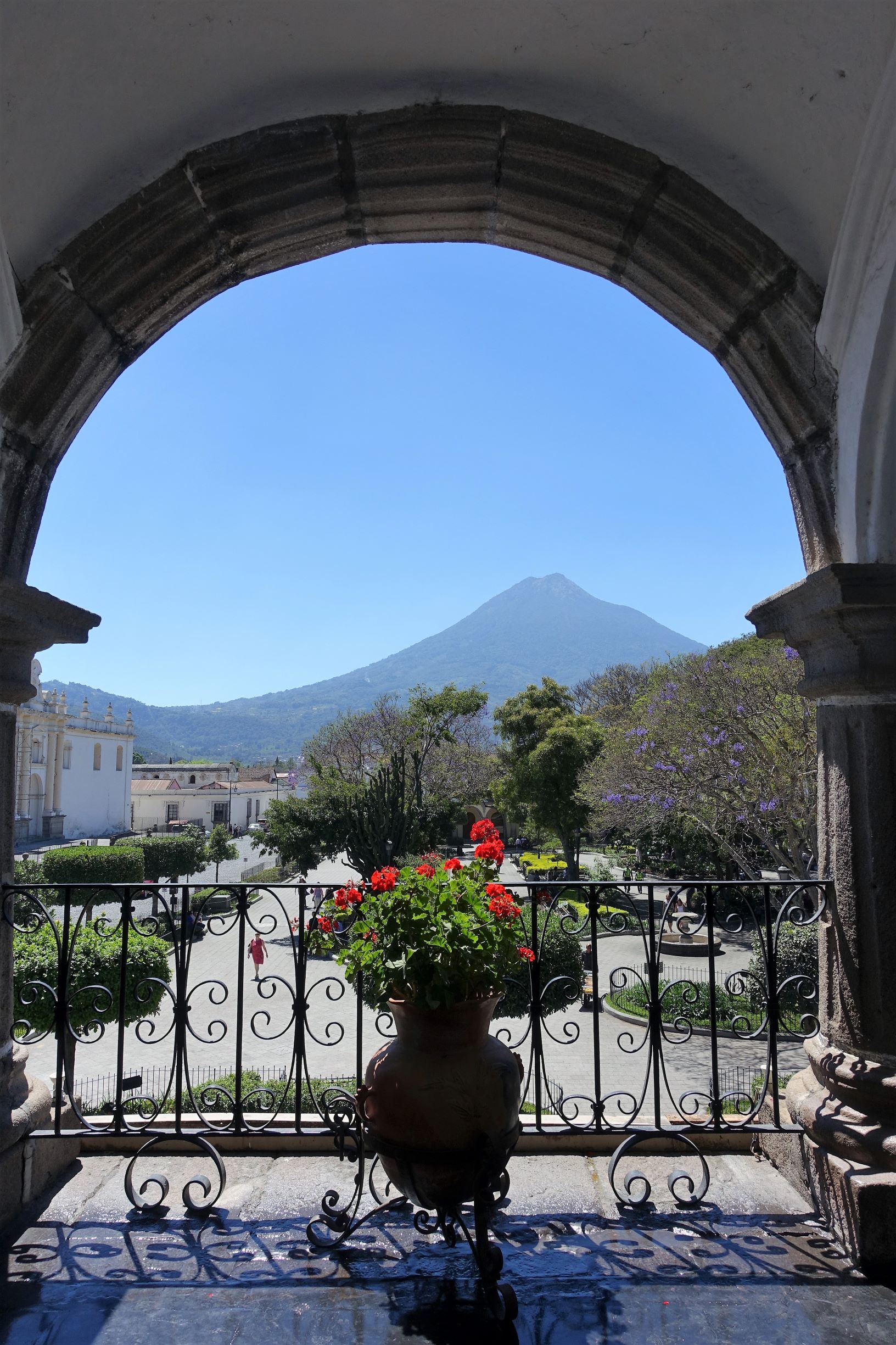
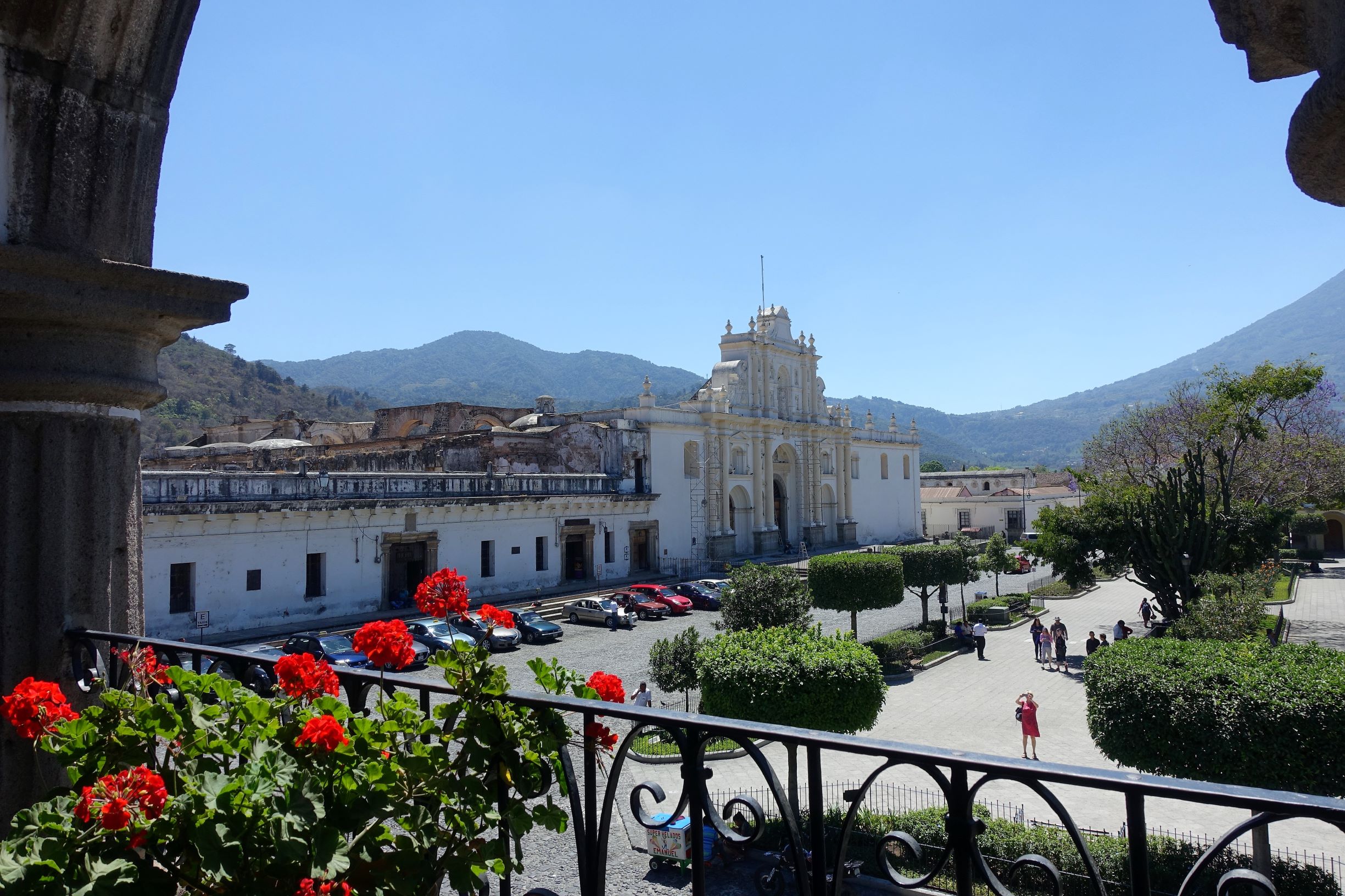
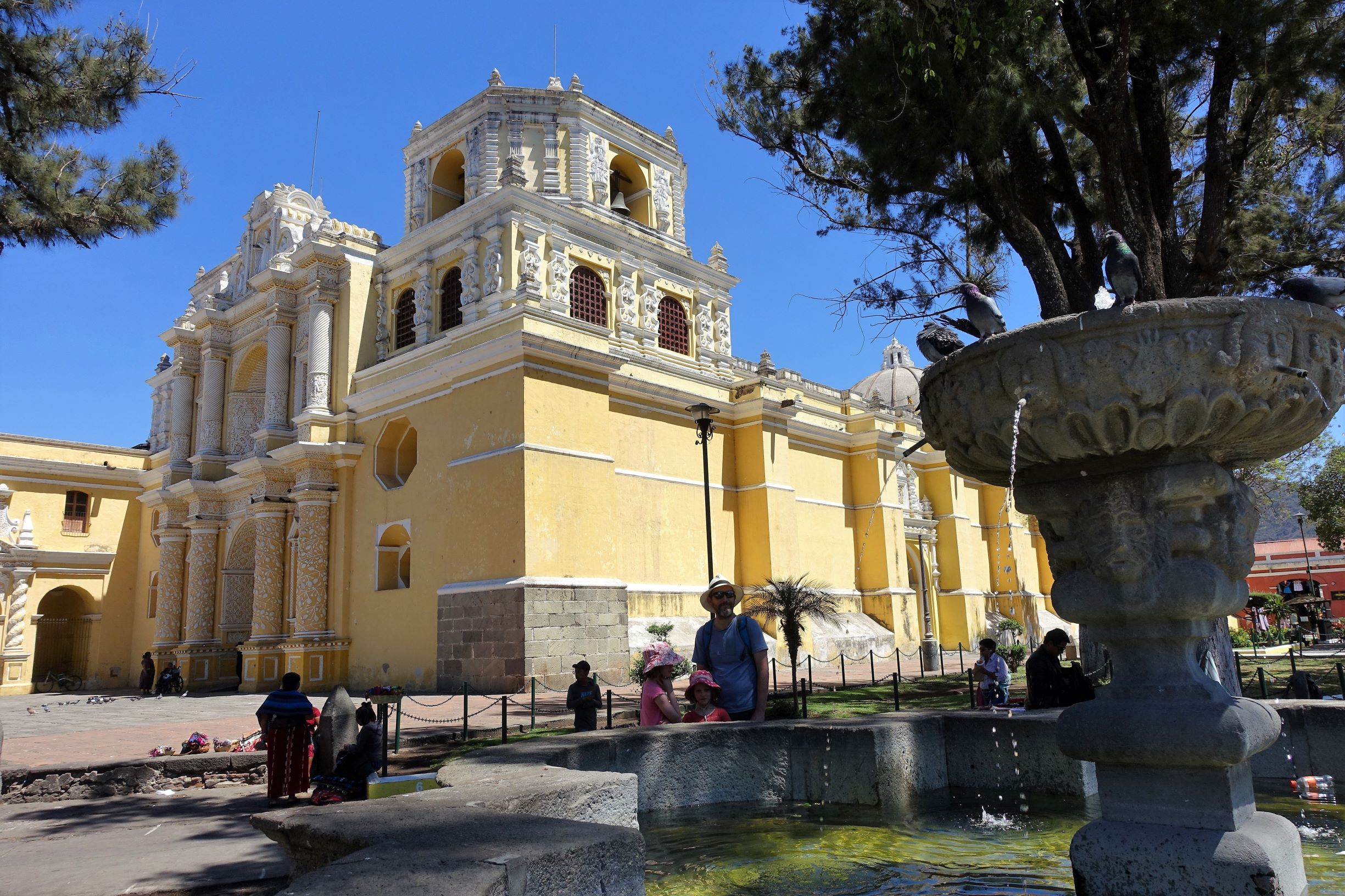
Like many travellers do, we entered Guatemala via its capital Guatemala City – and left again as soon as we could locate our driver at the airport arrivals gate. Guatemala City has a dangerous reputation and few charms to offer tourists. What it does offer is easy access to Antigua: a charming colonial town beautifully situated in a valley overshadowed by three looming volcanoes.
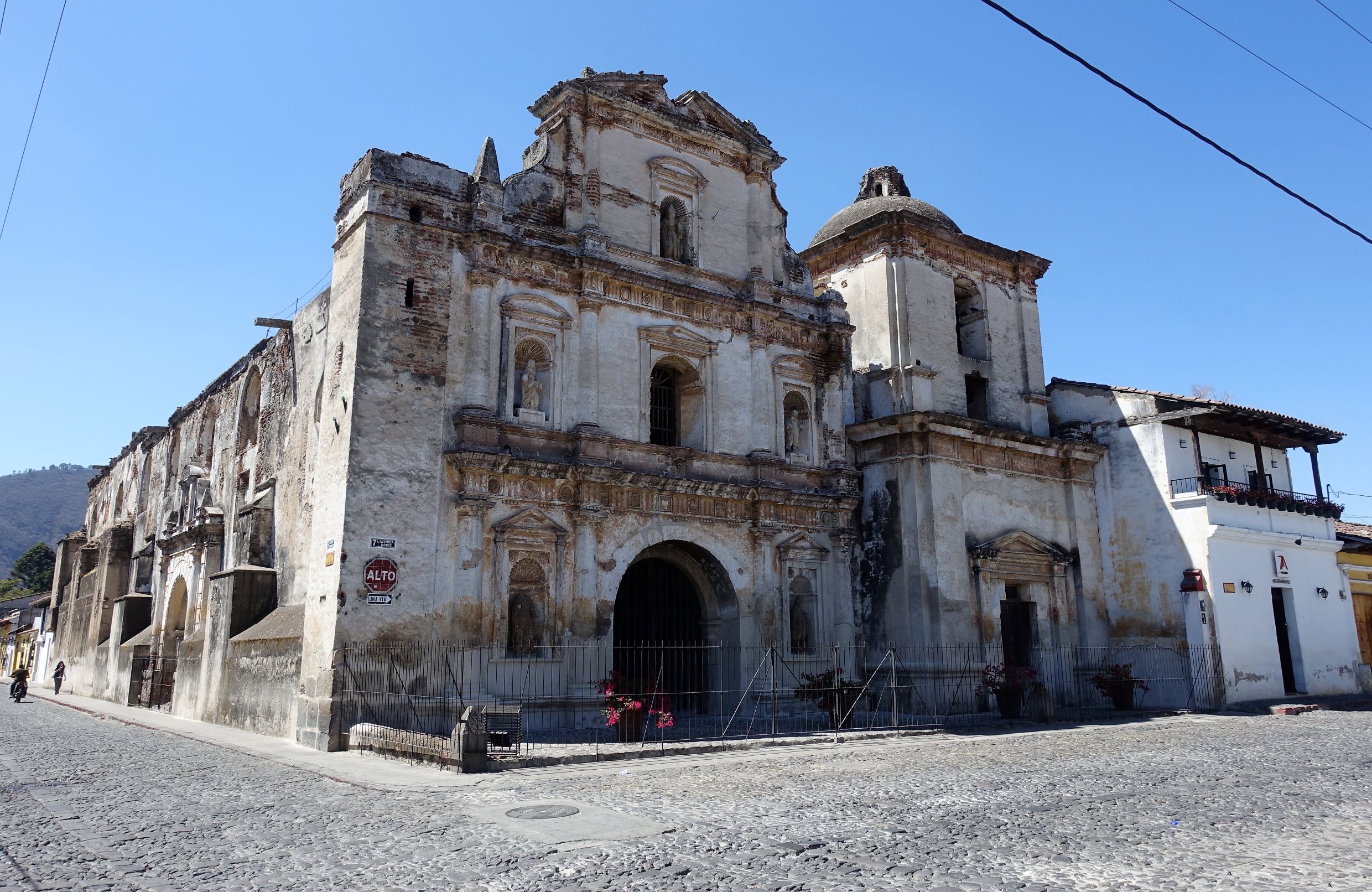
The picturesque factor in Antigua is high to extreme. Between the rows of brightly coloured houses, you frequently stumble across the ruins of far more impressive structures; whether they were churches, mansions or perhaps theaters, we weren’t always sure.
At the same time, the town is small enough to be very walkable, with plenty to see and do, both within the town and close by. Some of our highlights were a chocolate making workshop at the Choco Museo, roasting marshmallows on the lava field on Volcan Pacaya and lunch at an organic farm that is a hub of community life.
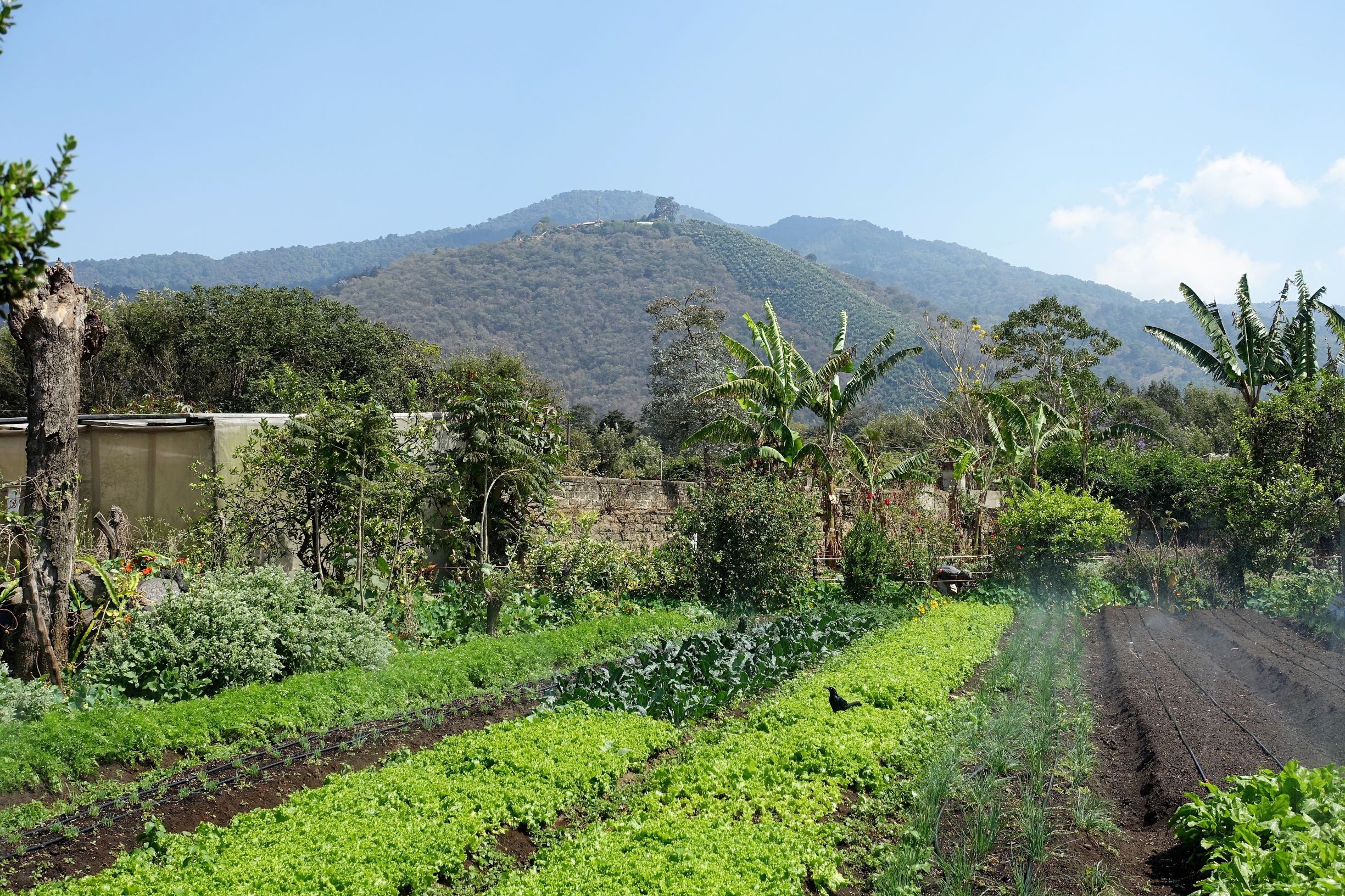
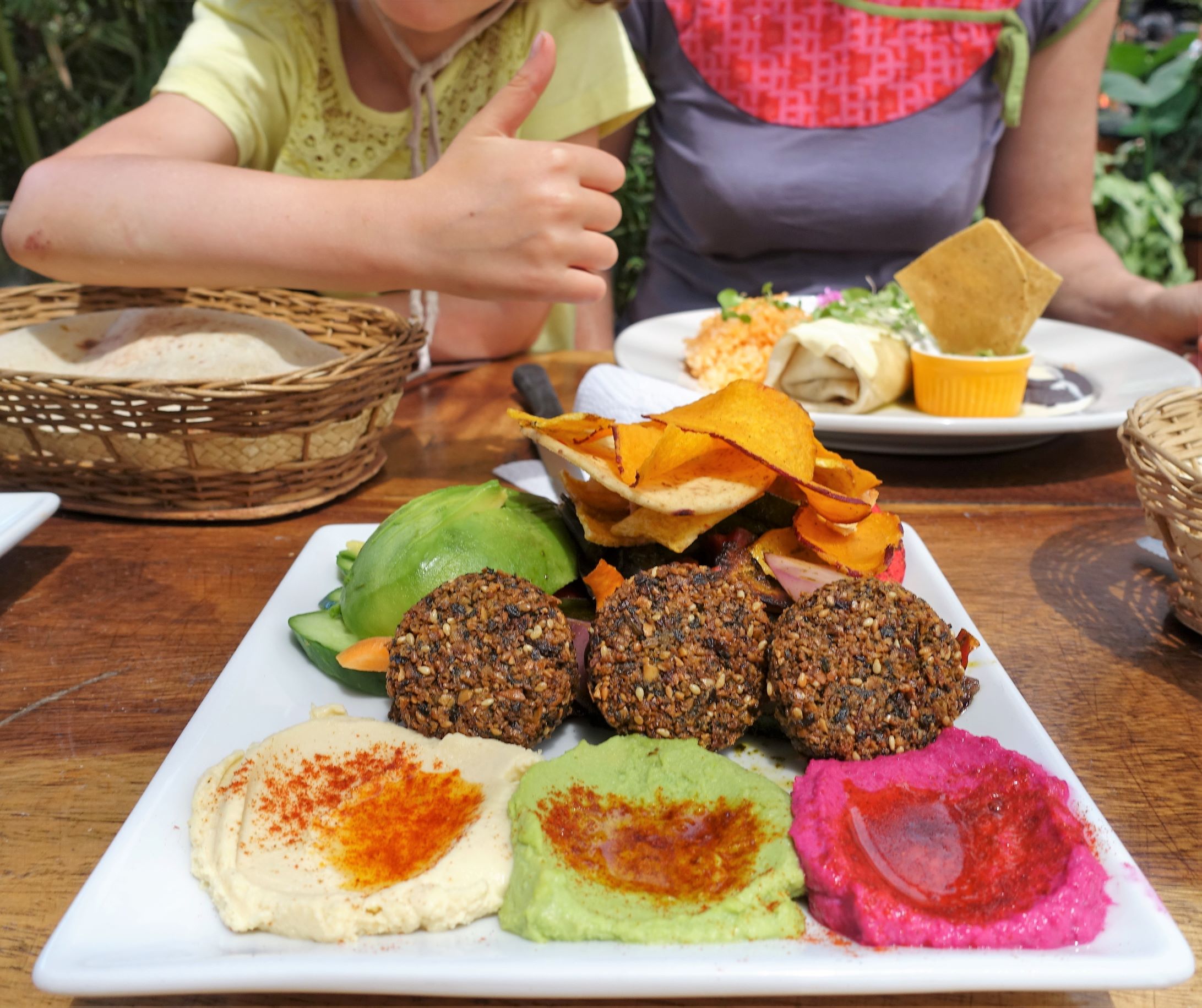
This huge farm has heaps of activities going on, including movie nights, music gigs and a farmer’s market. Practically everyone we met in Antigua told us to go there.Delicious, healthy organic food and the drinks were even better.
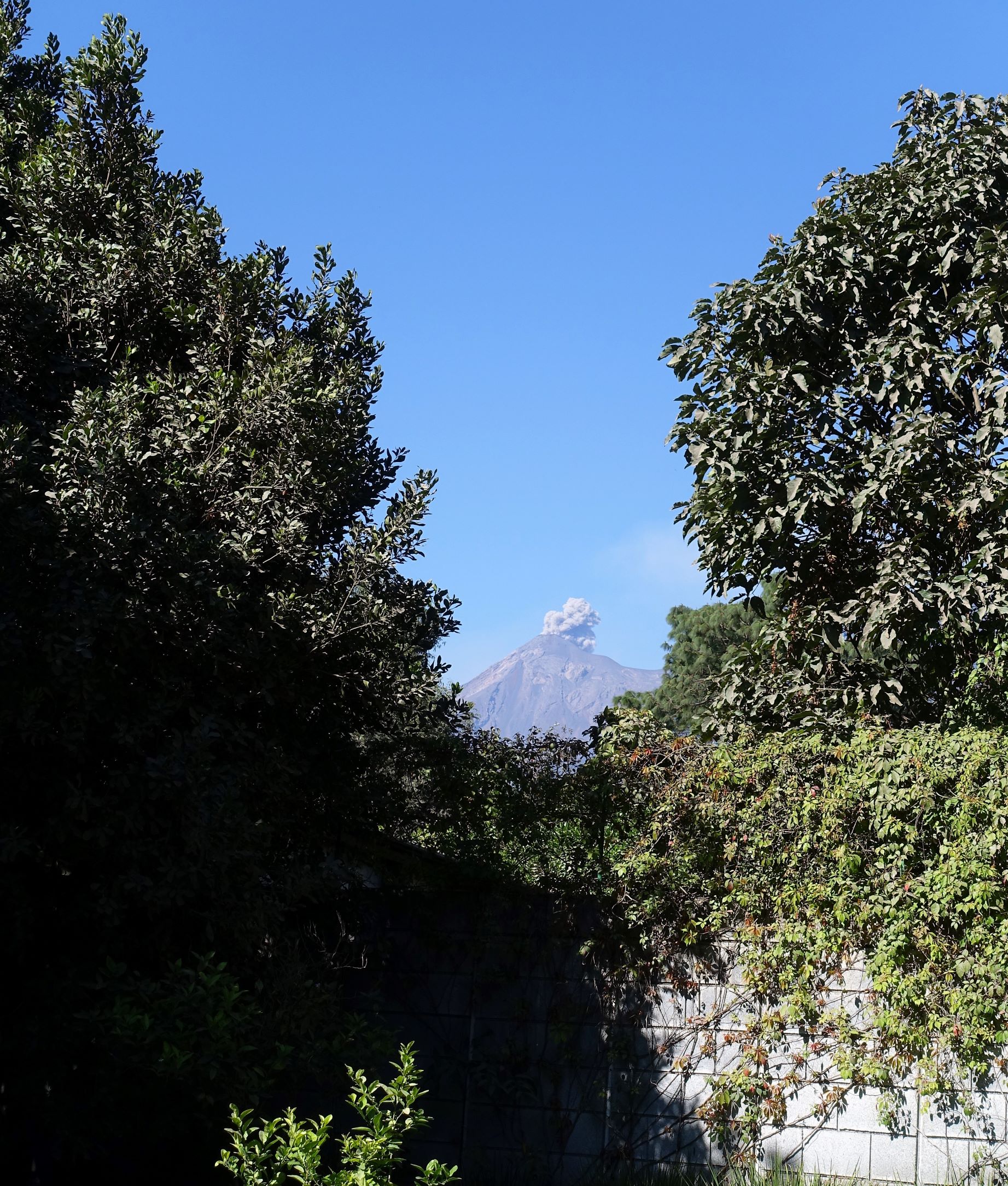
But perhaps our most memorable experience was sitting in the lovely garden of our Airbnb on our first morning. It was a beautiful sunny day and our view of the active Volcan Fuego was crystal clear.
It wasn’t puffing when we first sat down with our coffee. We got quite a shock when we glanced up a minute later!
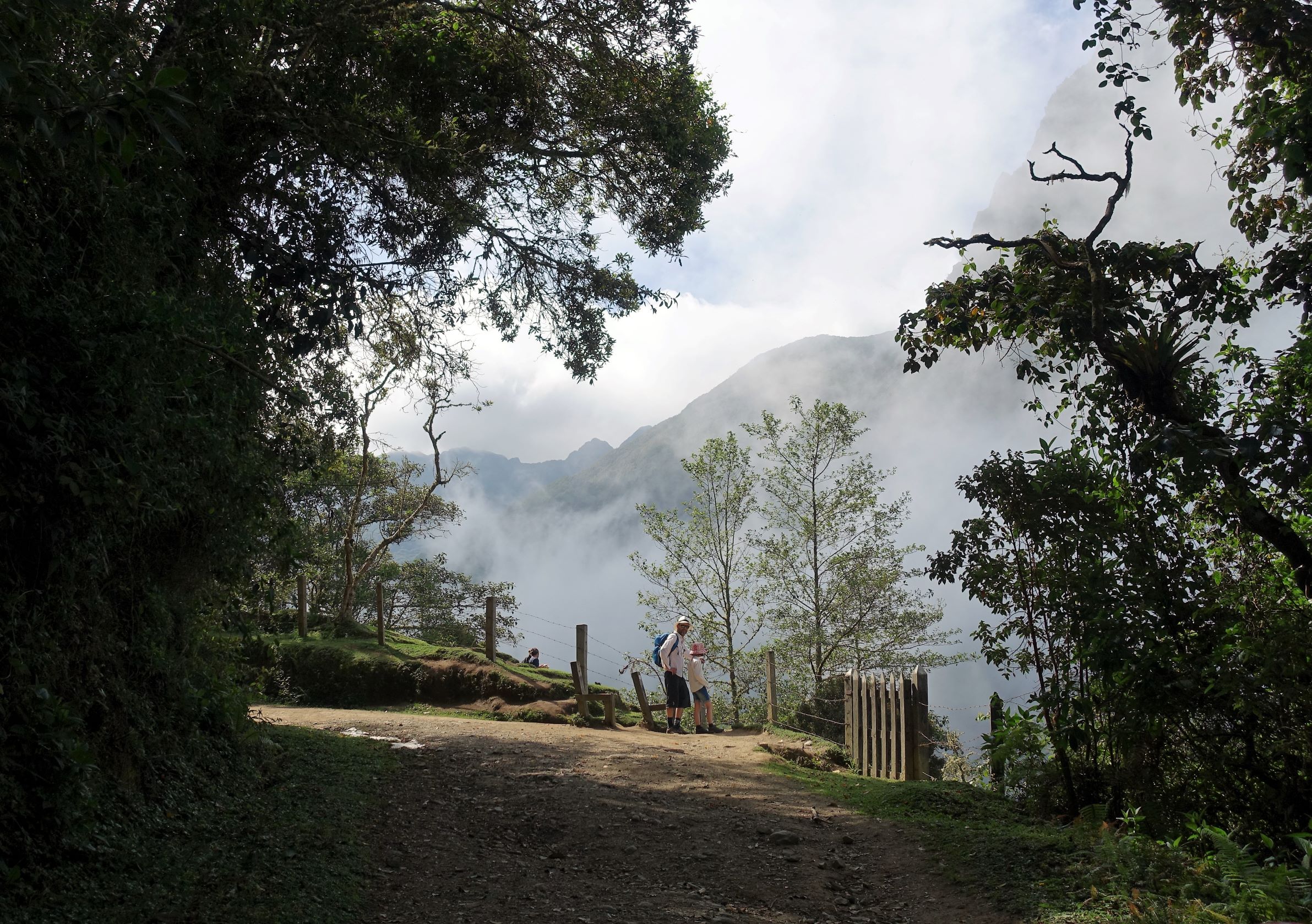
We fell in love with this country. Colombia has so much going for it, including friendly people, a variety of lush landscapes, beautiful beaches and attractive cities with interesting history and culture. It’s also very affordable for budget travelers, with cheap internal flights between regional centers – a real rarity in South America.
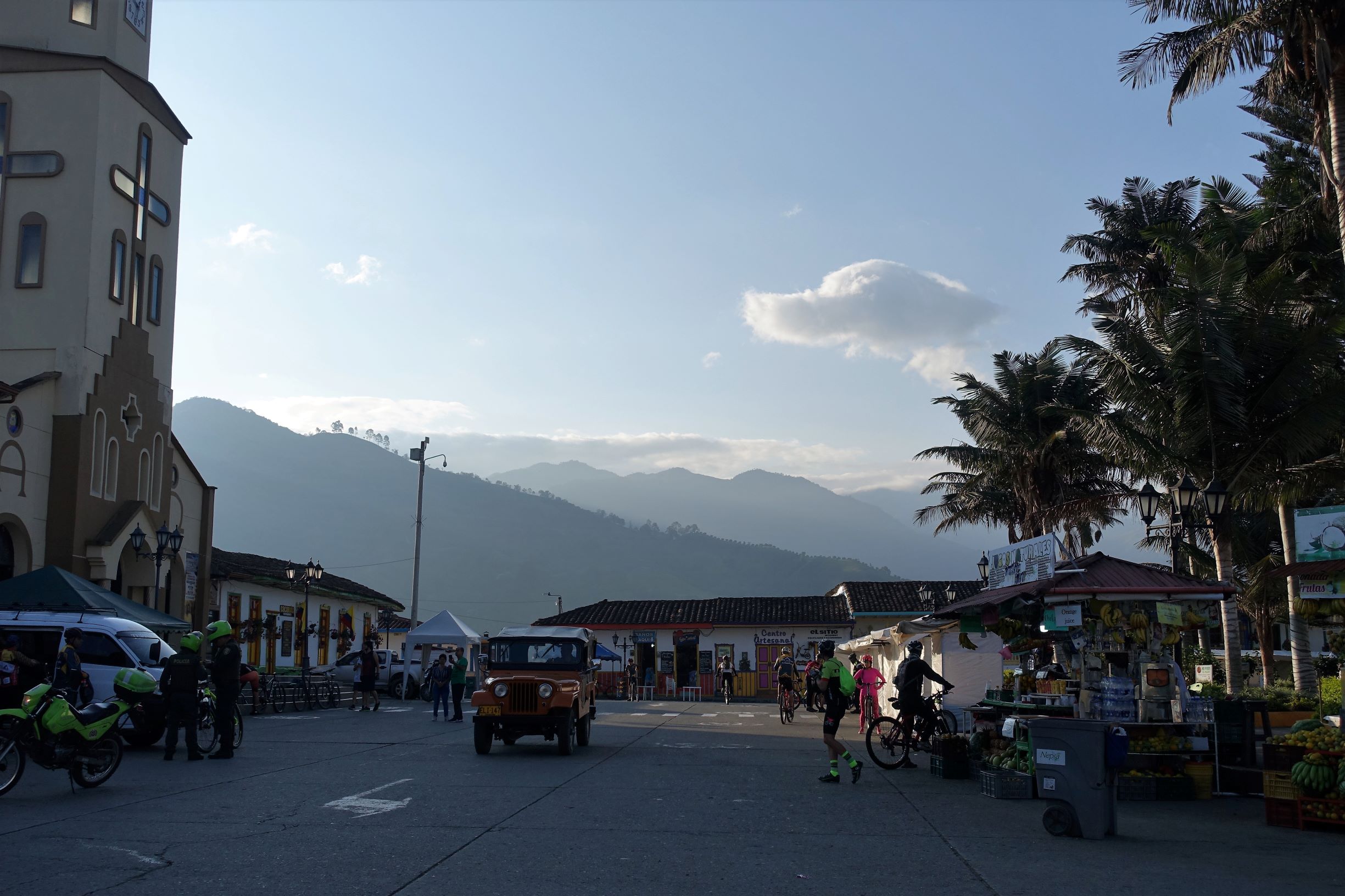
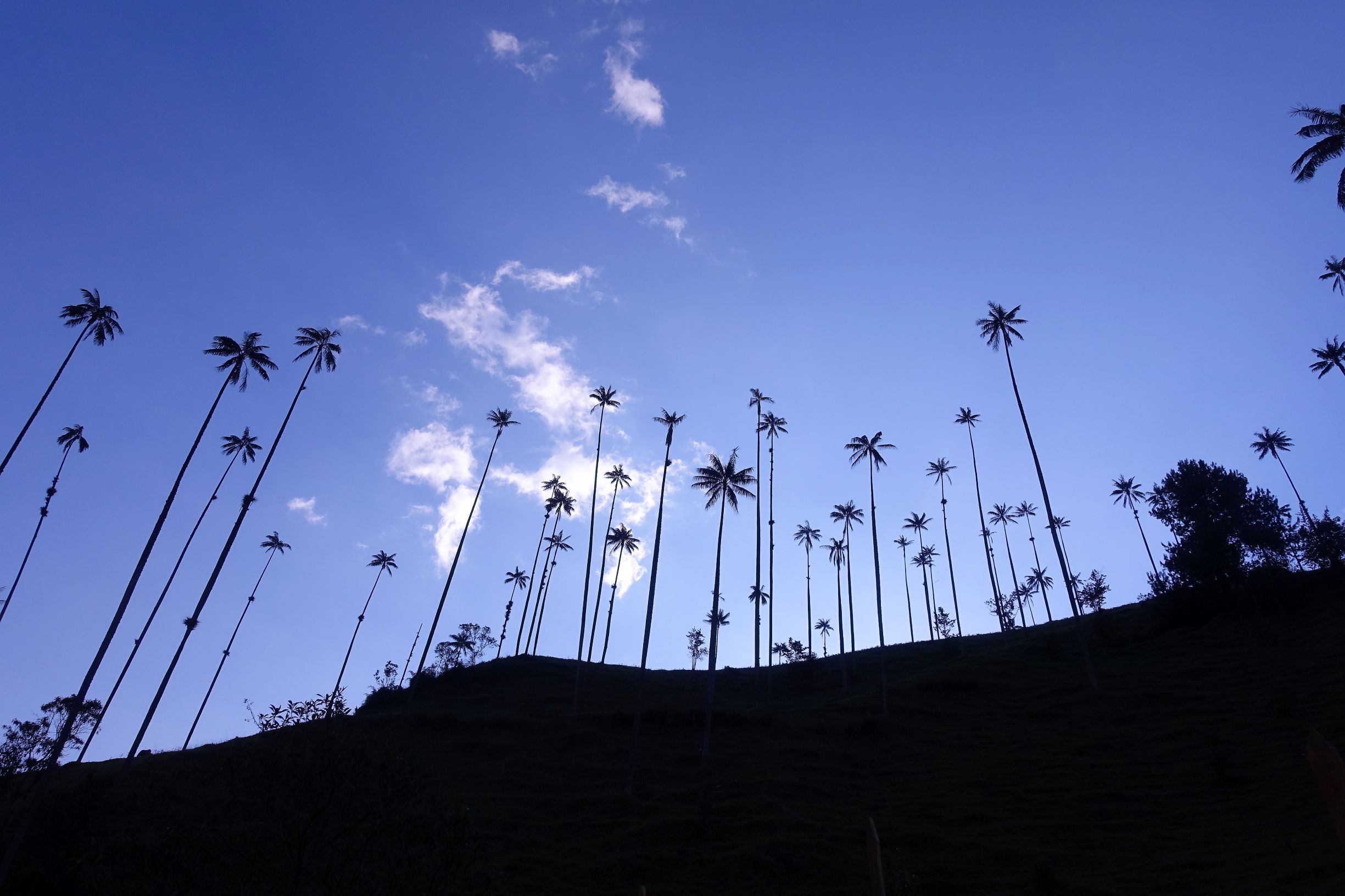
Morning in Salento.Valle de CorcoraCaribbean CartagenaA Colombian Caribbean beach
At all times we felt perfectly safe. The troubles that have
haunted Colombia for so long appear to be over now, at least as far as foreign
tourists are concerned. The occasional presence of soldiers with machine guns
on the streets – or even the beach at Playa Blanca – was a reminder of past
security problems. I can tell you that violence was far less of a concern to us
than an ever-present fear of a car crash involving inadequate seat belts and a
speeding taxi driver!
We can’t wait to return to Colombia. In the meantime, these are some of our favourite places and experiences.
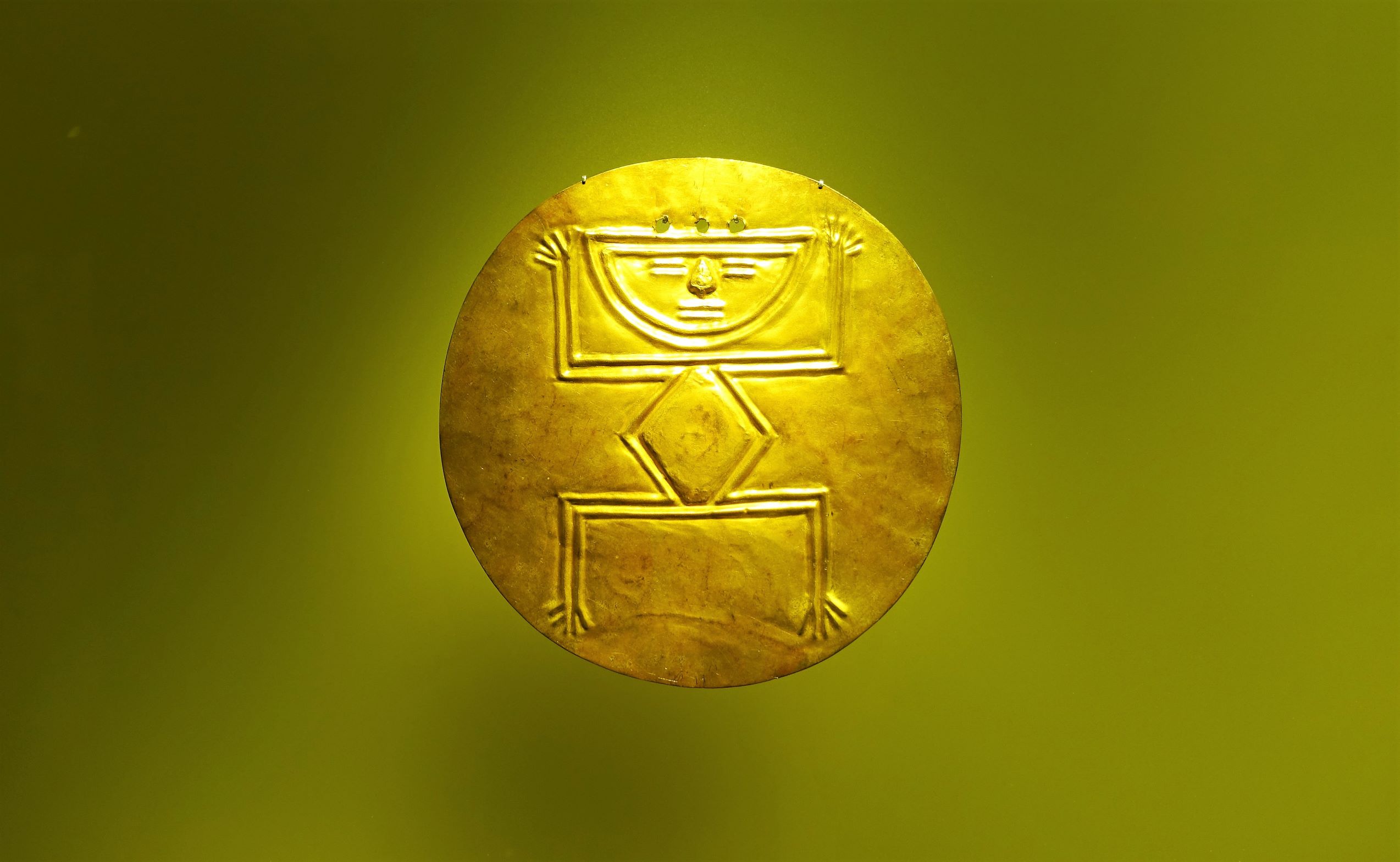
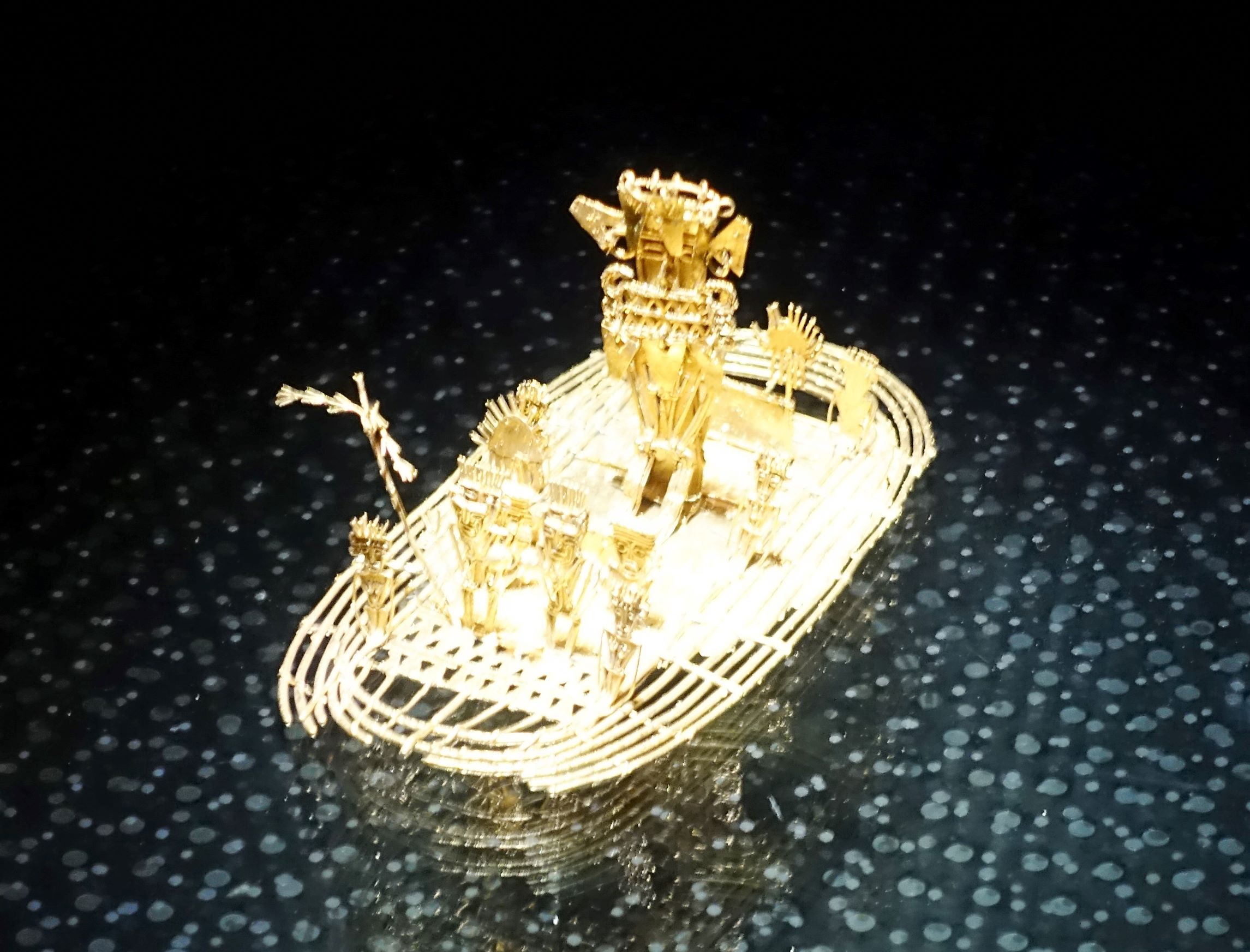
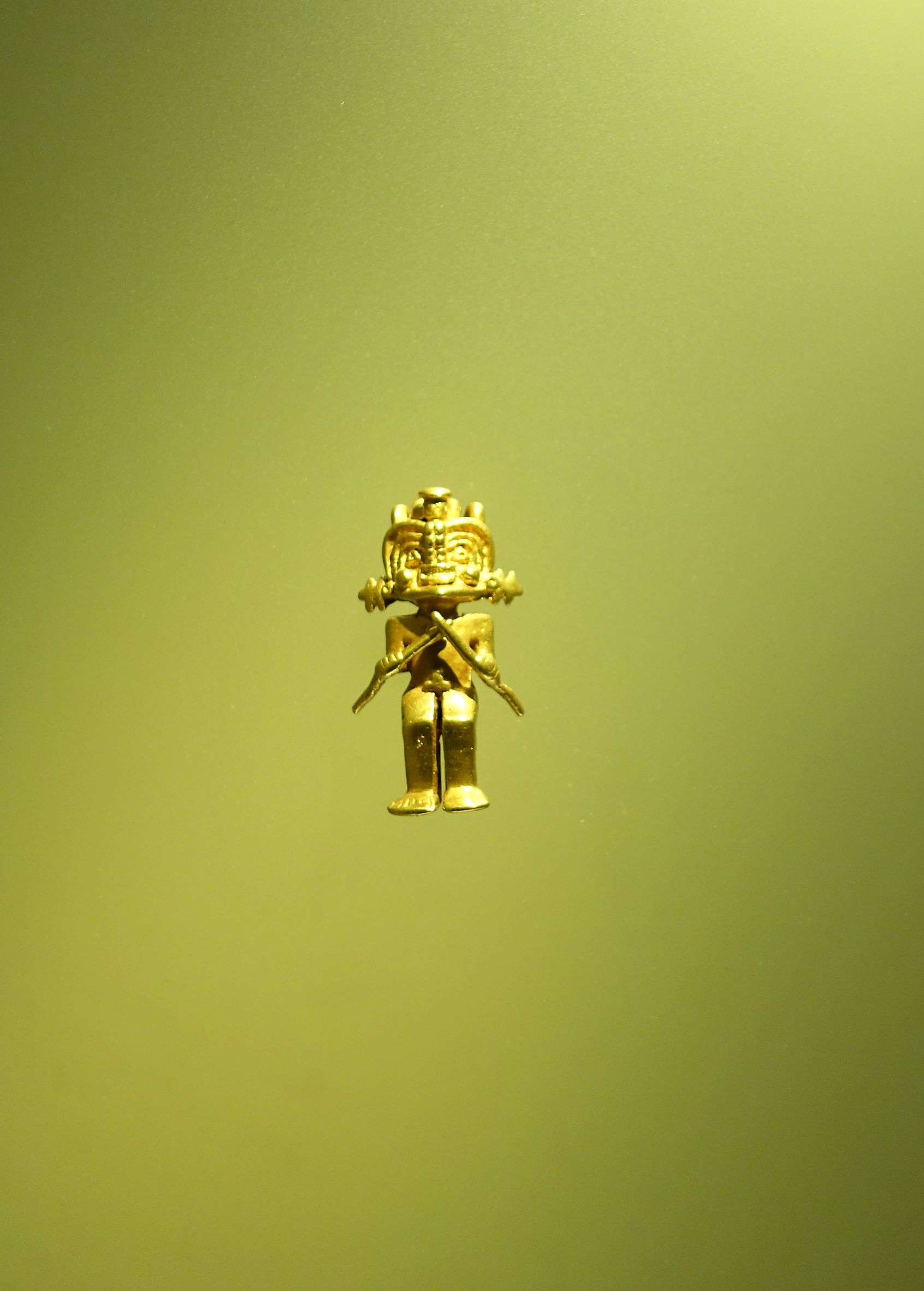
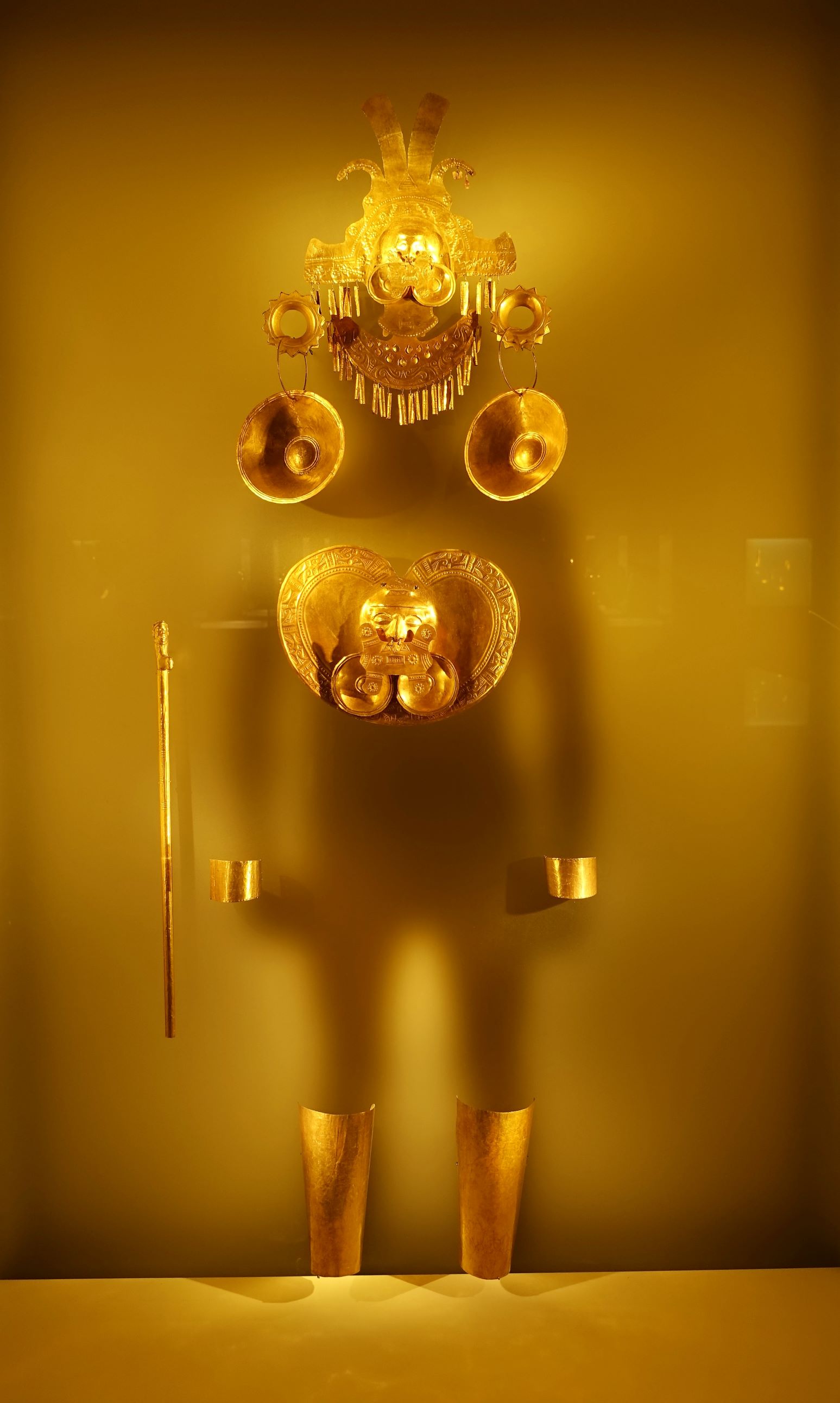
Bogota’s Gold Museum (by Eliane)
We really liked the Gold Museum because of all those interesting metals and the clear instruction of how to mold them. It was truly amazing learning all those different properties that we never knew about and couldn’t even imagine. I do not want to say too much in case you are going there so I will only say my favourite things.
The ways to mold the shapes were very interesting. The coolest way I thought was the one where you make the thing you want with wax, and put clay all around it but leave a hole so you can drain the wax out later and fill gold in. There were so many different patterns you couldn’t even count! The museum also included an interesting exhibition about the slave trade and other information about shamans and indigenous cultures in South America.
Coffee, Cowboys & the Corcora Valley
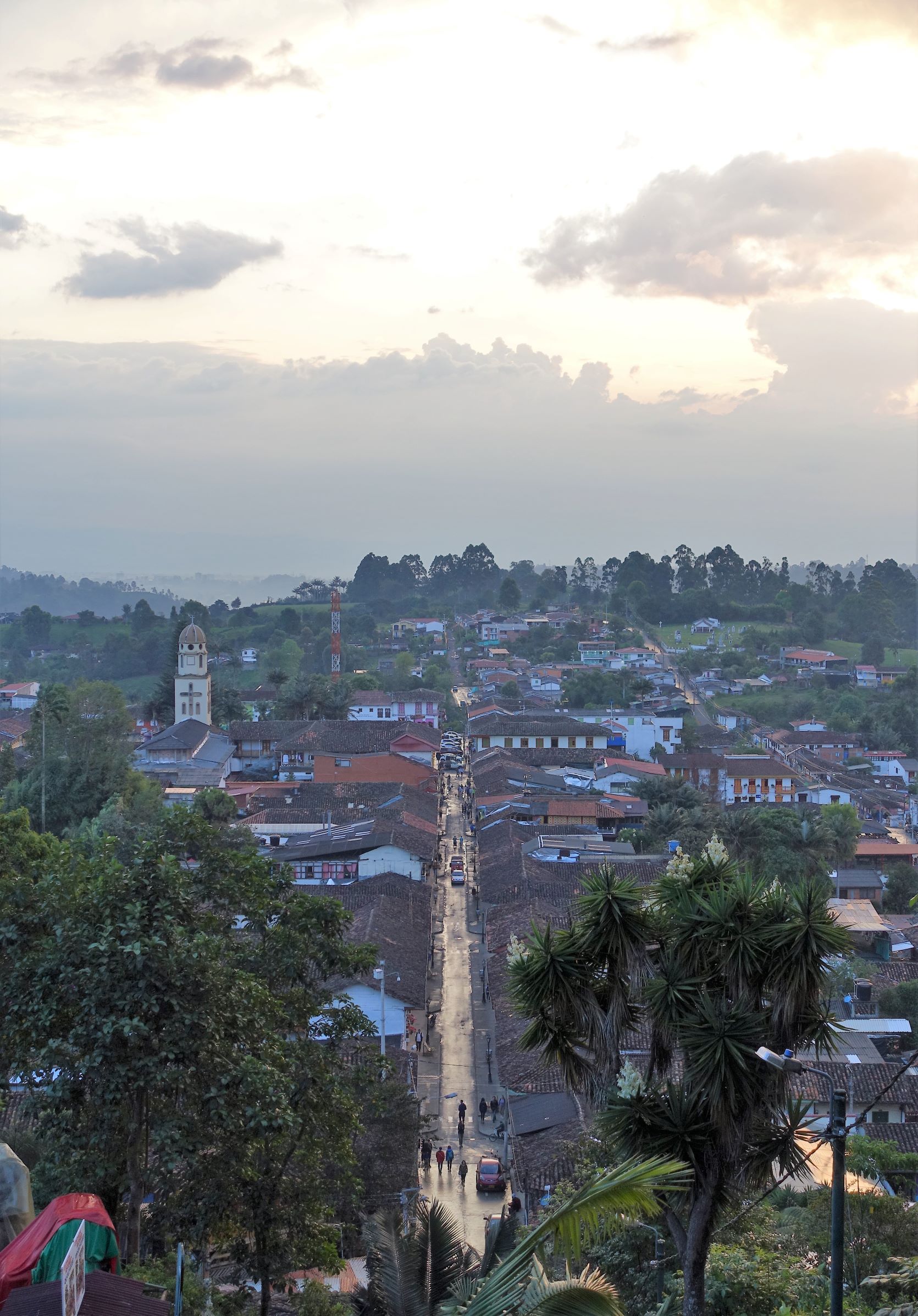
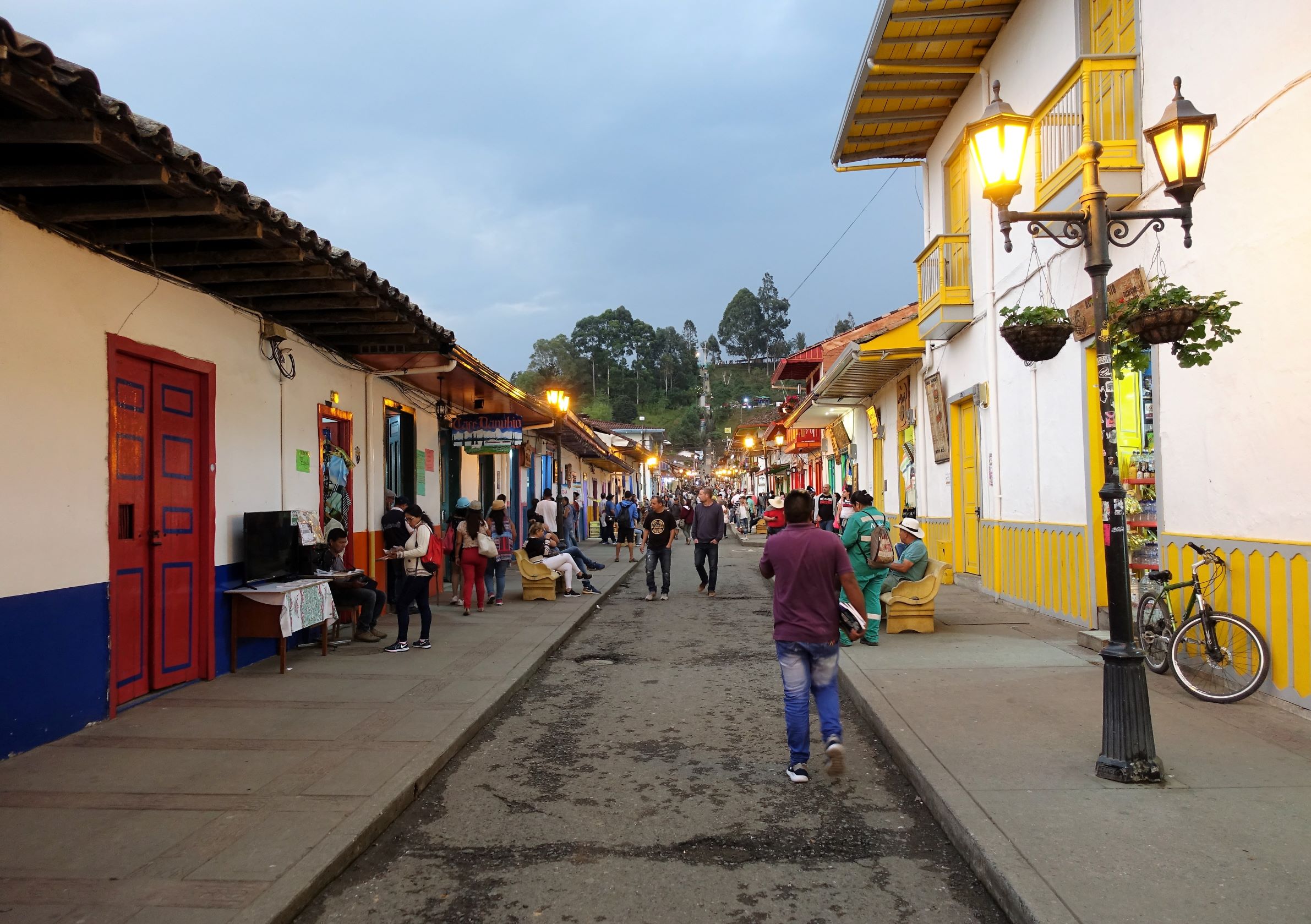
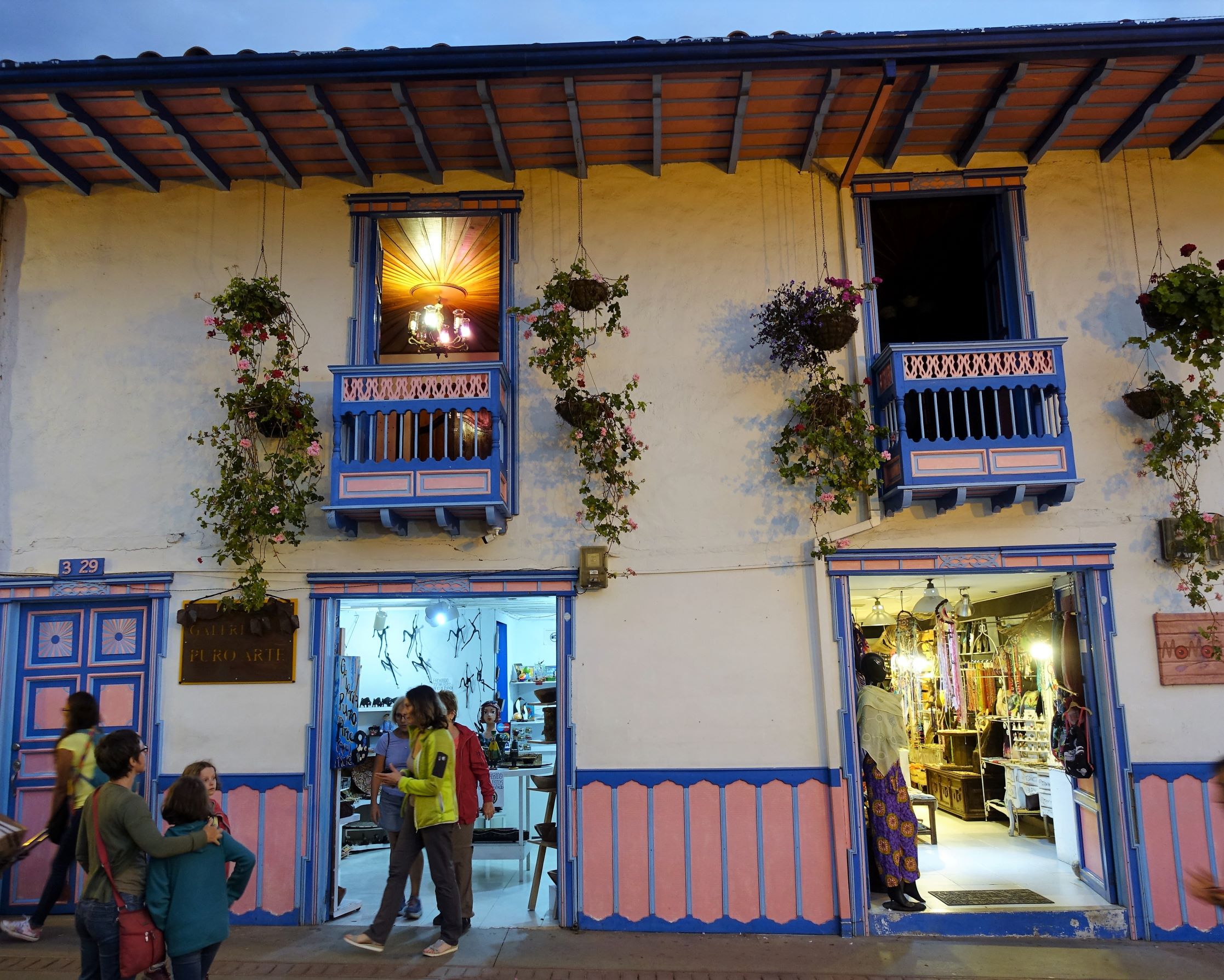
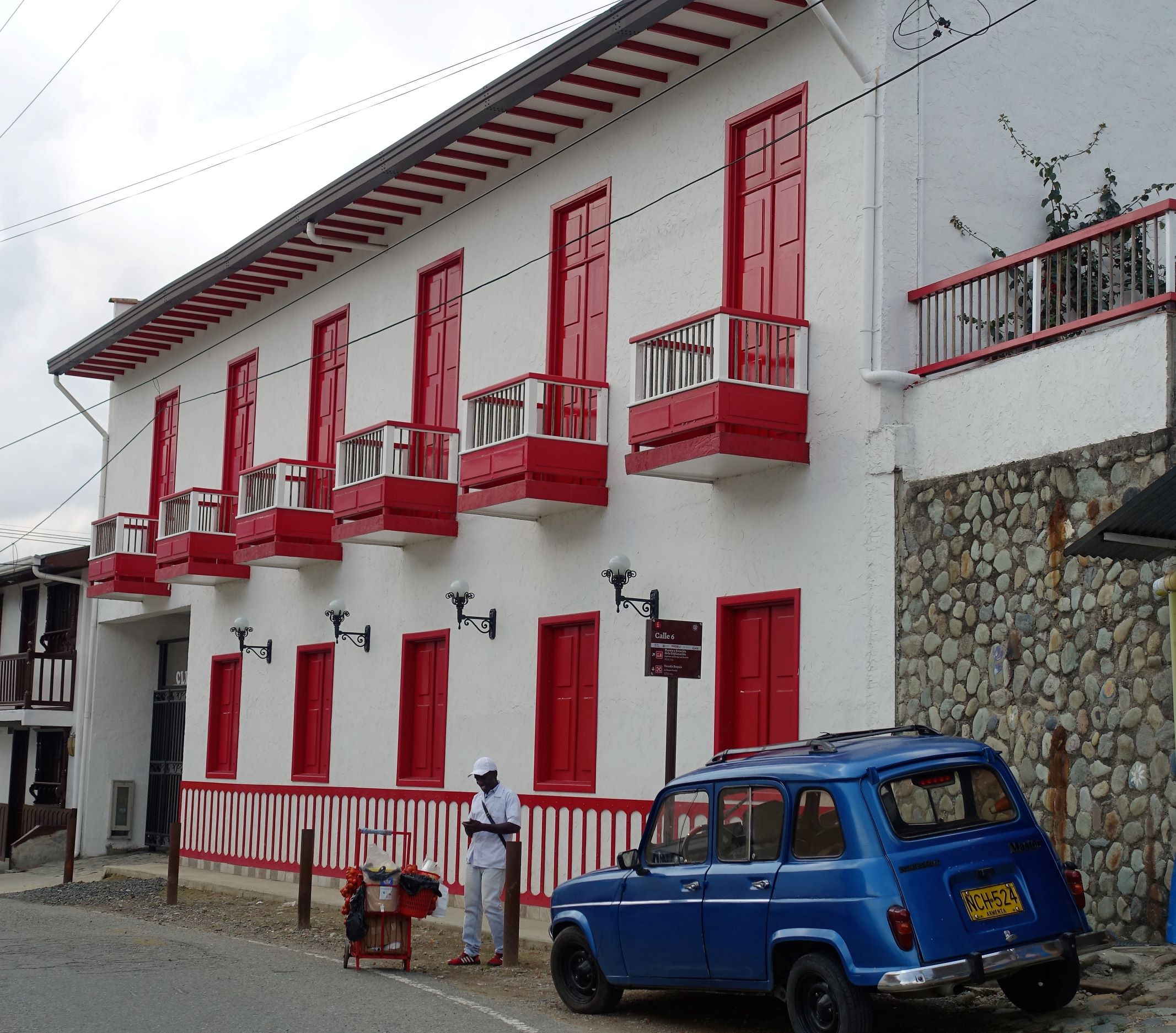
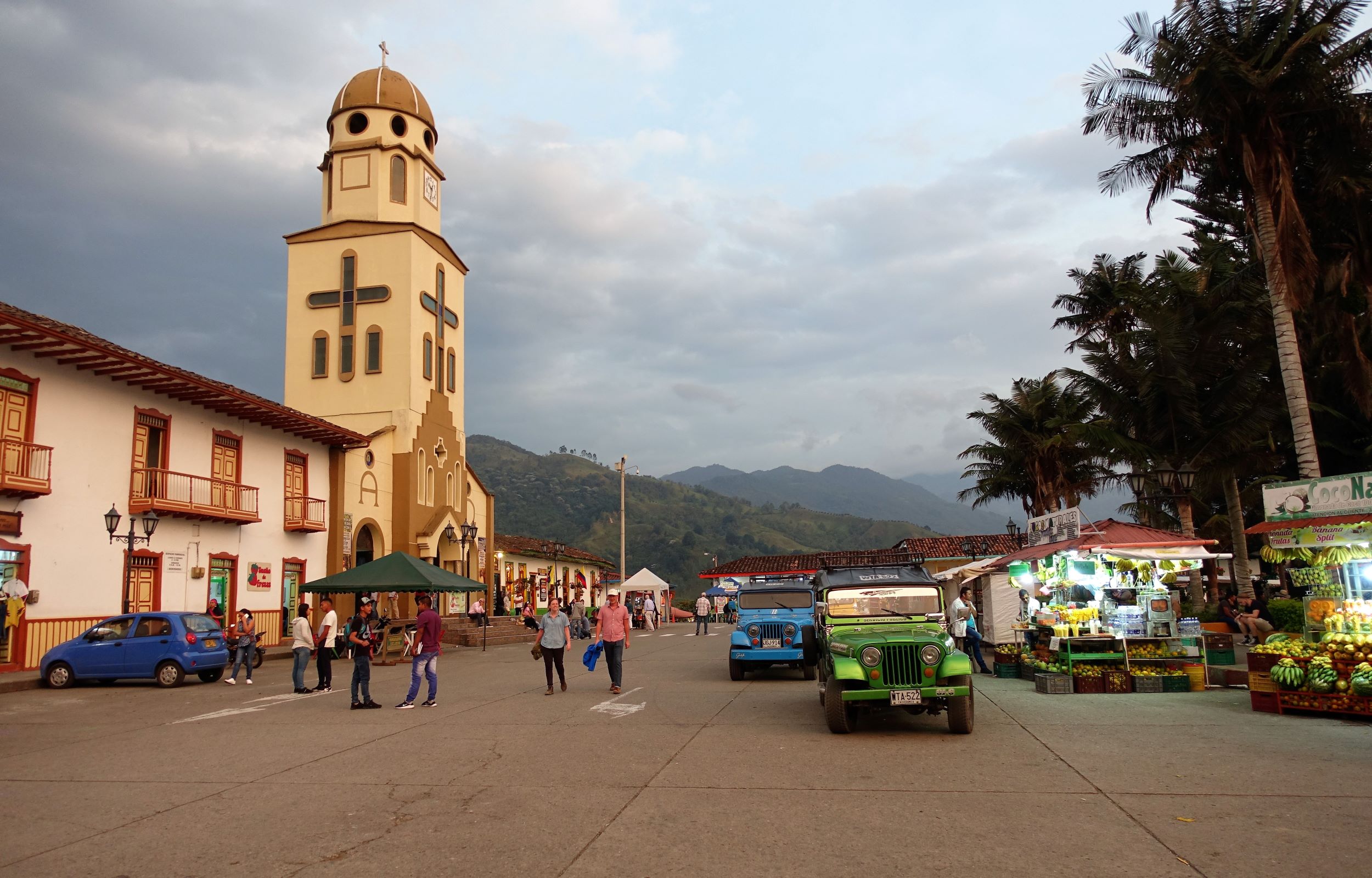
Colombia has a wealth of pueblos (towns or villages) set in beautiful countryside, with traditional – and often very colourful – architecture. We chose to visit Salento in the Coffee Region, which is one of the most famous (and most visited) pueblos.
This may be the most colourful town we’ve ever visited.
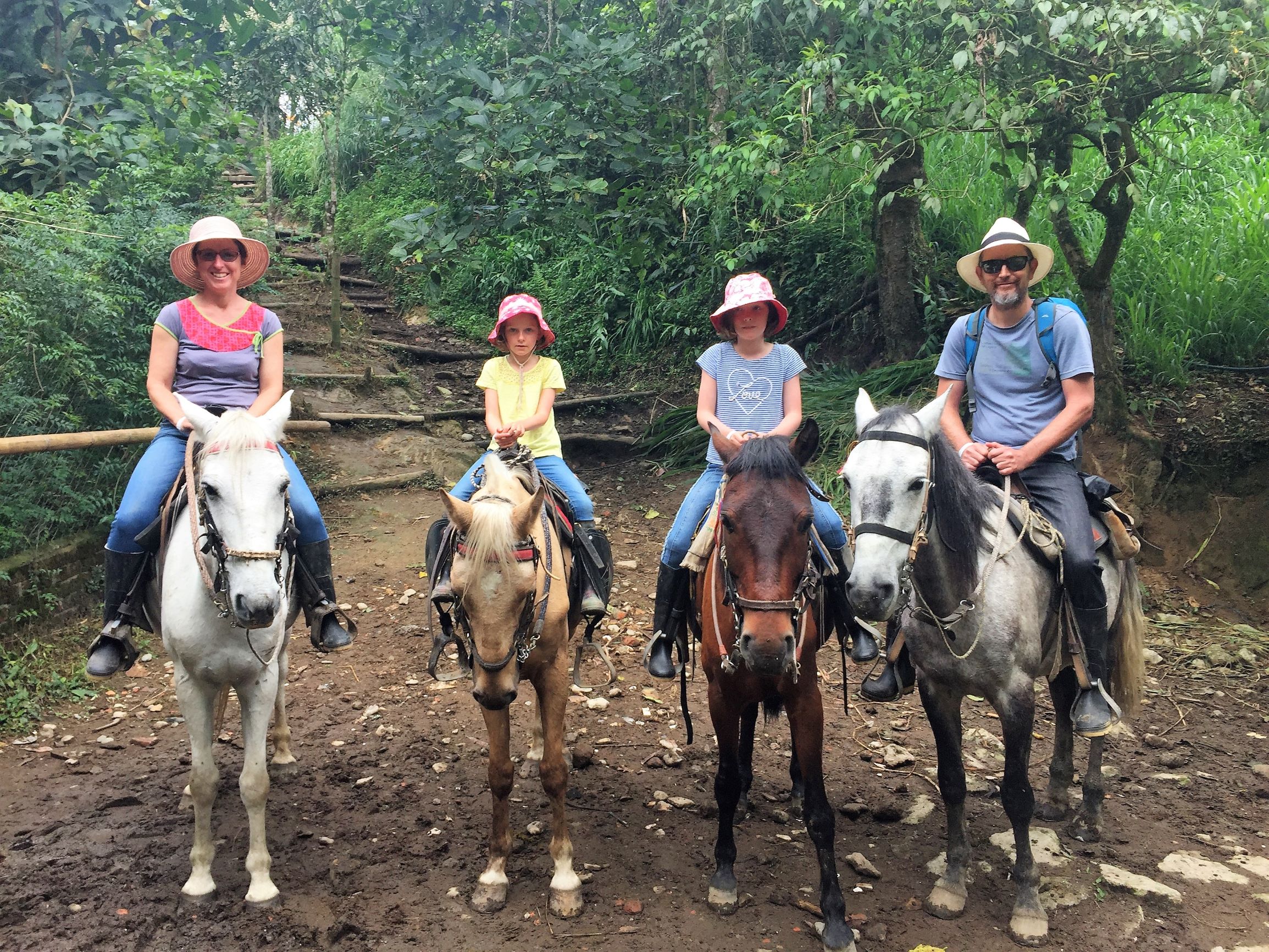
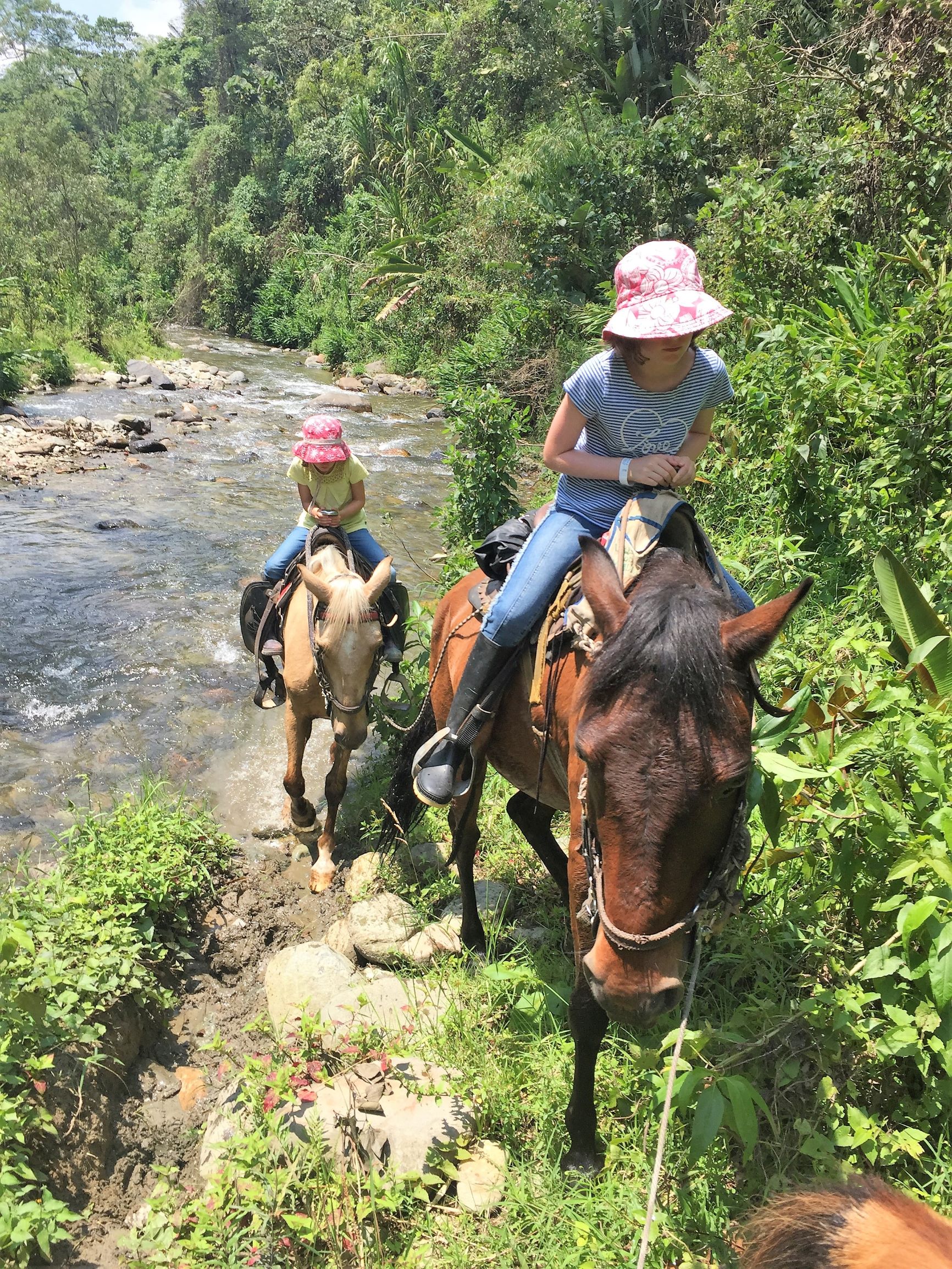
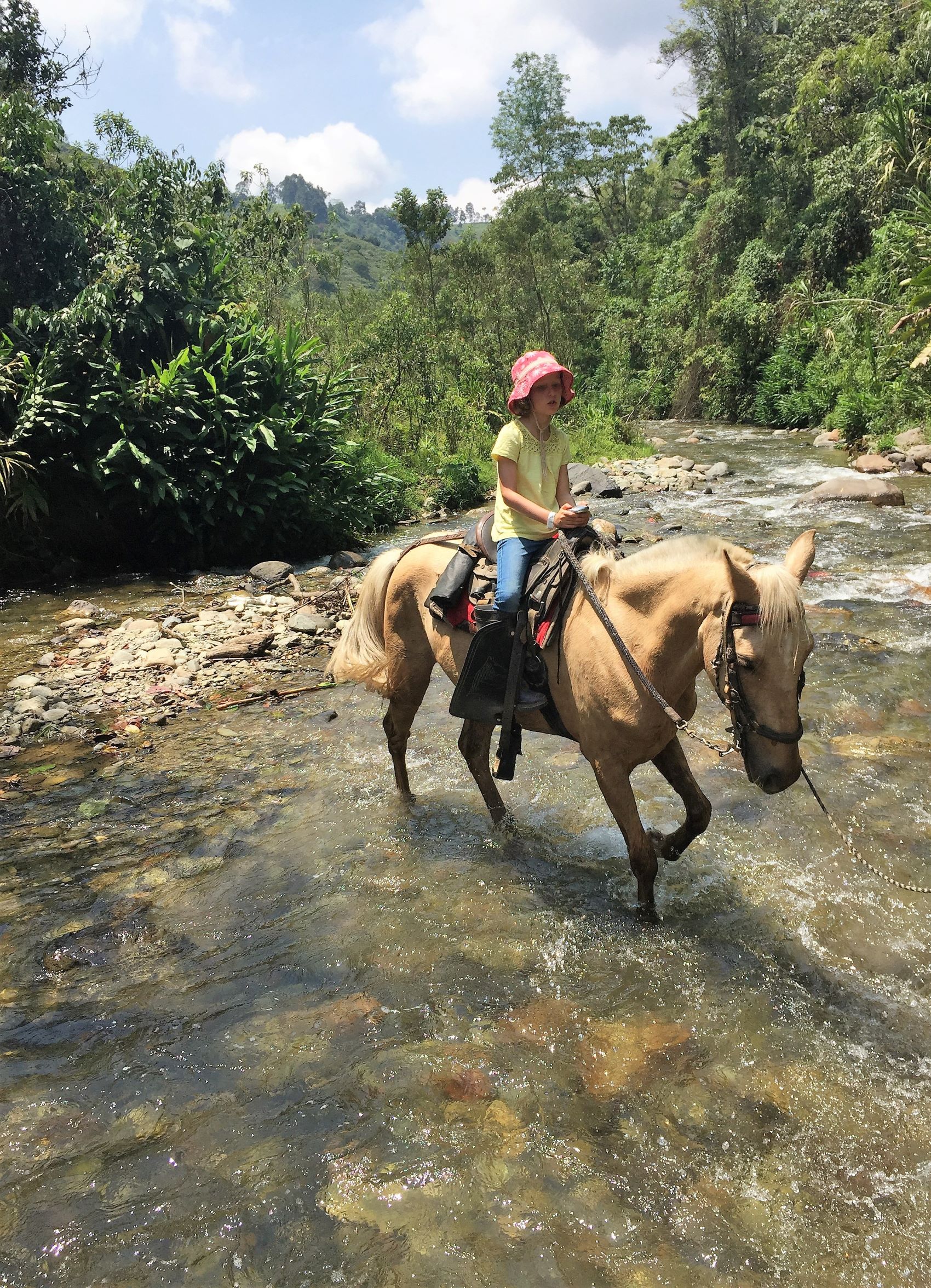
While tourism has well and truly taken off here, Salento still has many charms, such as the presence of traditional Colombian cowboys, wearing Colombian-style cowboy attire and sporting massive handlebar moustaches. We met one of these colourful characters when we decided to go horse-riding. Our only regret is that we didn’t take a photo of Oscar before the ride – because at the end we were too sore to do more than hobble off!
Ready to go!
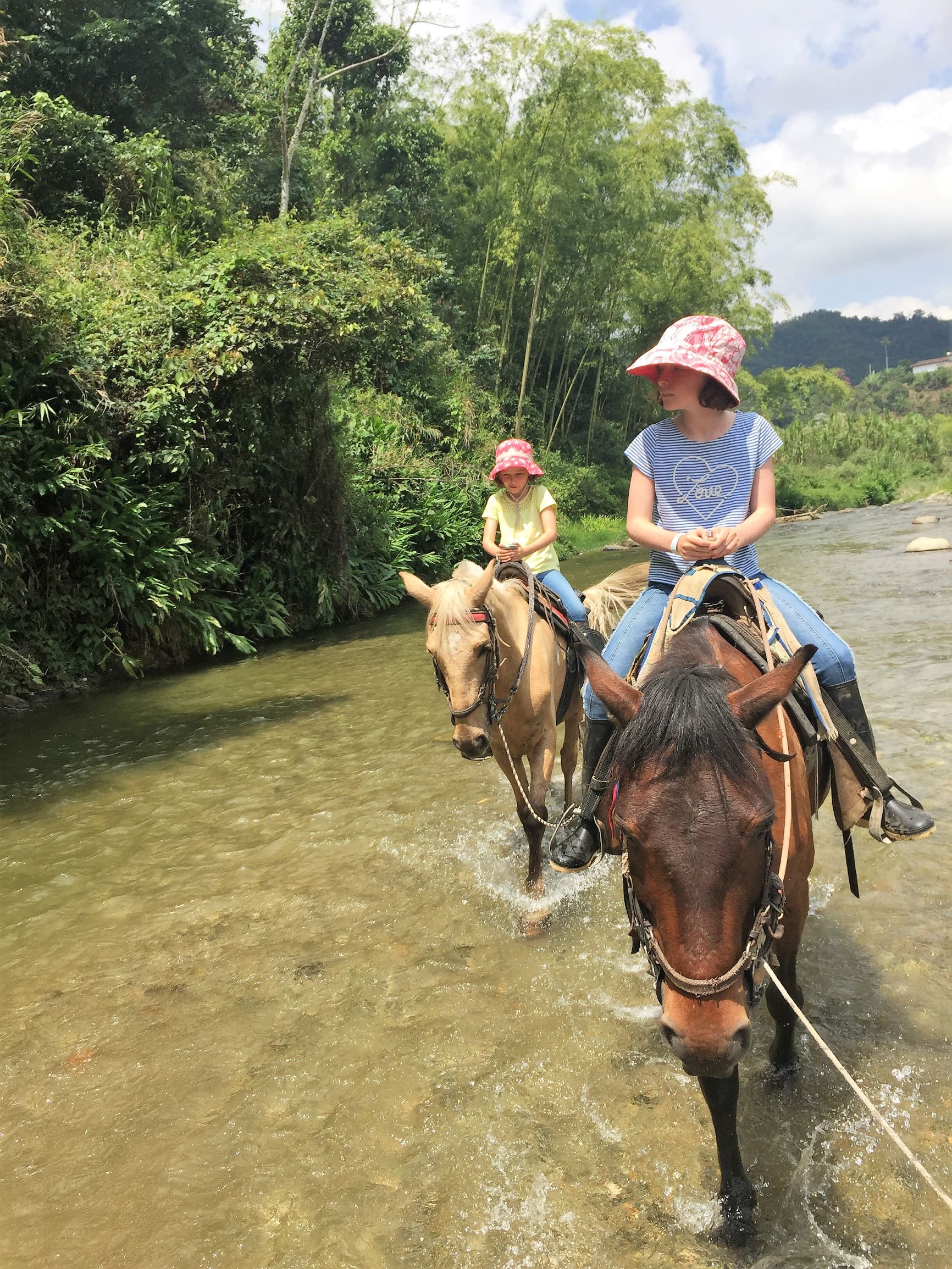
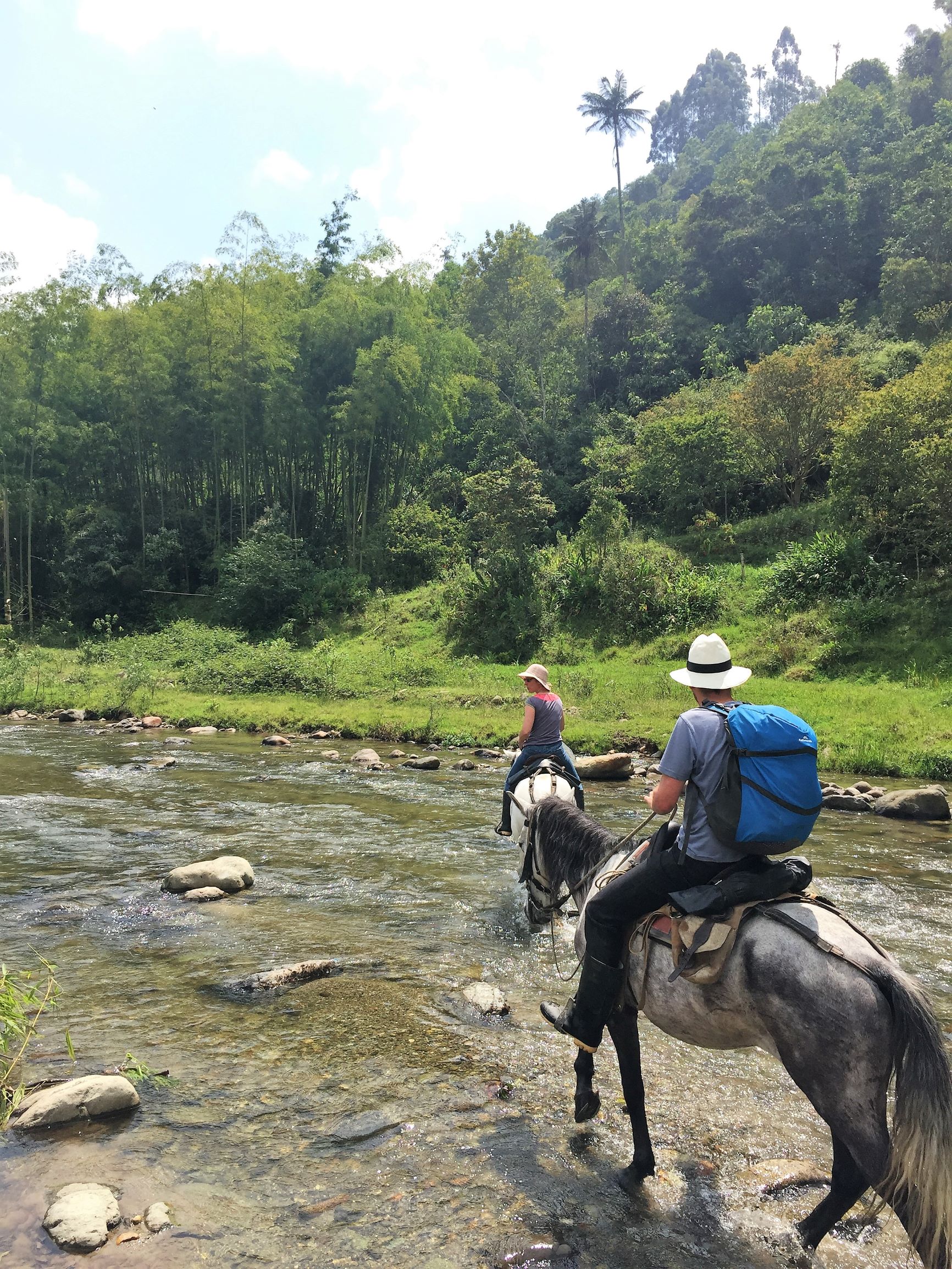
From Maille: We went horse-riding for four hours. We were going down to the river. When we got to the river our horses walked across the river lots of times. The horses splashed across and my horse wet Eliane! We had a little break before getting back on our horses. Eliane and I were led on a string because we were scared. But our horses were really good. When we went back up the hill it was scary because you went straight up on a muddy path.
The scenery got more and more beautiful as we followed the river up the valley.
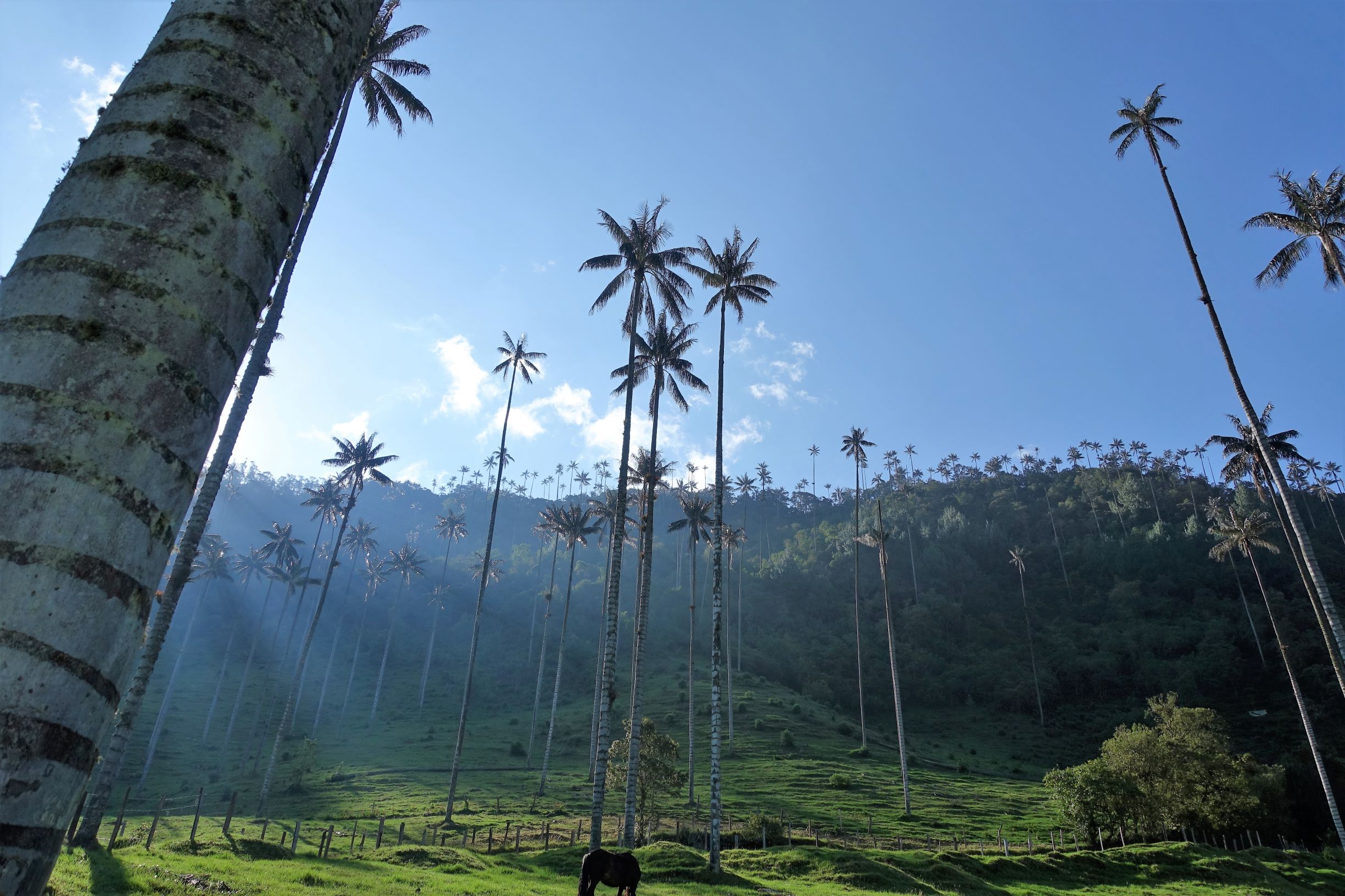
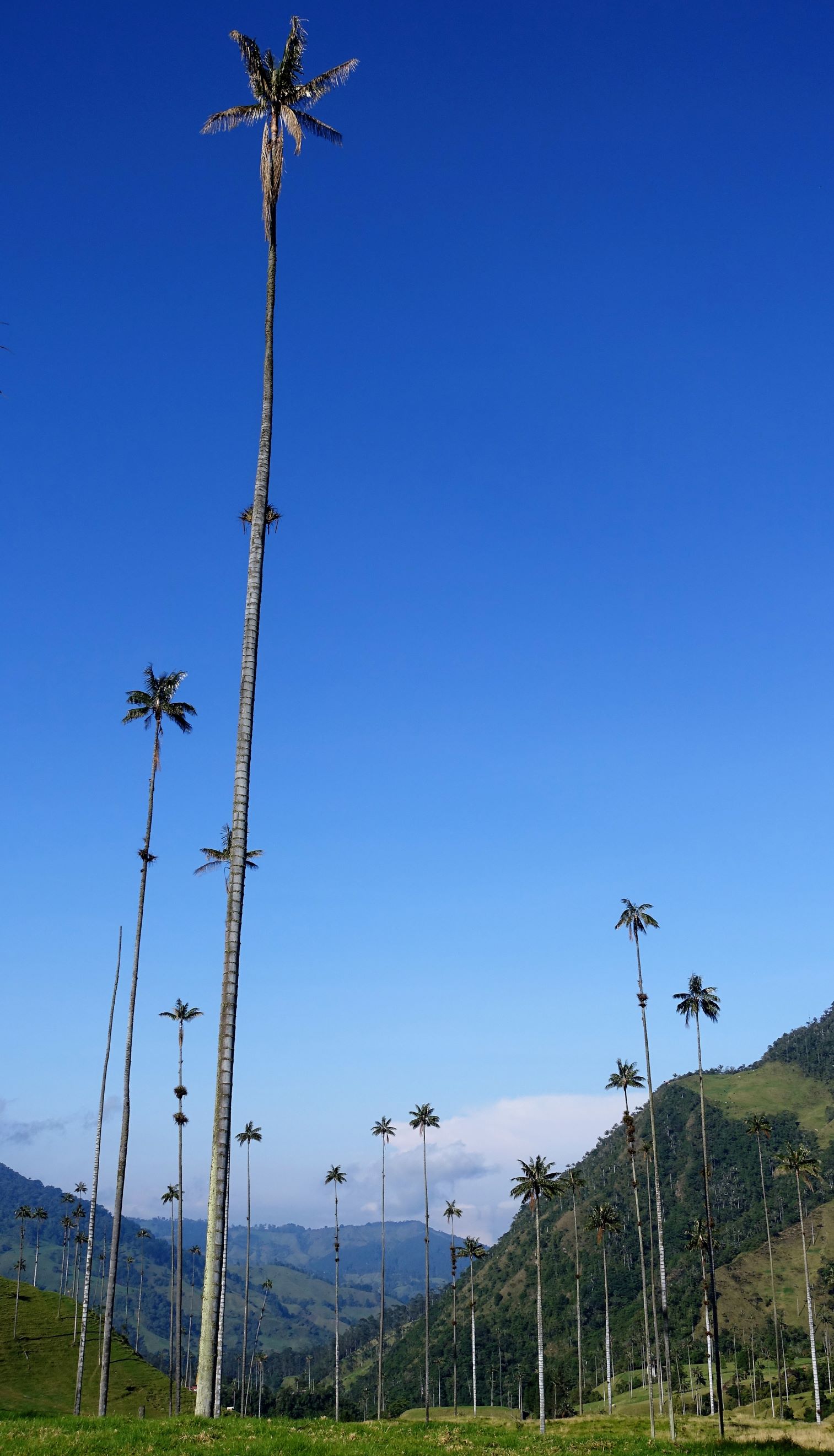
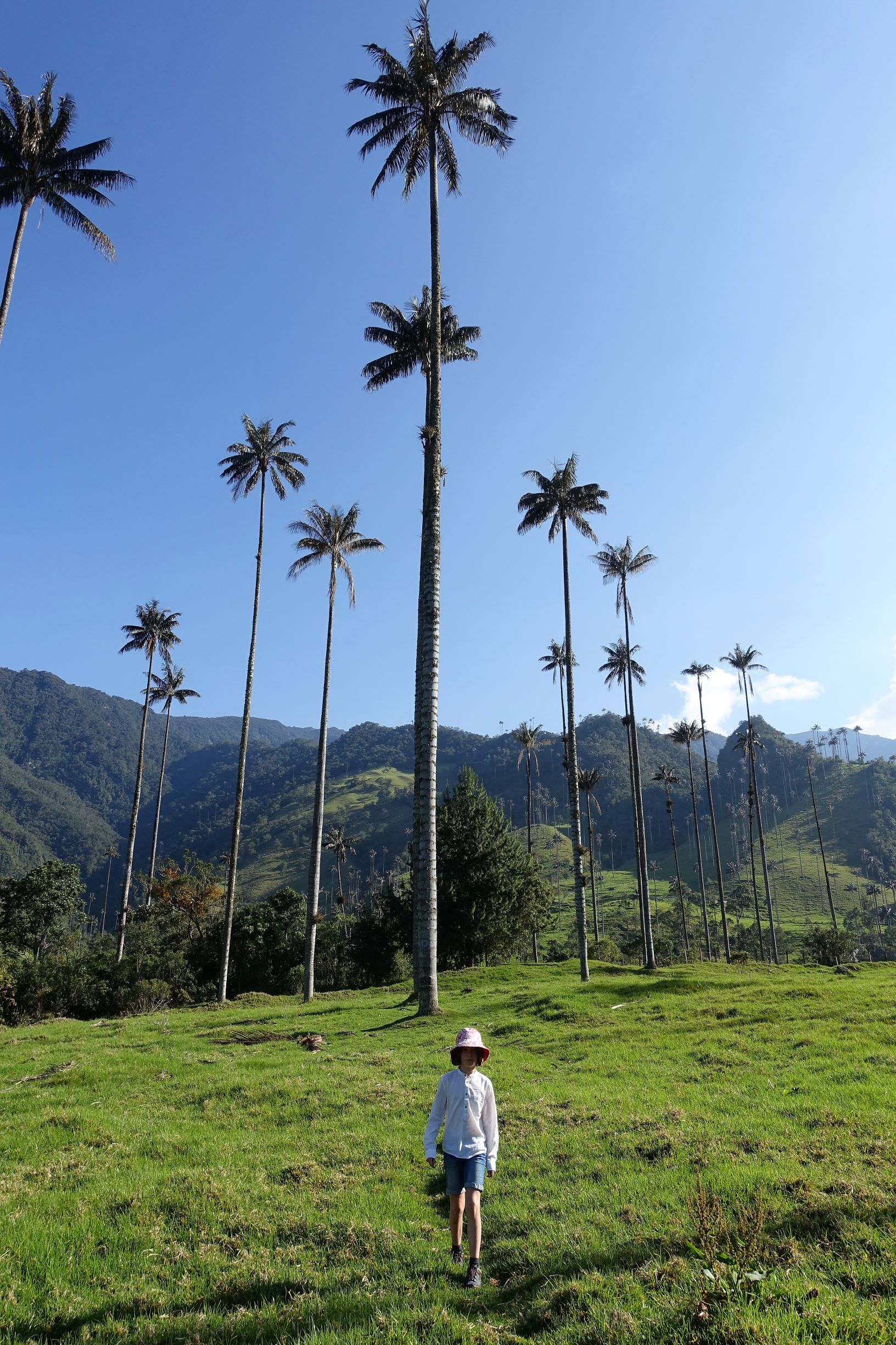
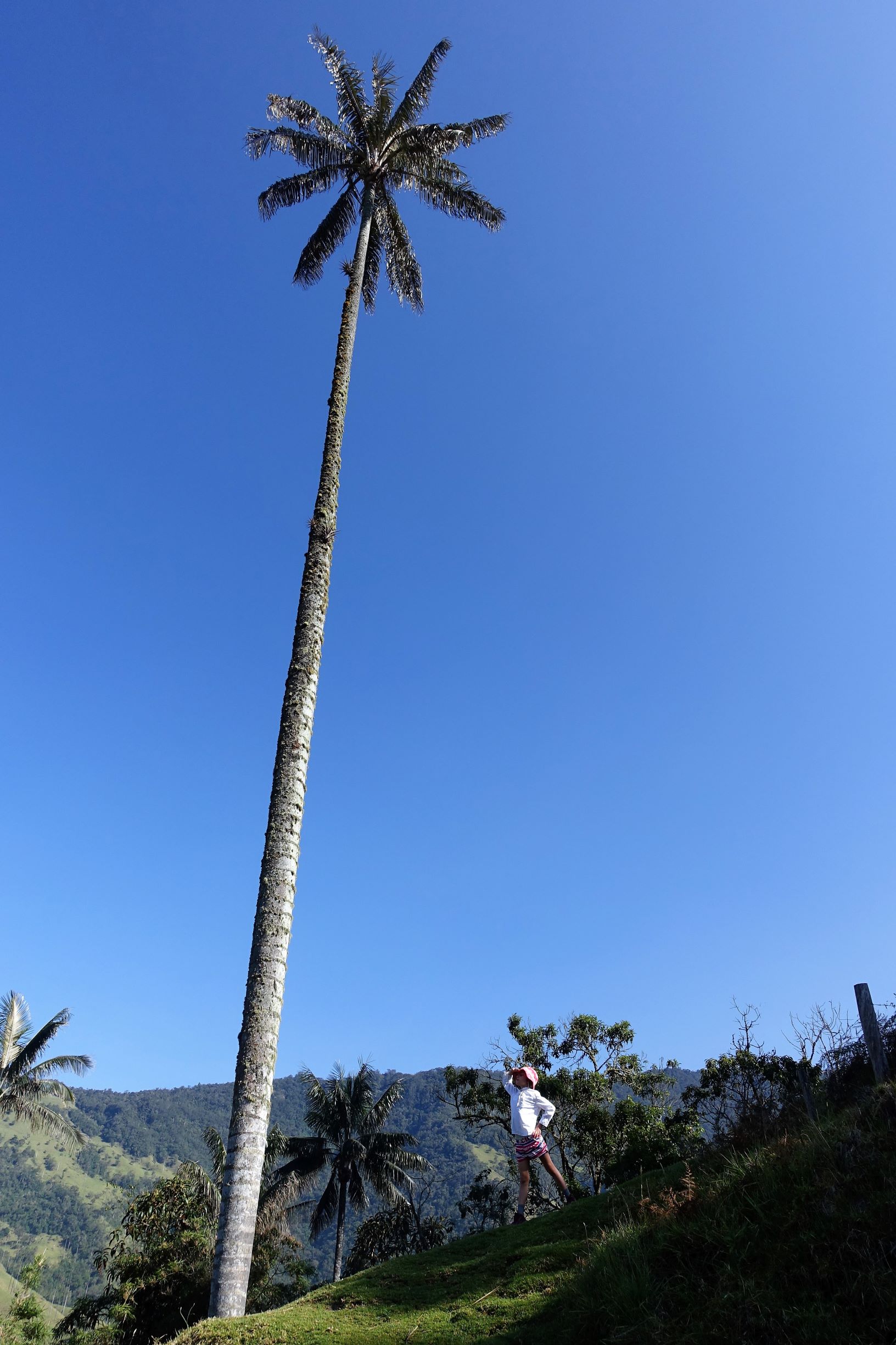
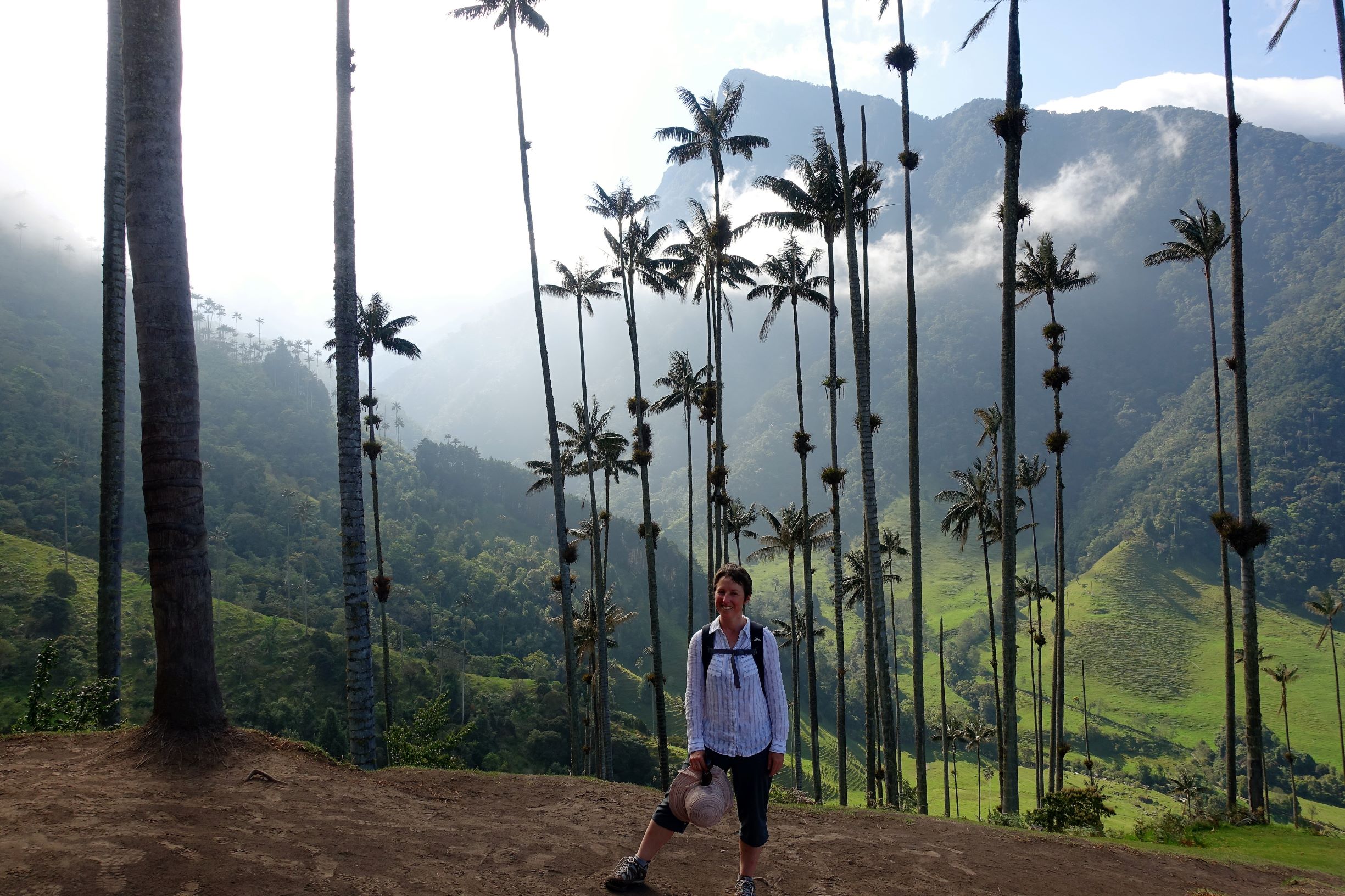
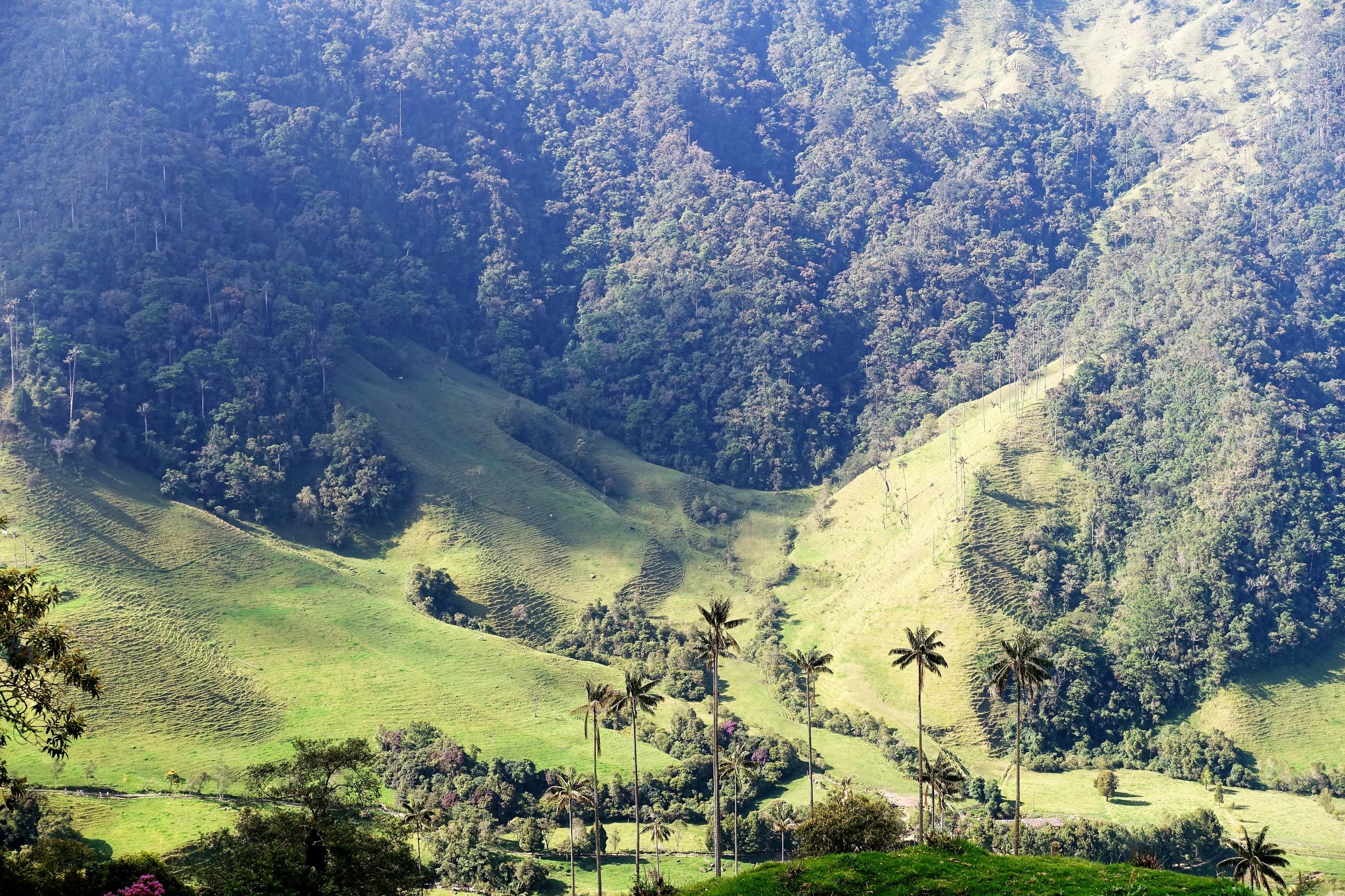
Probably the biggest single attraction drawing people to Salento is its proximity to the Corcora Valley, famous for its incredibly scenic wax palms – the tallest palm trees in the world.
Our visit to the Valle de Corcora began in Salento’s central plaza, where we paid for a ride out to the Valle in a World War II Willys Jeep. We were lucky and got seats inside both there and back. Those that came a little later had to either hang off the back of the jeep or cling to the roof. There are seemingly no pesky regulations here about the number of people to one vehicle!
The jeeps are brightly coloured and unmissable!
The
12km round trip hike took us through a beautiful valley where the wax palms
stand as solitary reminders of the rainforest ecosystem that was there before
the land was cleared for pasture. It’s a sad thought that one day the stunning
palms will be gone, but I was heartened to see more palms in their original
forest – that will hopefully be protected into the future.
Rest stop with a view.There’s a rest stop with hot chocolate at the top.
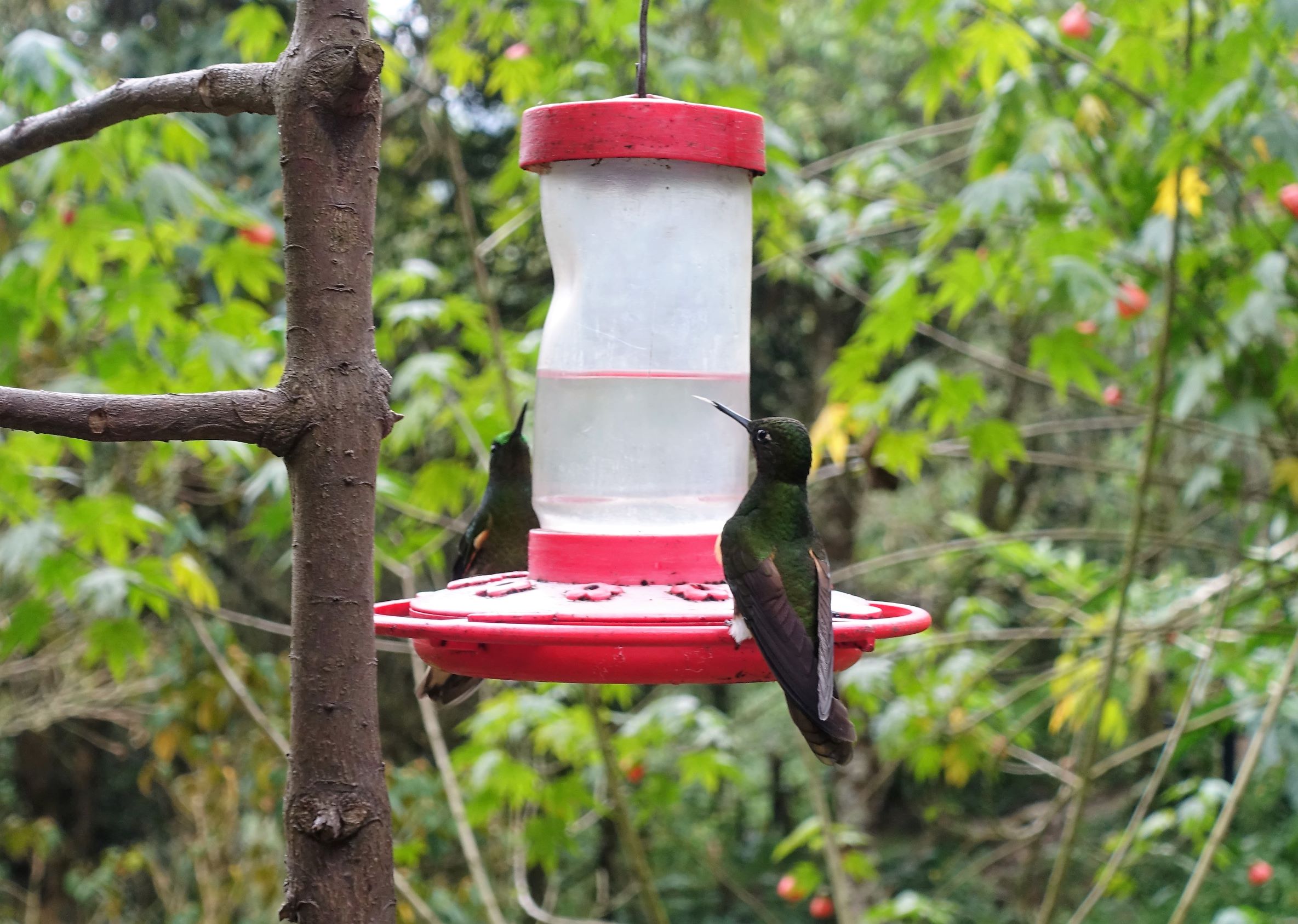
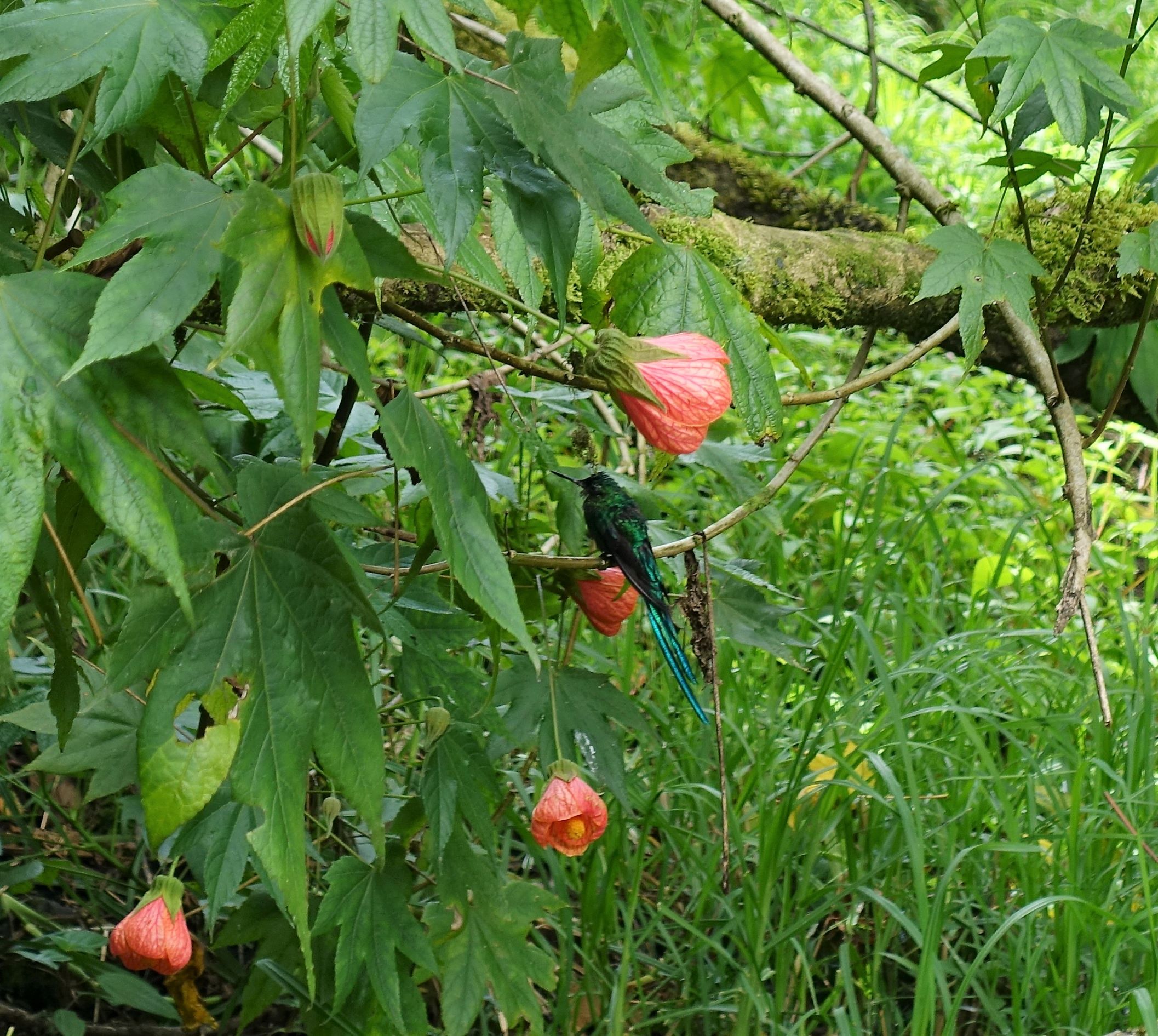
After winding uphill past the palms and down into the next valley, we detoured to a hummingbird sanctuary nestled in the rainforest. The place was heaving with people so we didn’t stay long, but we managed to see at least two types of hummingbirds – including a spectacular long-tailed bird – and even got some pics!
Have you ever tried to photograph a hummingbird? Trust us, it’s very tricky as they usually don’t stay still for a second!
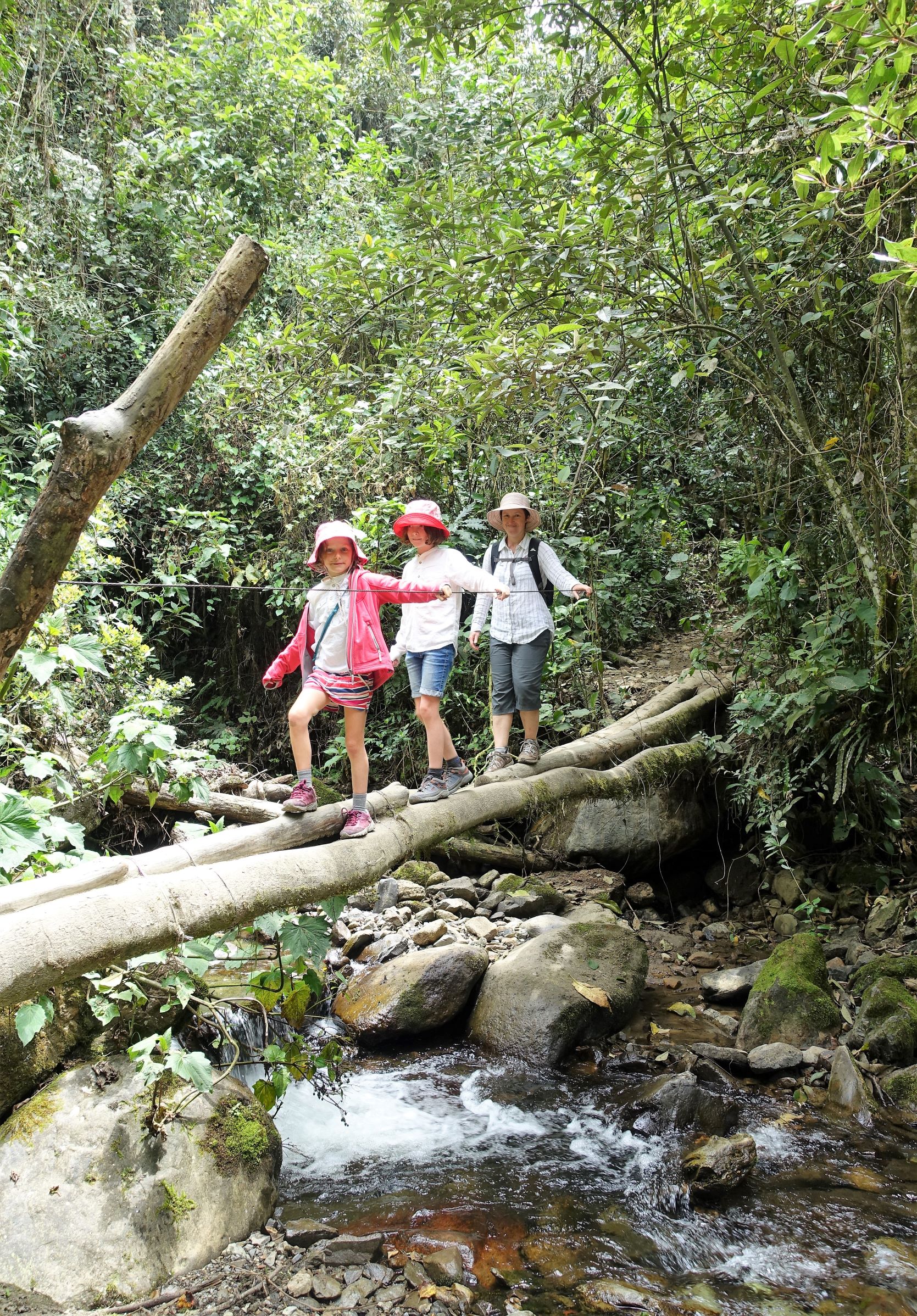
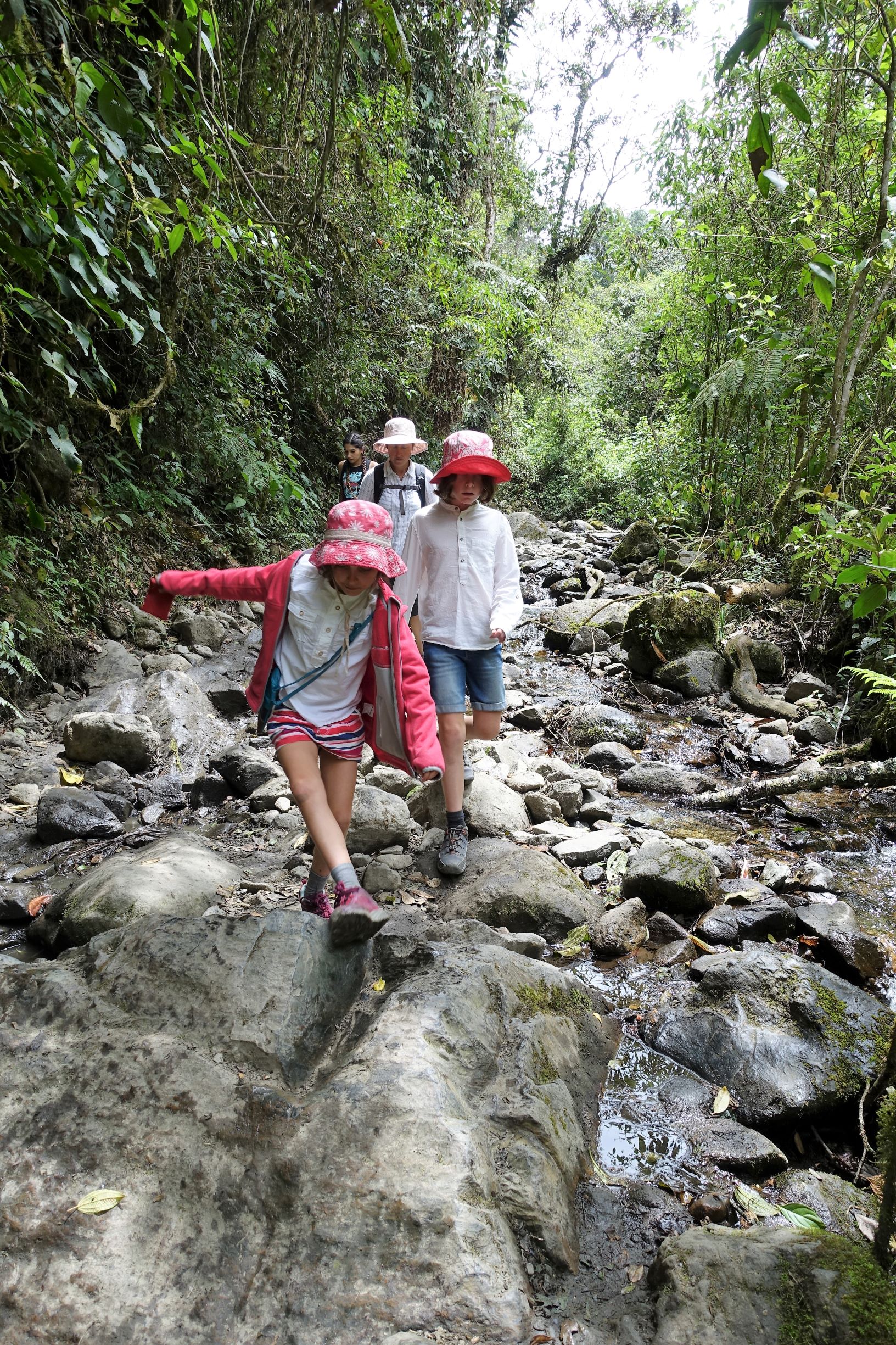
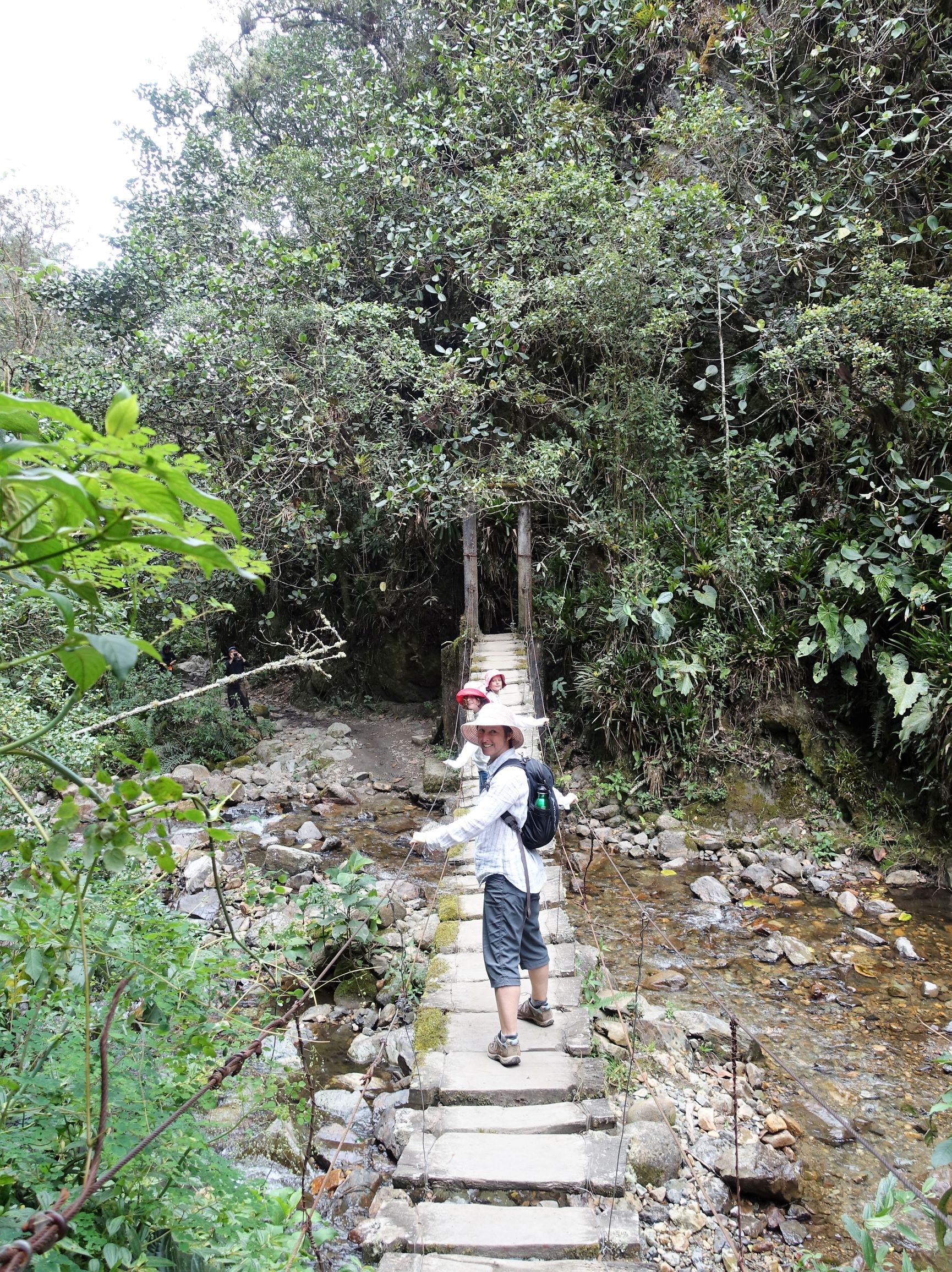
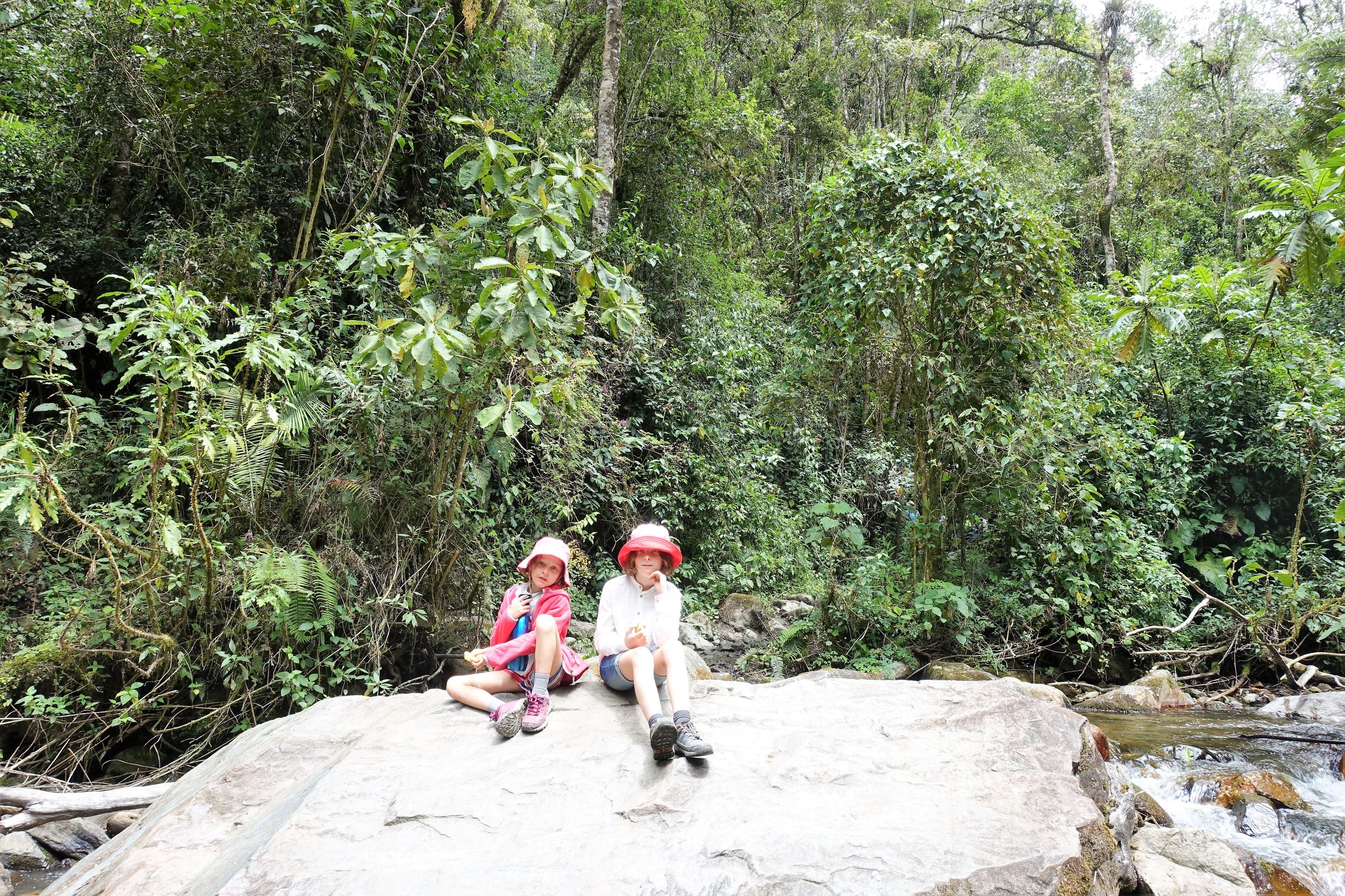
The walk through the rainforest held its own adventure, with the path sometimes merging with the creek so that we had to pick our way through to avoid wet feet, and with many fragile-looking swinging bridges to cross.
Lunch stop
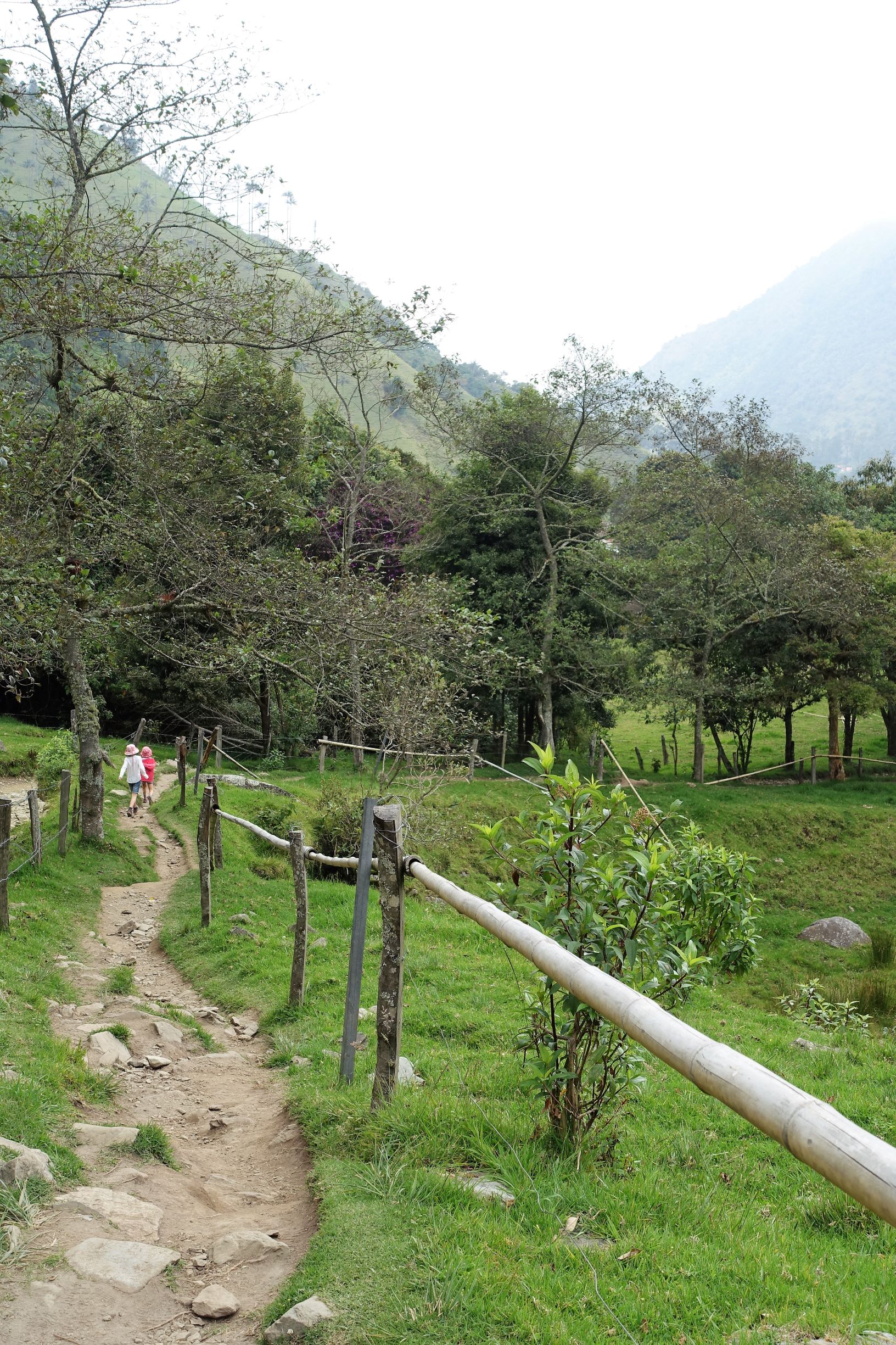
Eventually we emerged from the forest into a Hobbiton-like landscape where we followed a narrow path along the stream, past groups of picnickers and back to the jeeps. The girls’ previous hiking experience at Machu Picchu and the Colca Canyon prepared them well for yet another challenging hike at altitude. Maille achieved a new PB for distance and only started to seriously struggle in the last 500m.
Homeward bound.
Enchanting Cartagena
Nos encanta Cartagena! Literally, Cartagena enchants us. This is partly due to its fascinating history.
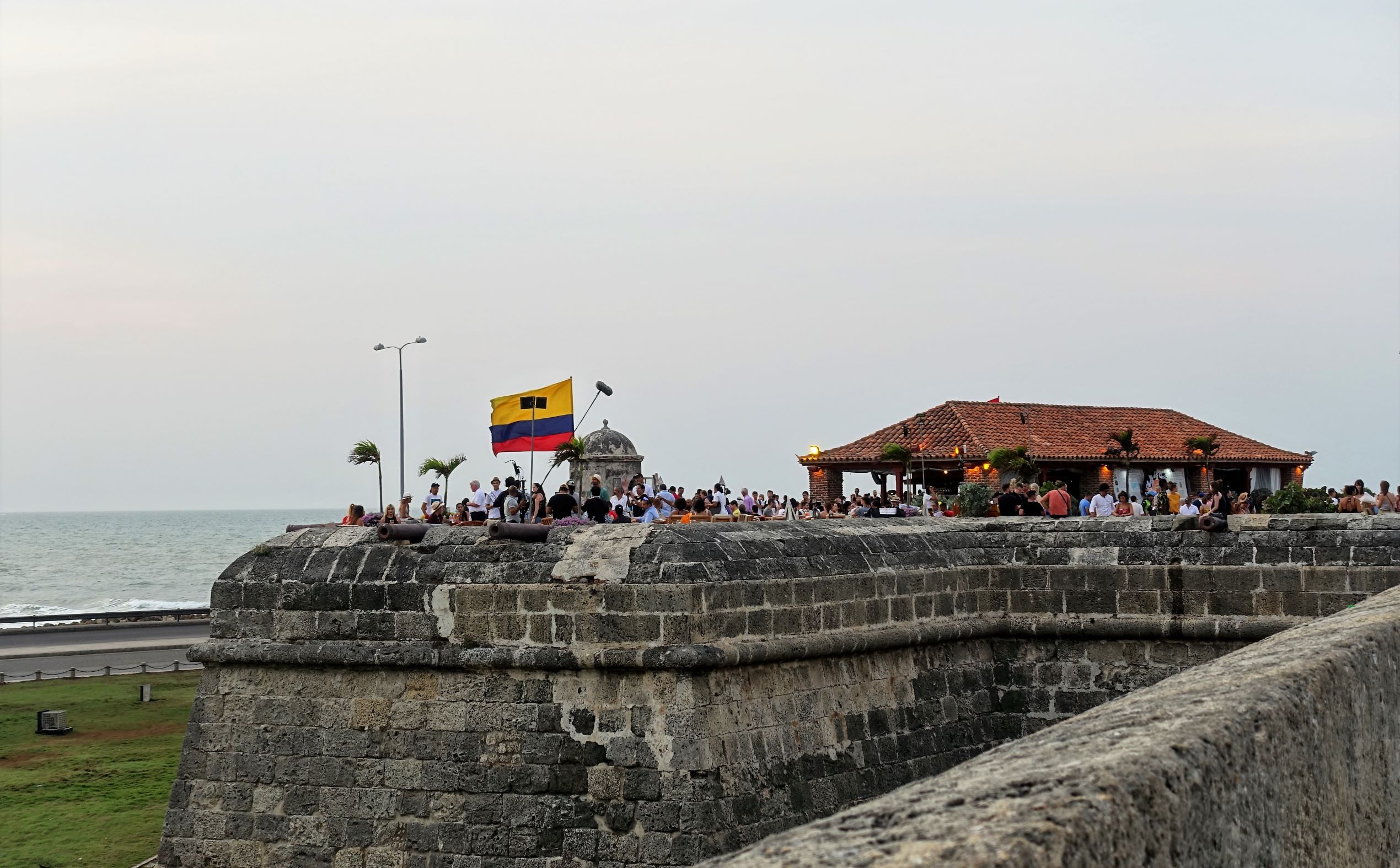
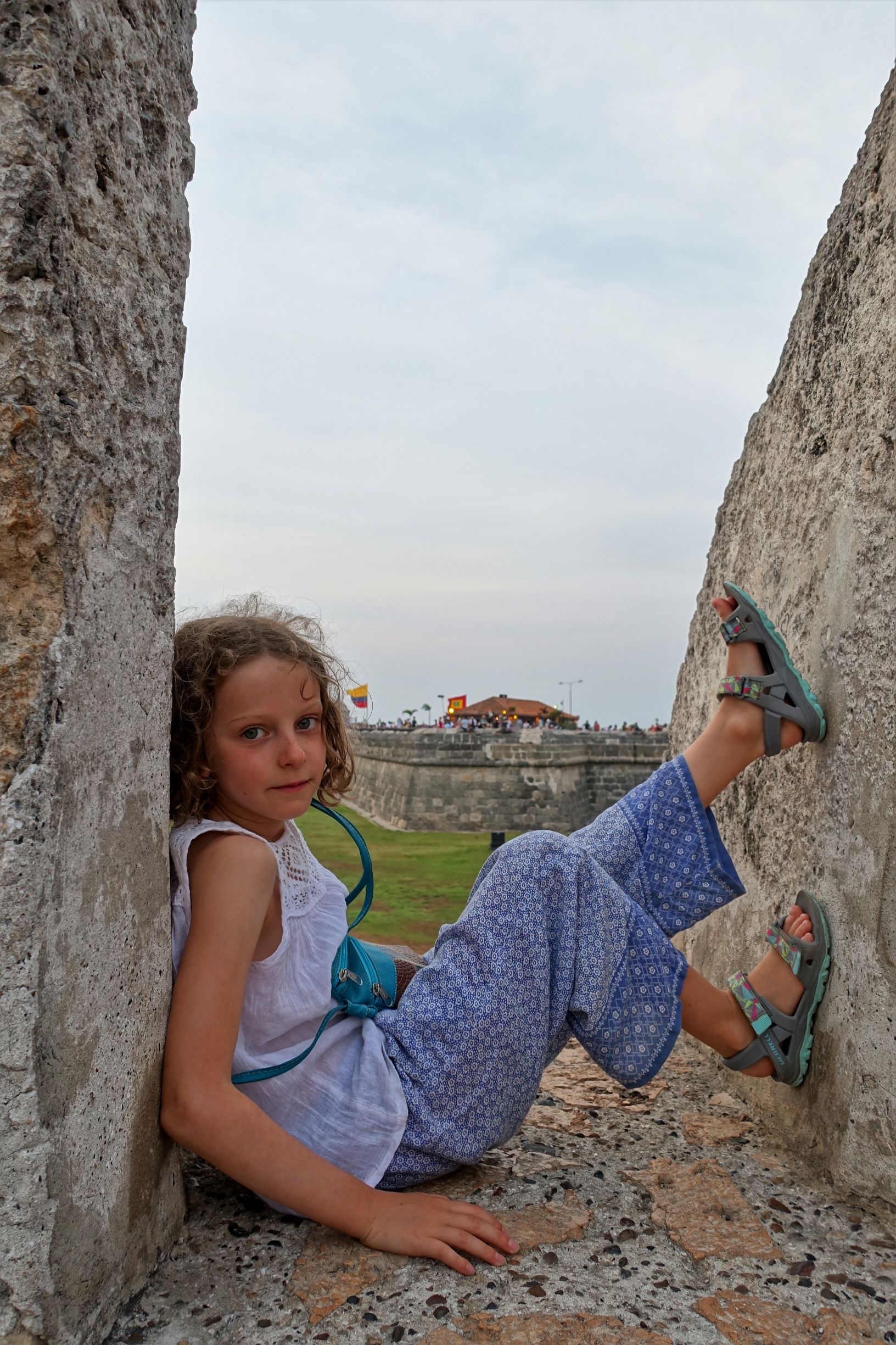
View of the walled old city (and new city to the left) from the Castillo San Felipe de Barajas
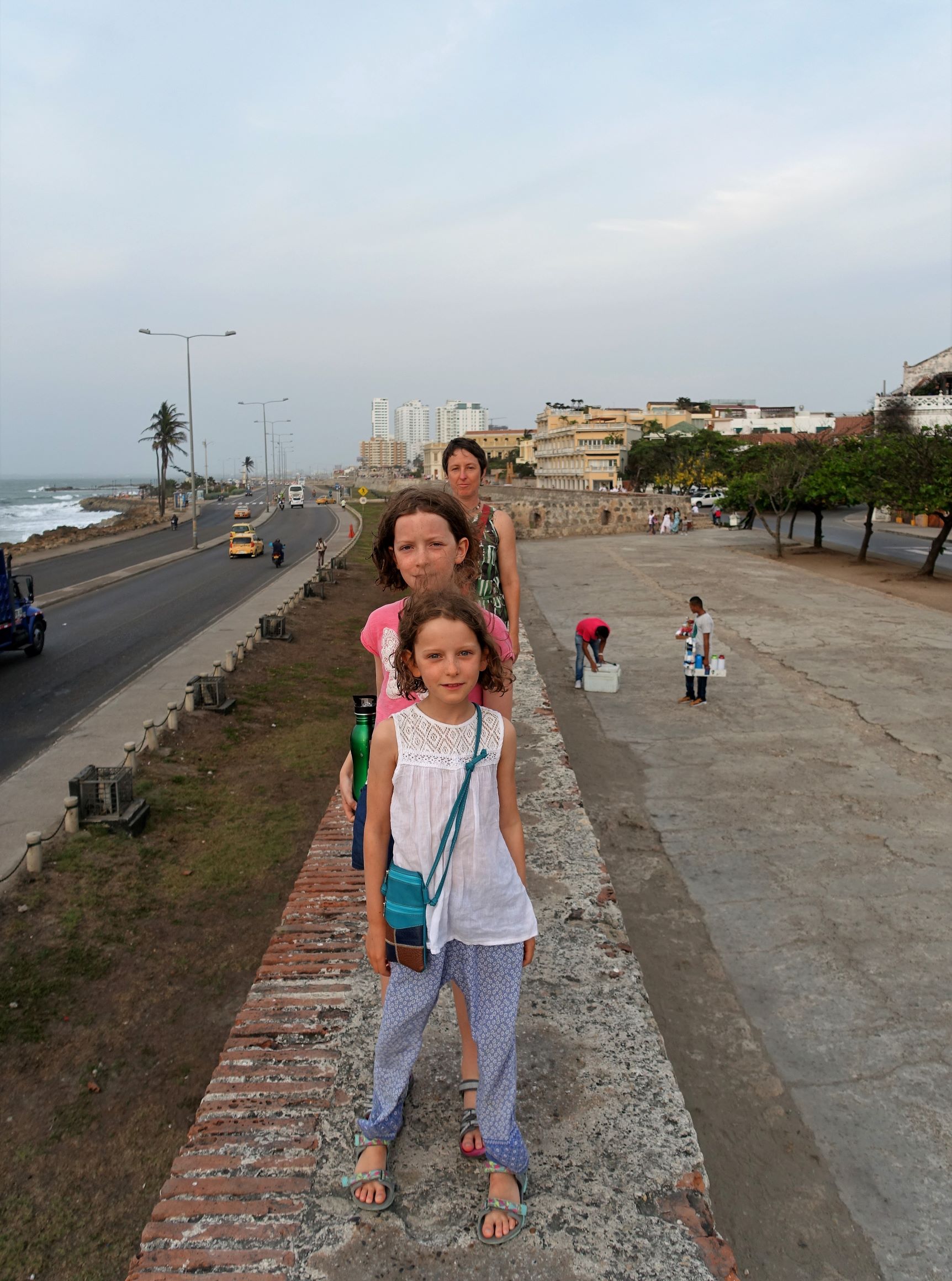
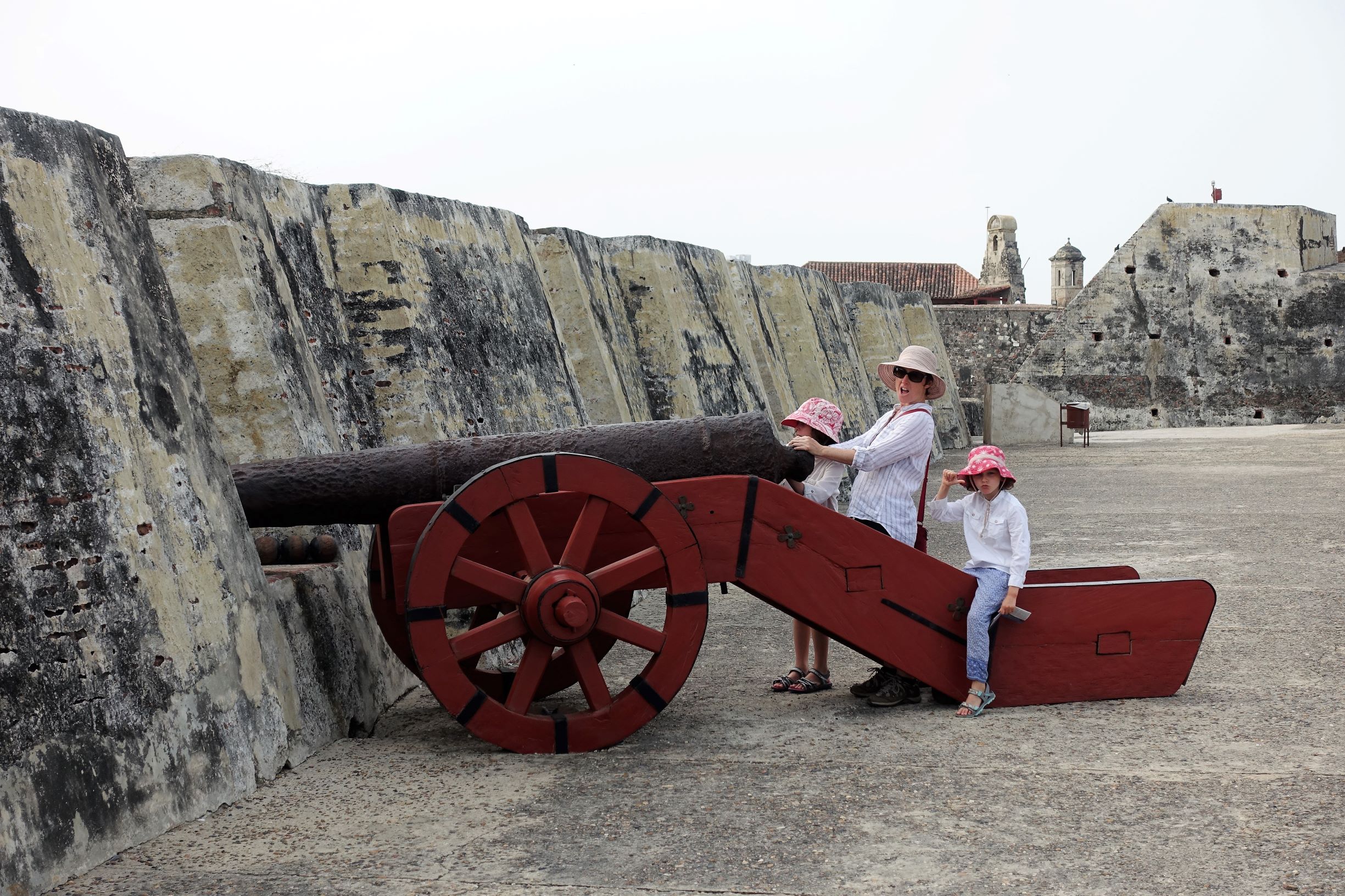
One of the first cities built by the Spanish in their conquest of South America, Cartagena was the port through which they shipped their plundered gold back to Spain, and later brought slaves in from Africa to work the colonies. The city was a rich target for Dutch, French and English pirates, such as Sir Francis Drake, and was attacked many times. The attacks prompted the building of a series of increasing fortifications, such as the thick wall around the old city, which you can walk around to this day.
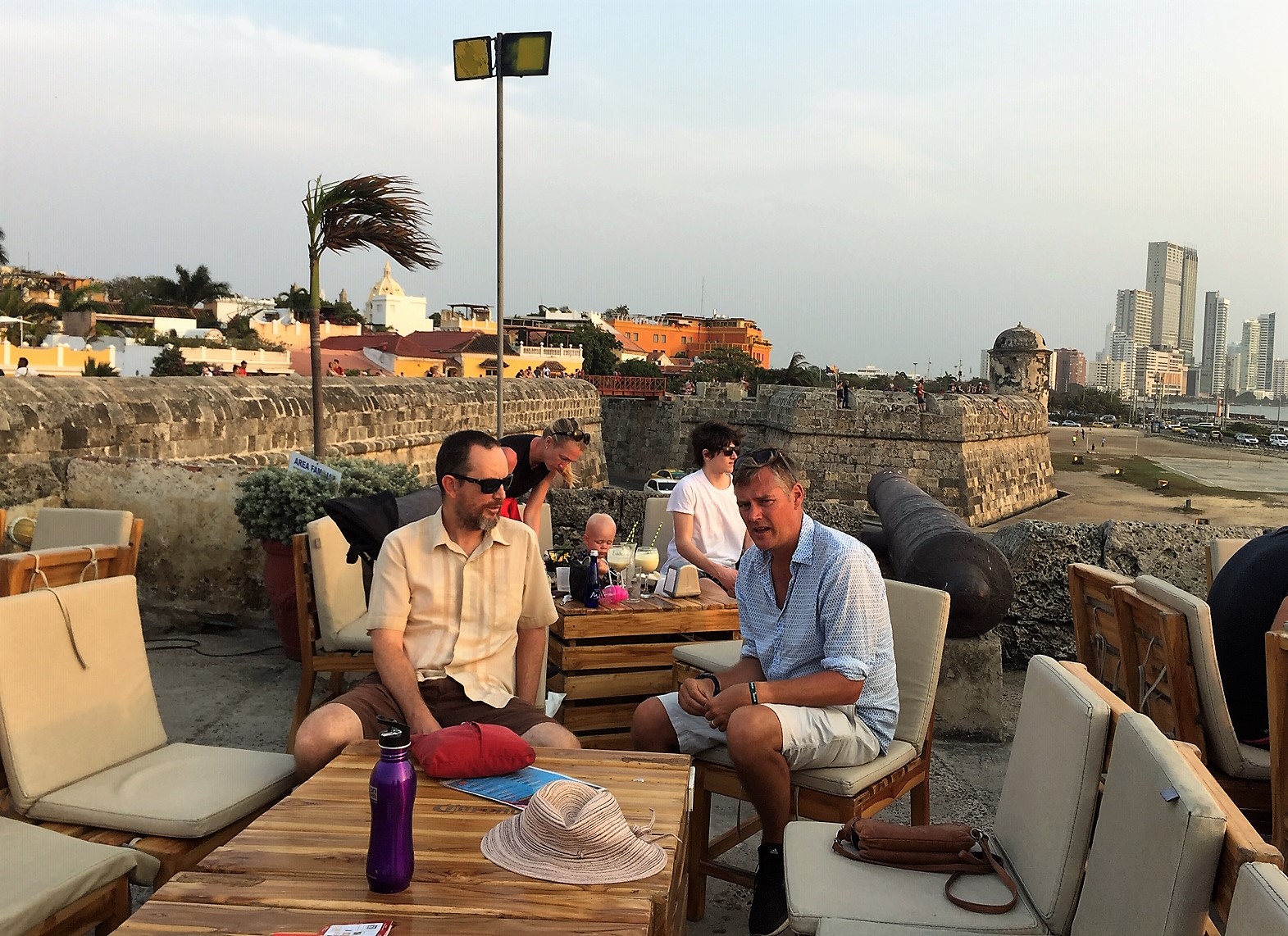
Sunset is party time at Cafe del Mar, at one of the thickest points of the city wall.
Nearby strategic fortifications, including the Castillo San Felipe de Barajas, eventually became so impressive and effective that the Spanish enemies decided to turn their attention elsewhere!
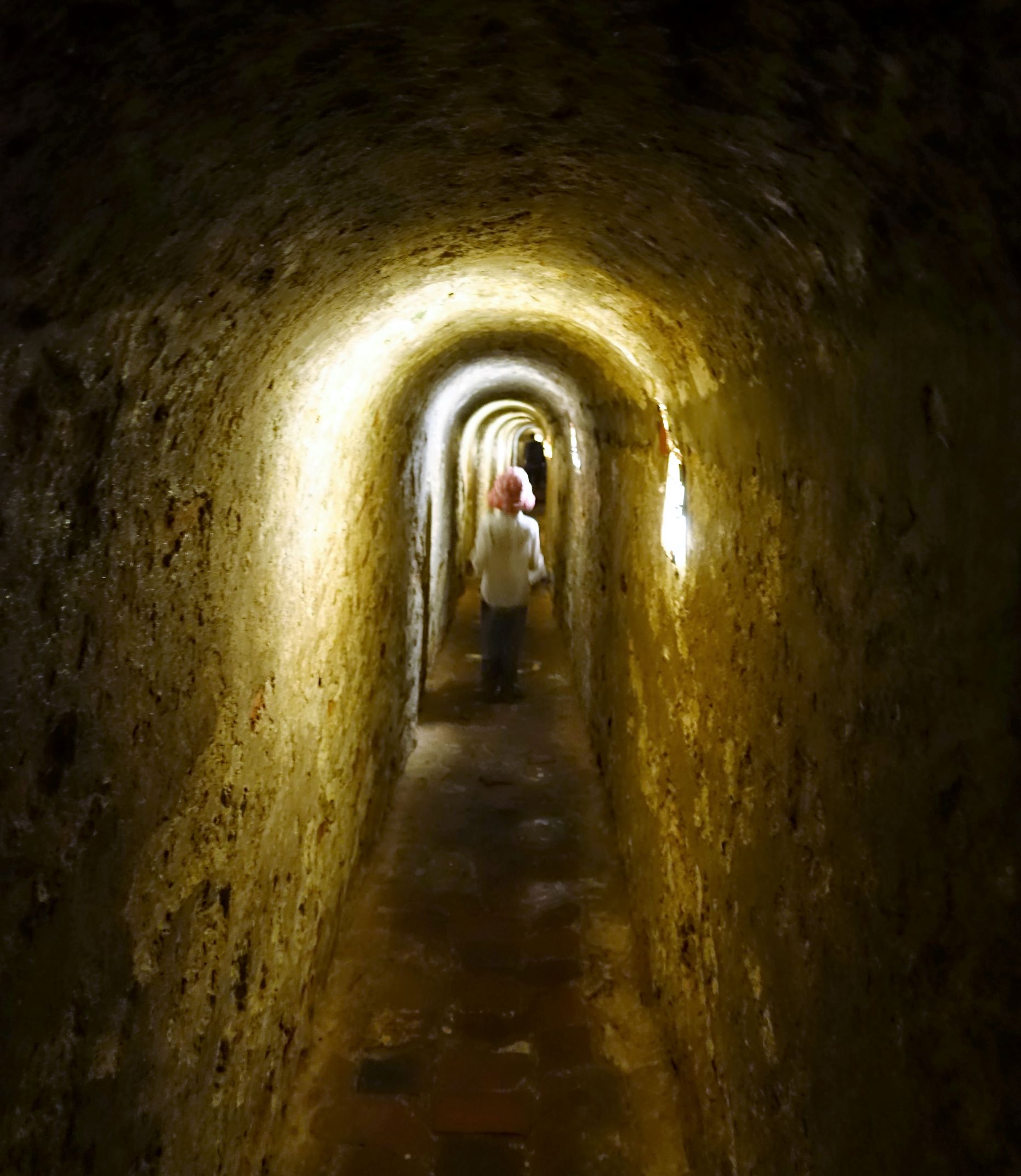
The Castillo is riddled with tunnels that defenders could access to blow up their enemies up above.
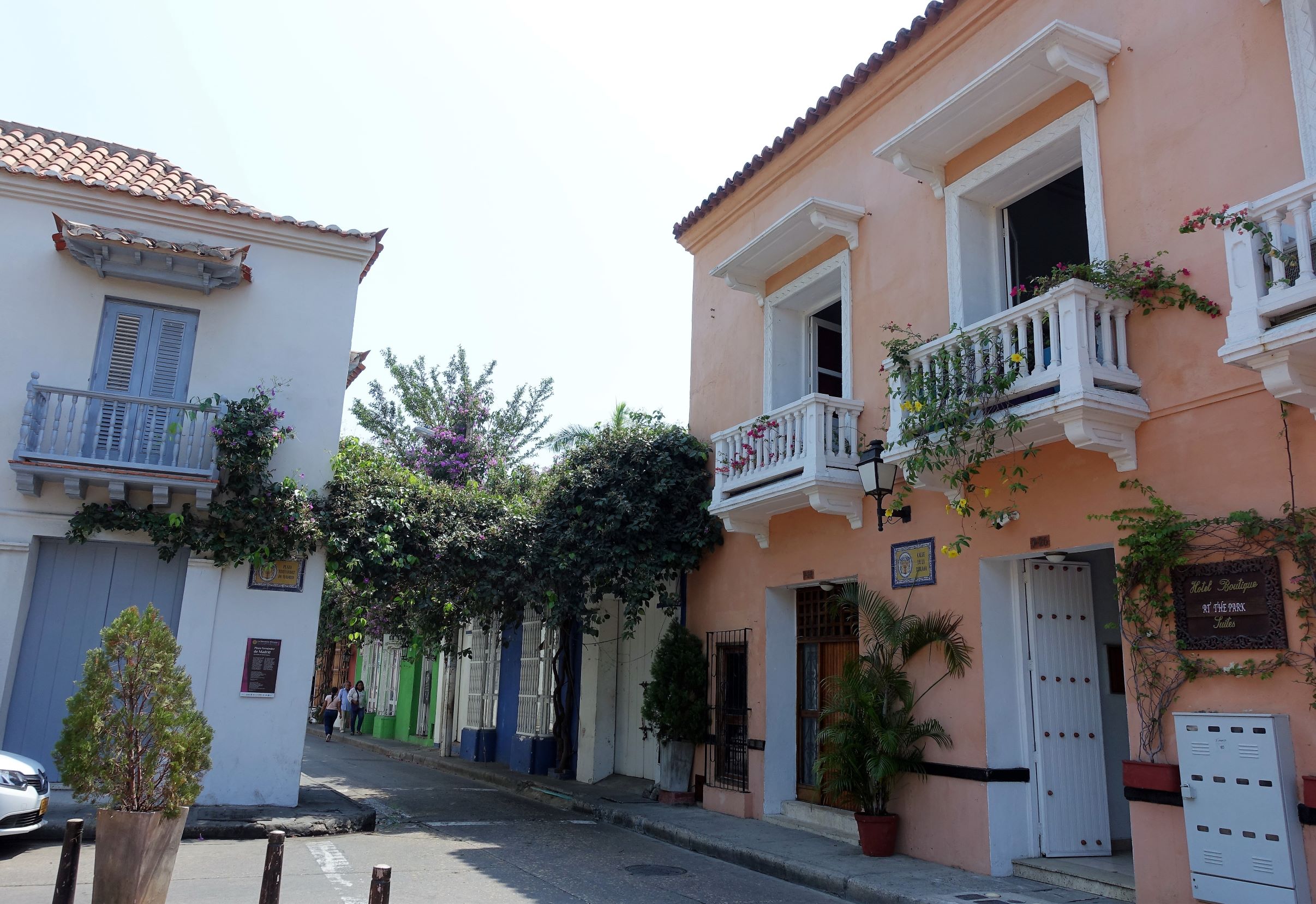
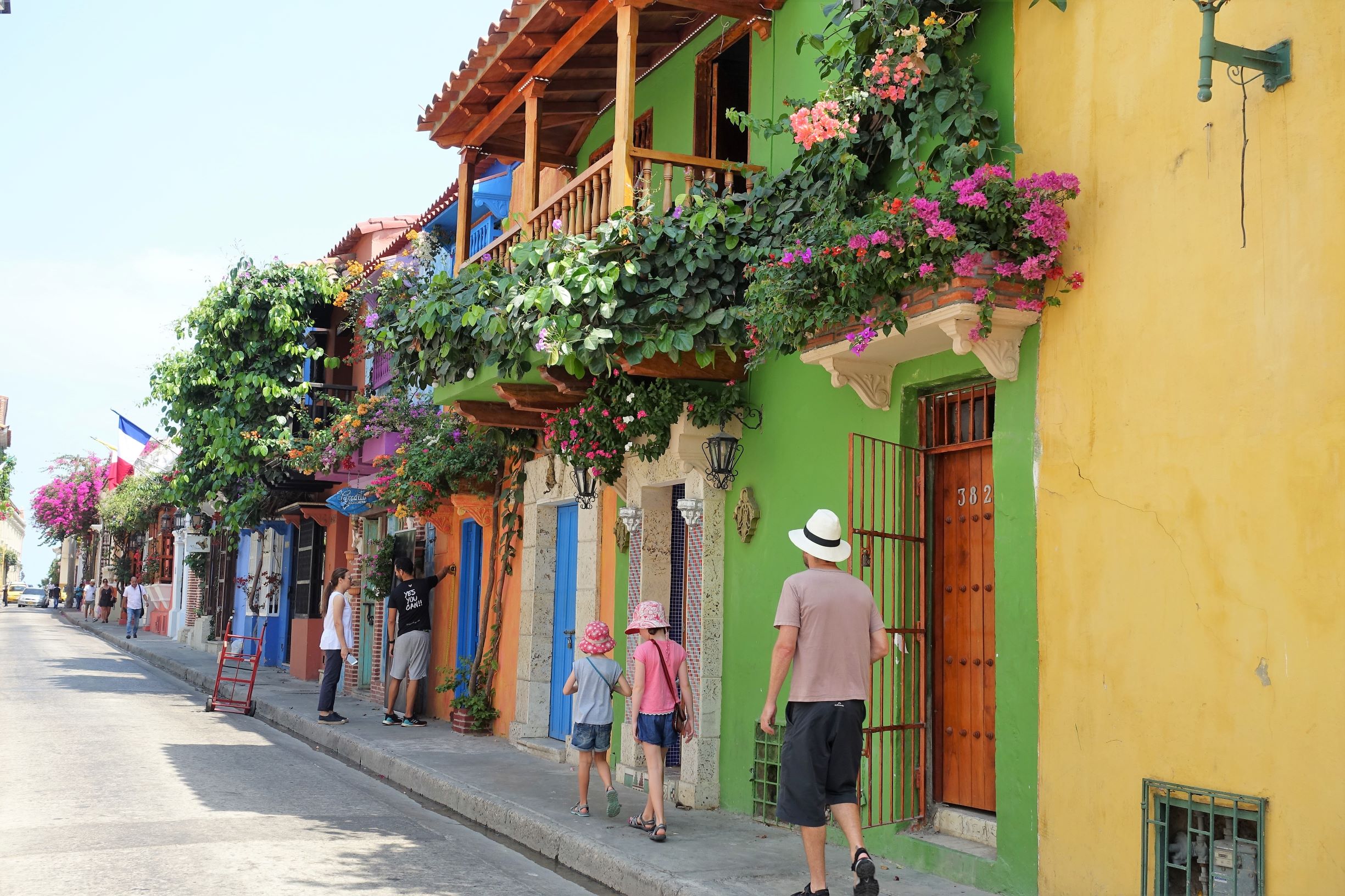
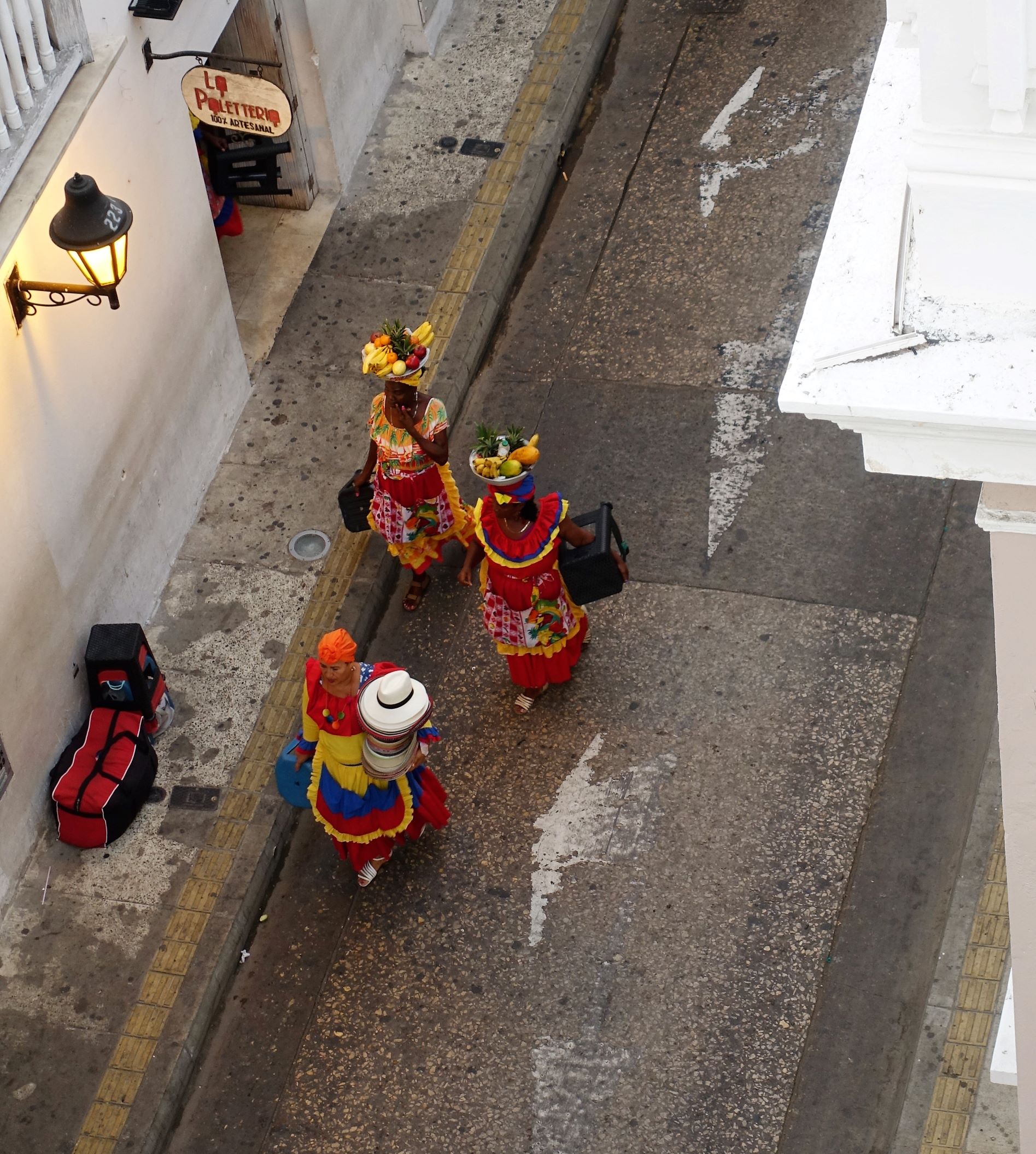
Cartagena also enchanted us with its beauty and the carnival-type atmosphere in the old city.
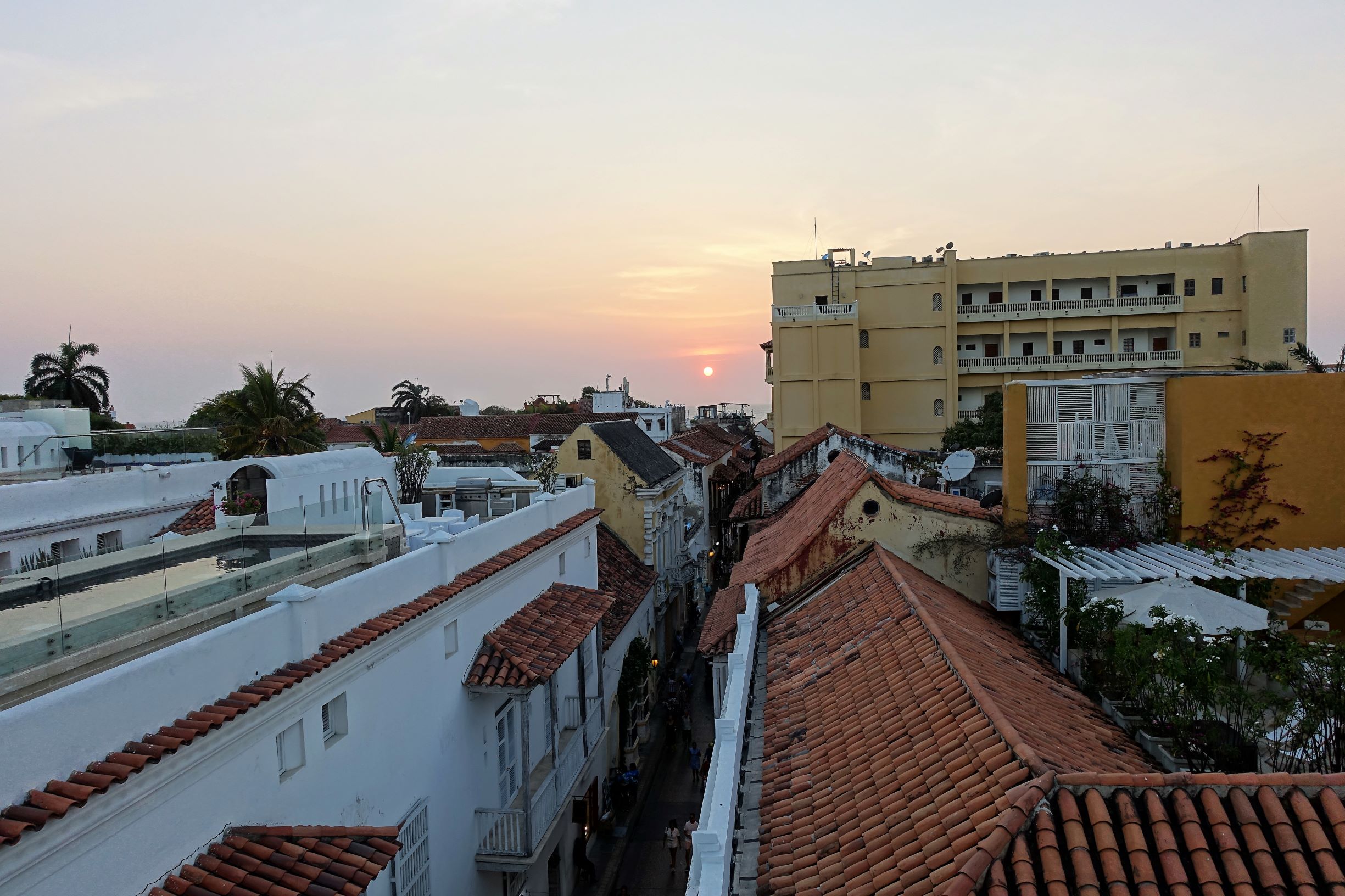
We were lucky to stay in a comfortable apartment in one of the beautiful fancy buildings in the centre of the old city. Right in the middle of the action, we could watch the happenings on the streets from our balcony or the rooftop terrace.
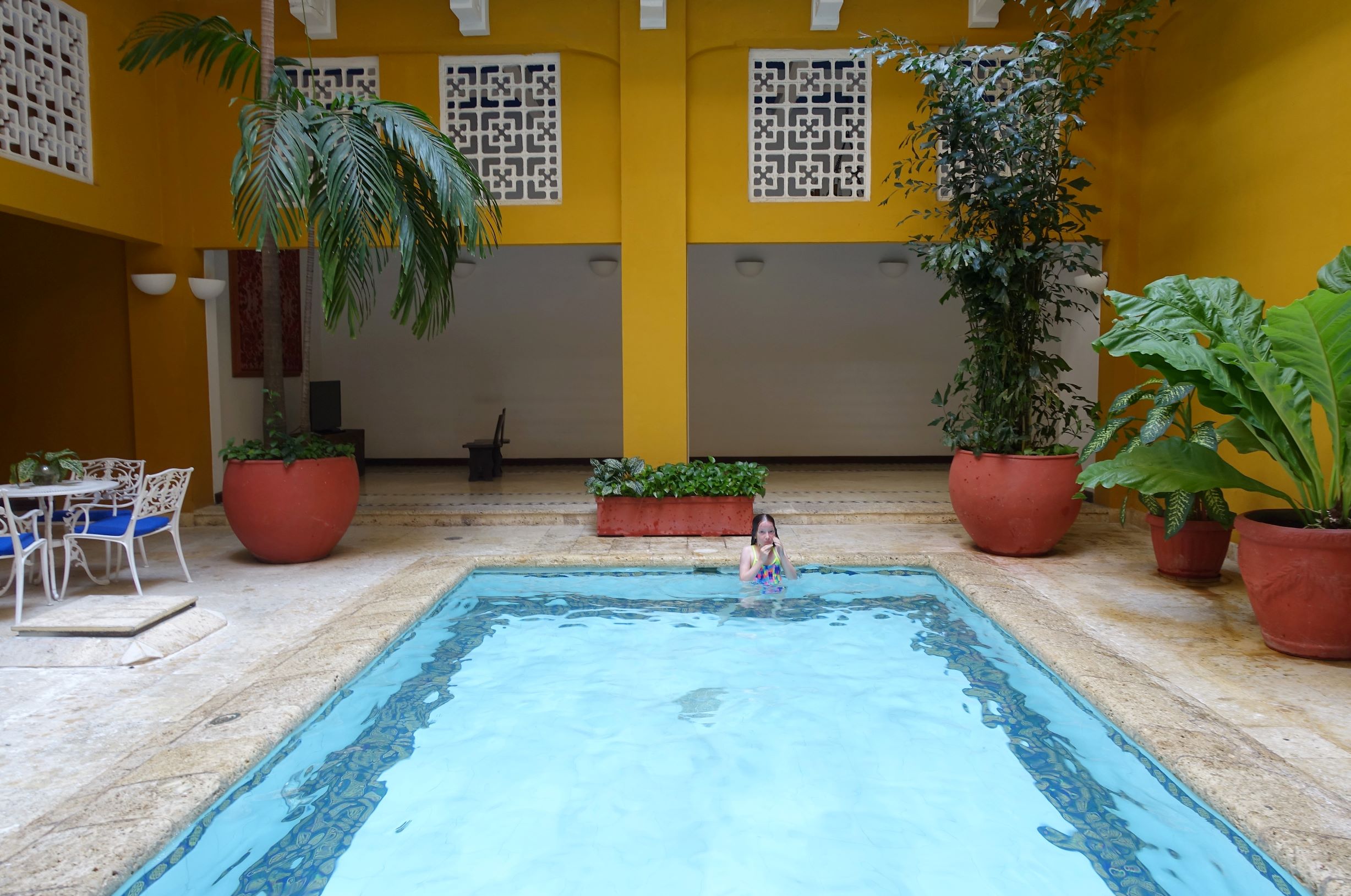
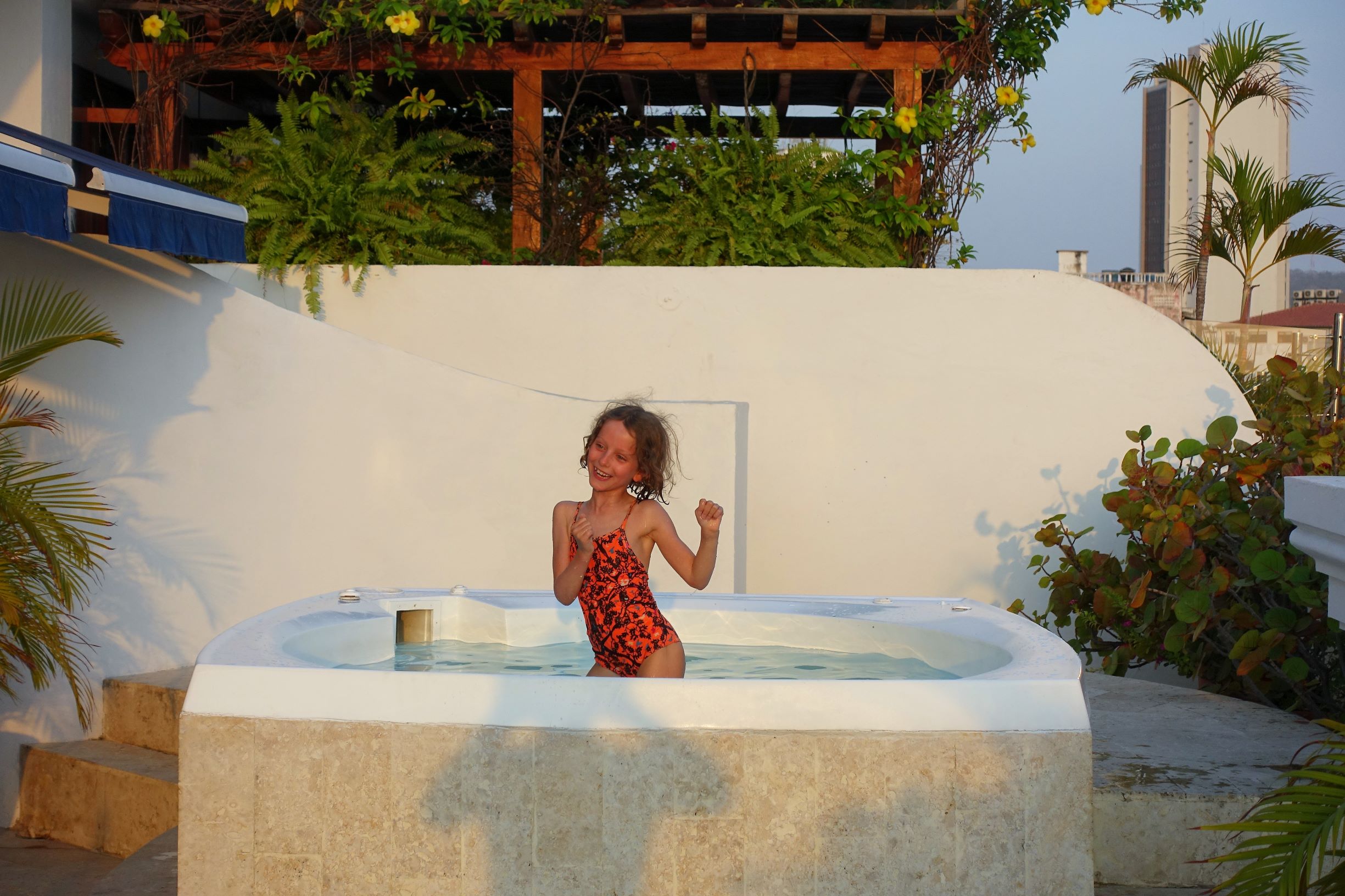
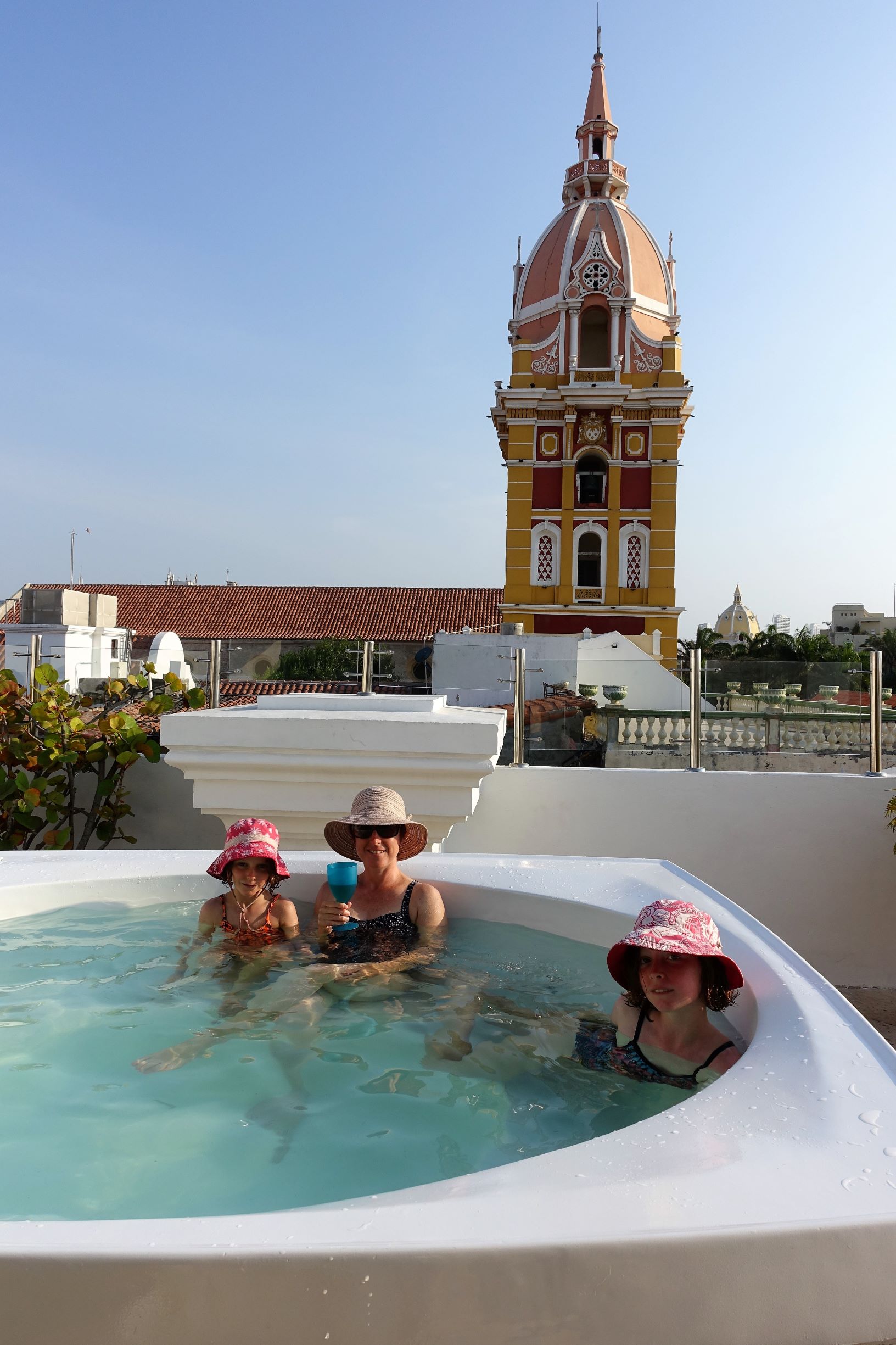
Sunset view from the terrace.Courtyard poolParty time on the terrace!
Of all the people endeavouring to part you from your money, my personal favourite were the rappers – a small group young guys who would hang out around our intersection and accost passers-by with tailored raps delivered at high speed. If you let it happen, once the first guy reached the end of his sequence another would step in seamlessly with the next verse. We found it hilarious to watch them bail up their victims, and if necessary accompanying them along the street, without missing a word. They mainly targeted middle-aged white men and James had to take evasive action occasionally, such as ducking into a store, to avoid capture.
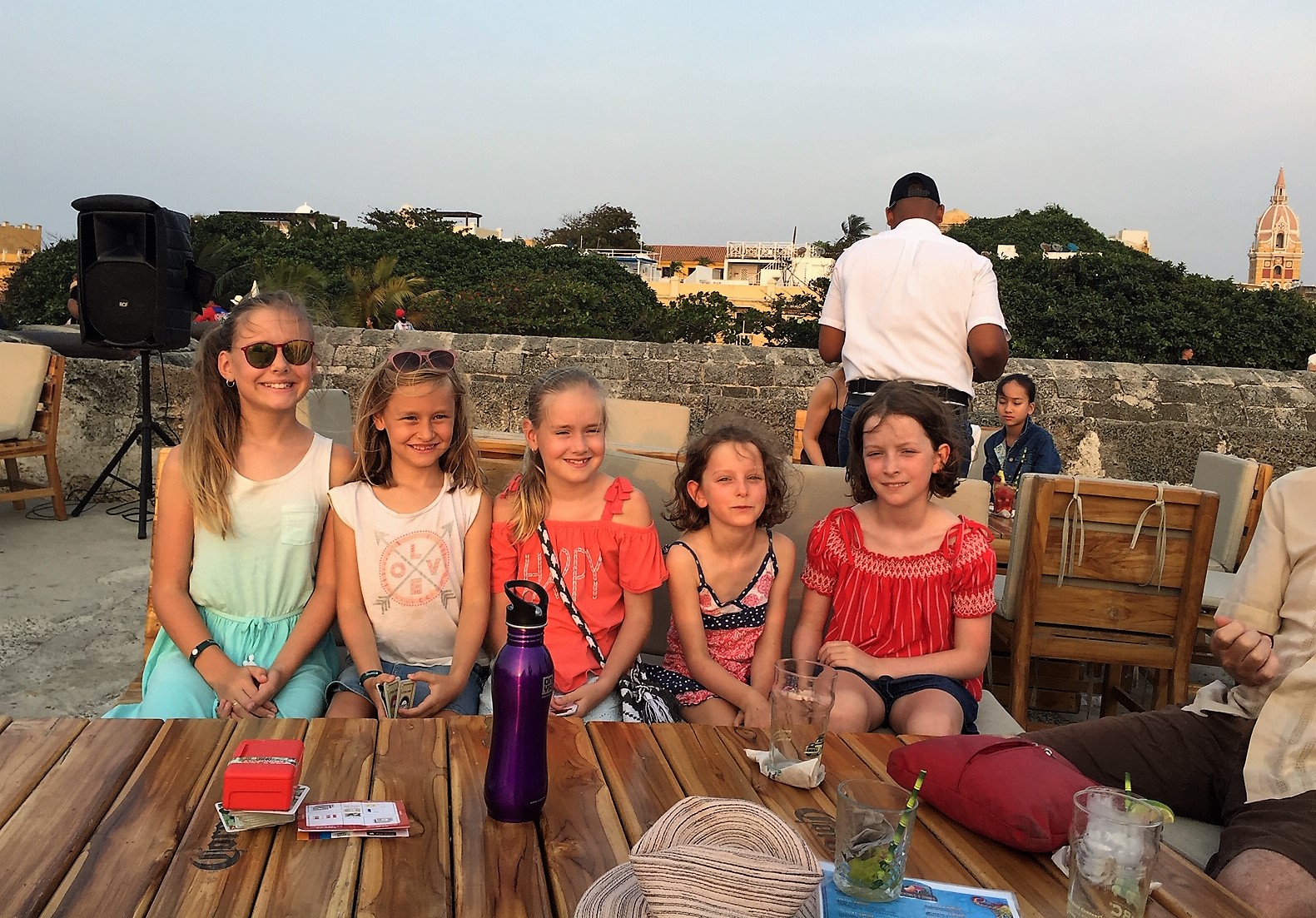
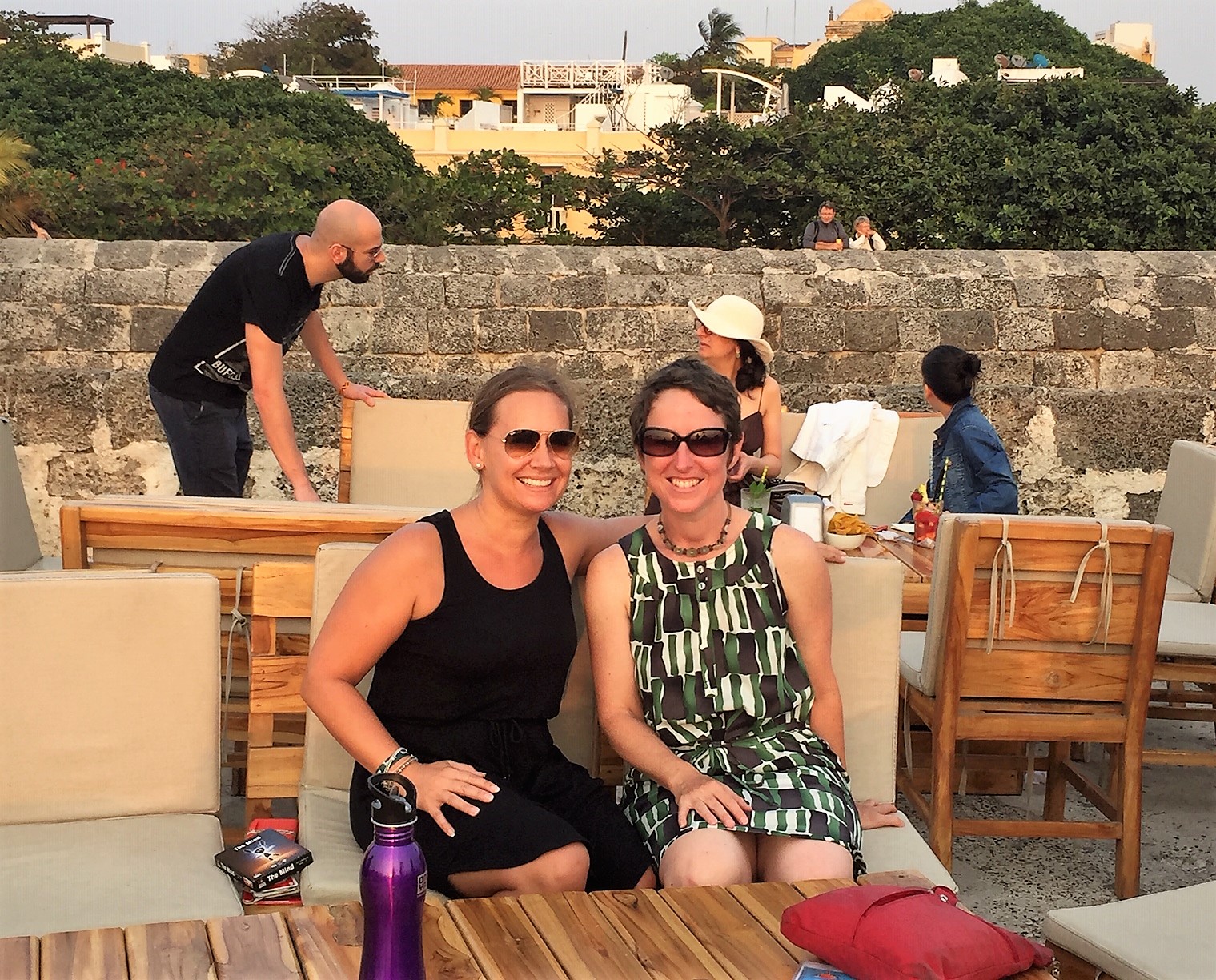
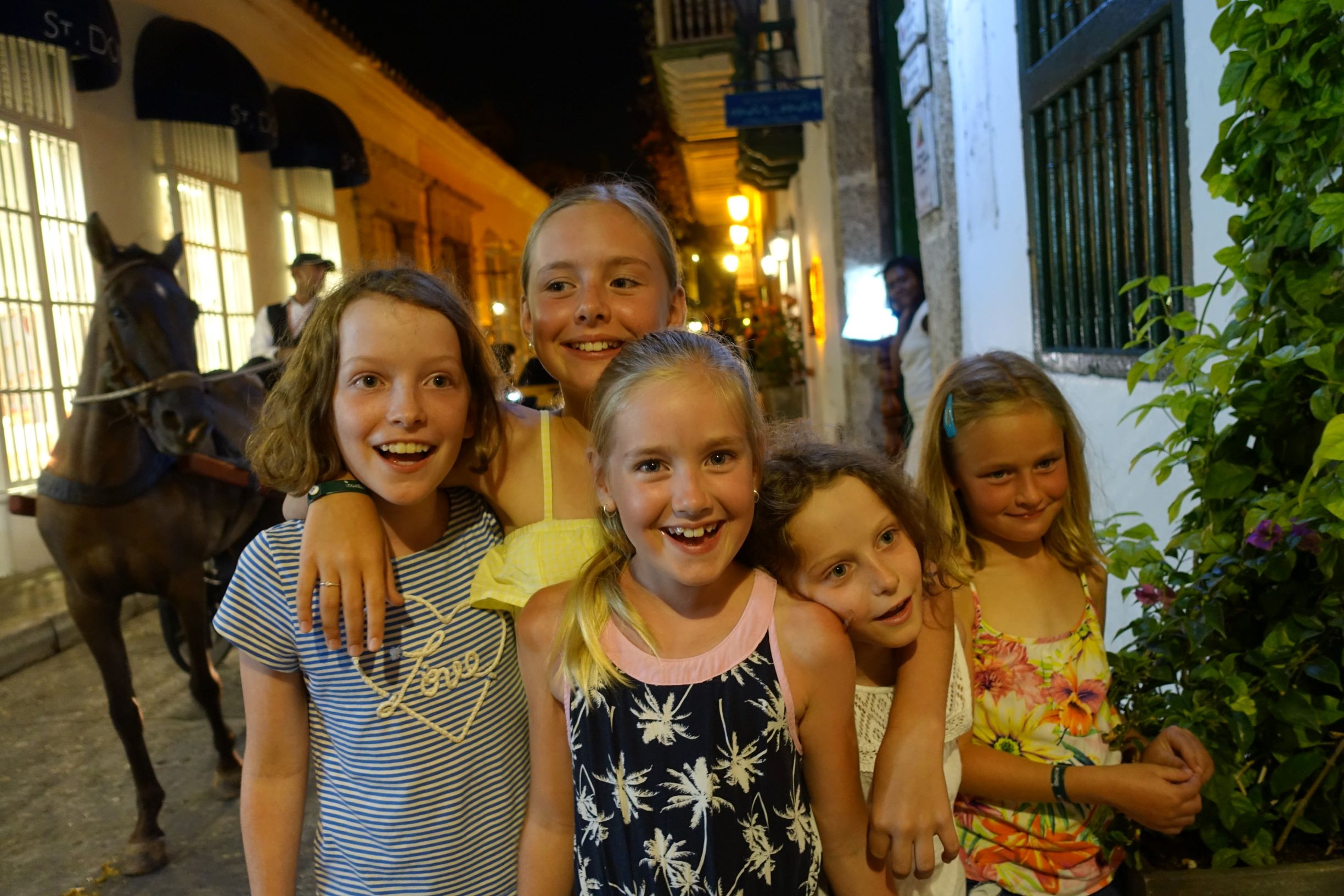
Cartagena ranks high in our estimation, partly because we met up with some new friends there – Marina and Will and their three girls, Maddie, Anabelle and Natalie. The girls were thrilled to have playmates of their own age, gender and nationality – who were having such similar experiences – and the adults also enjoyed the chance to compare notes on our parallel journeys and the challenges involved!
Drinks at Cafe del Mar was followed by dinner.
By the second night the girls were fast friends.
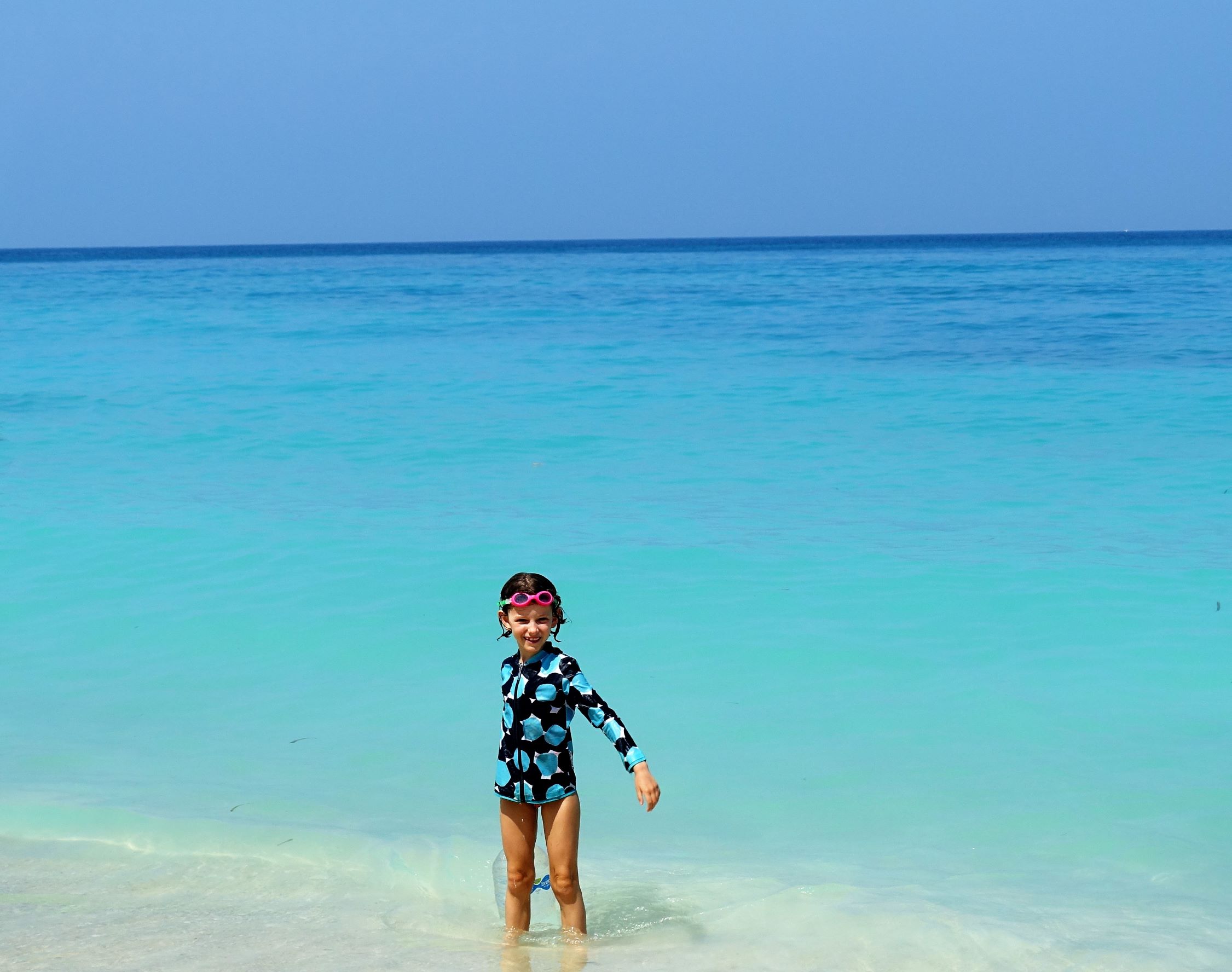
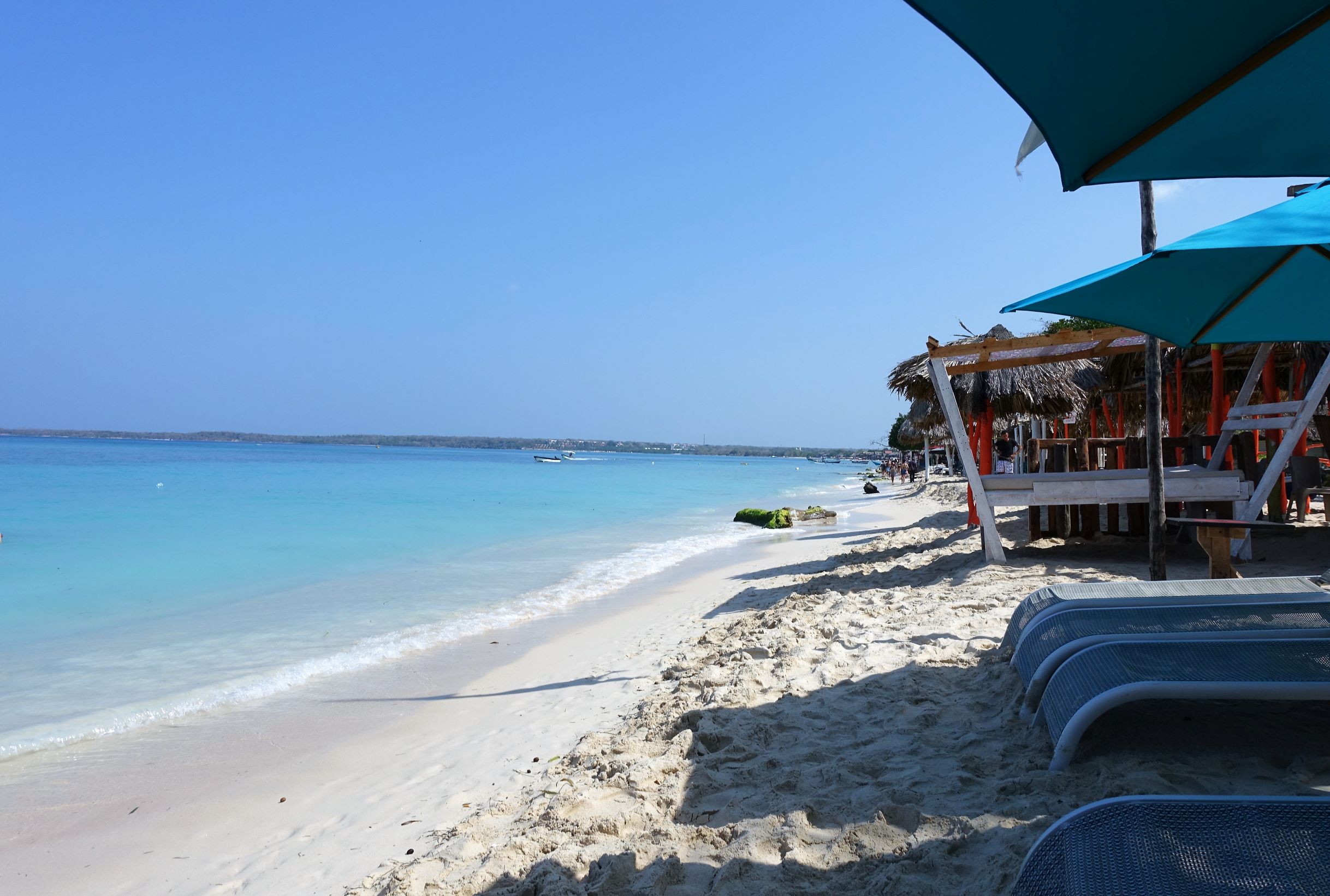
Finally, Cartagena offers opportunities to escape the hustle and bustle of the city for some R&R. A visit to beautiful Playa Blanca for our first swim in the neon-blue Caribbean couldn’t be missed!
Maille’s fishing expedition.View from our sun loungers.
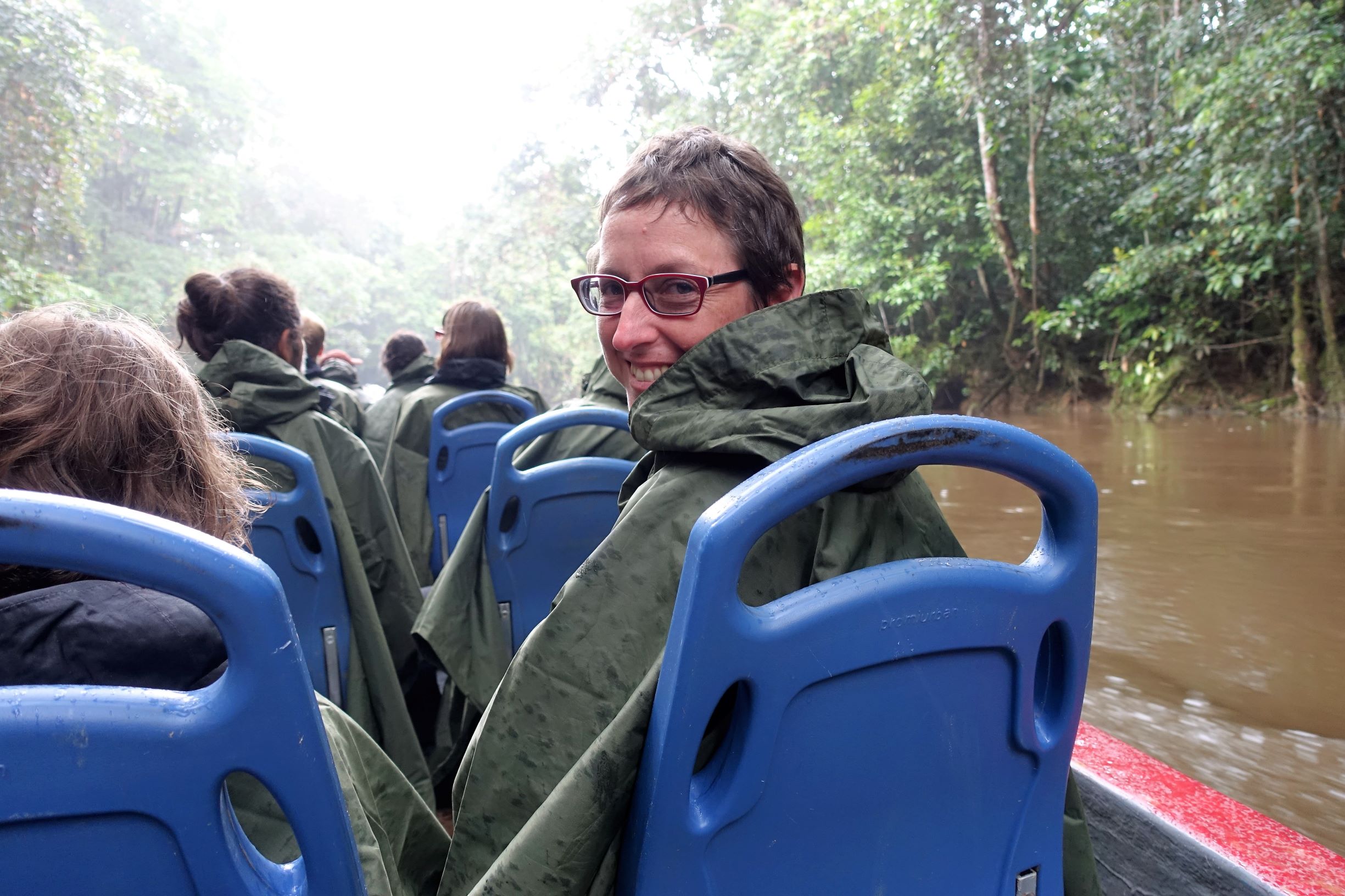
Heading off to Cuyabeno Lodge in our motorized canoe, wearing our rain ponchos, and wondering what we were getting into…
What do you think about when you hear the words Amazon rainforest? To us, before we went there, it was a jumble of words like: rivers, trees, ‘lungs of the earth’, impenetrable jungle and Tarzan vines, exotic animals like capybaras, toucans and pink dolphins, medicinal plants and indigenous tribes living in blissful ignorance of the rest of the world…
But we also thought about dangerous (or at least scary) animals like tarantulas, snakes, mosquitoes, caiman and piranhas, heat, damp and discomfort, deforestation and destruction from land clearing and mining…
And then we thought about how the Amazon rainforest provides 20% of the world’s oxygen, is an enormous carbon sink, and how a 3 degree rise in global temperatures is likely to destroy three-quarters of this amazing, life sustaining place. And we thought maybe we’d better see it while we still can.
We almost changed our mind on discovering how expensive the lodges are and that in some places spotting the wildlife has become more difficult and you might not get to see much. But then I heard about Cuyabeno: a reserve close to the Andes that is rich in wildlife and where the lodges are comparatively accessible and affordable.
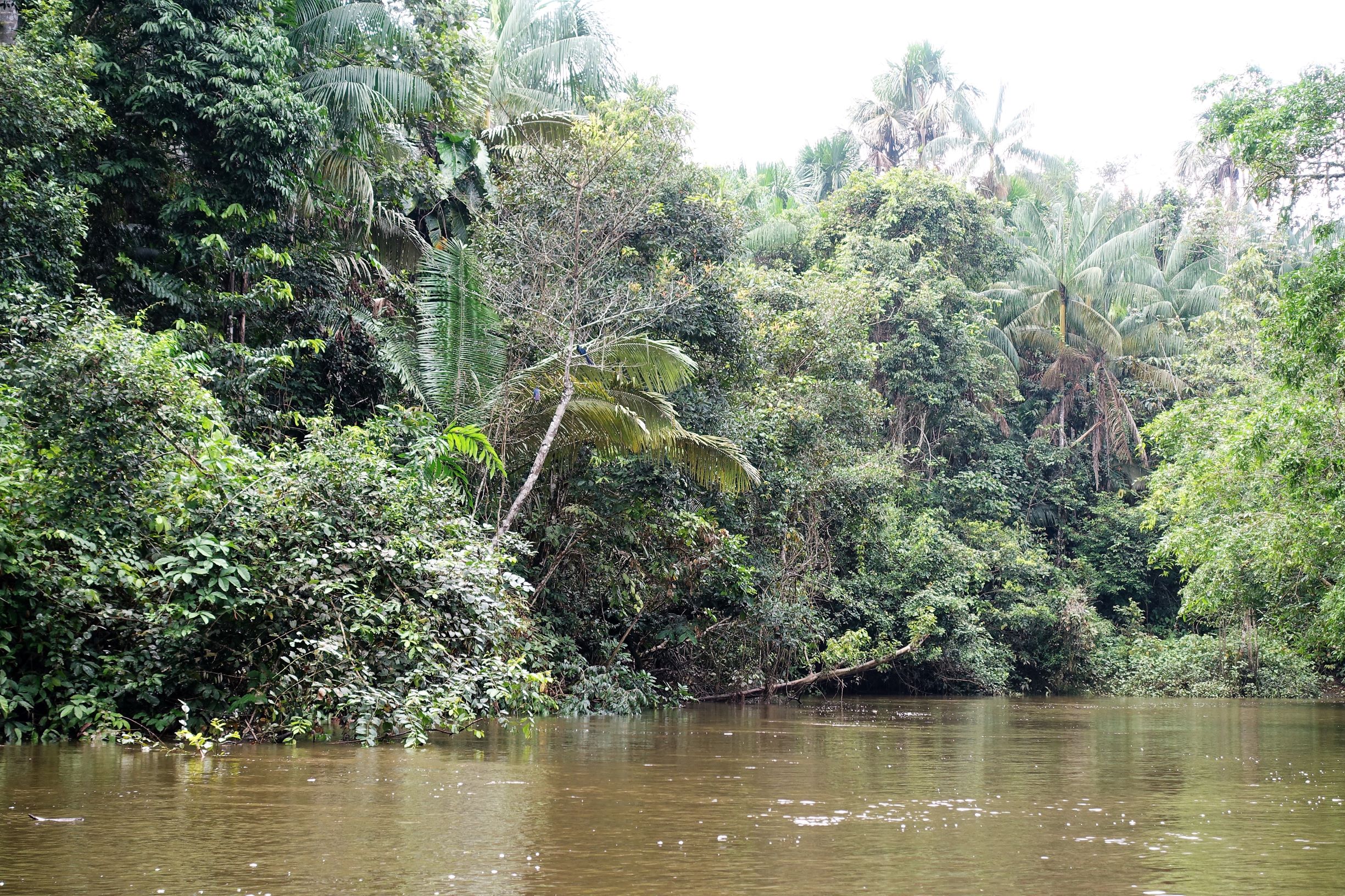
Approaching Cuyabeno Lodge, our home for 3 nights. Access to this island lodge is via a 2-hour canoe ride downriver from the nearest road.
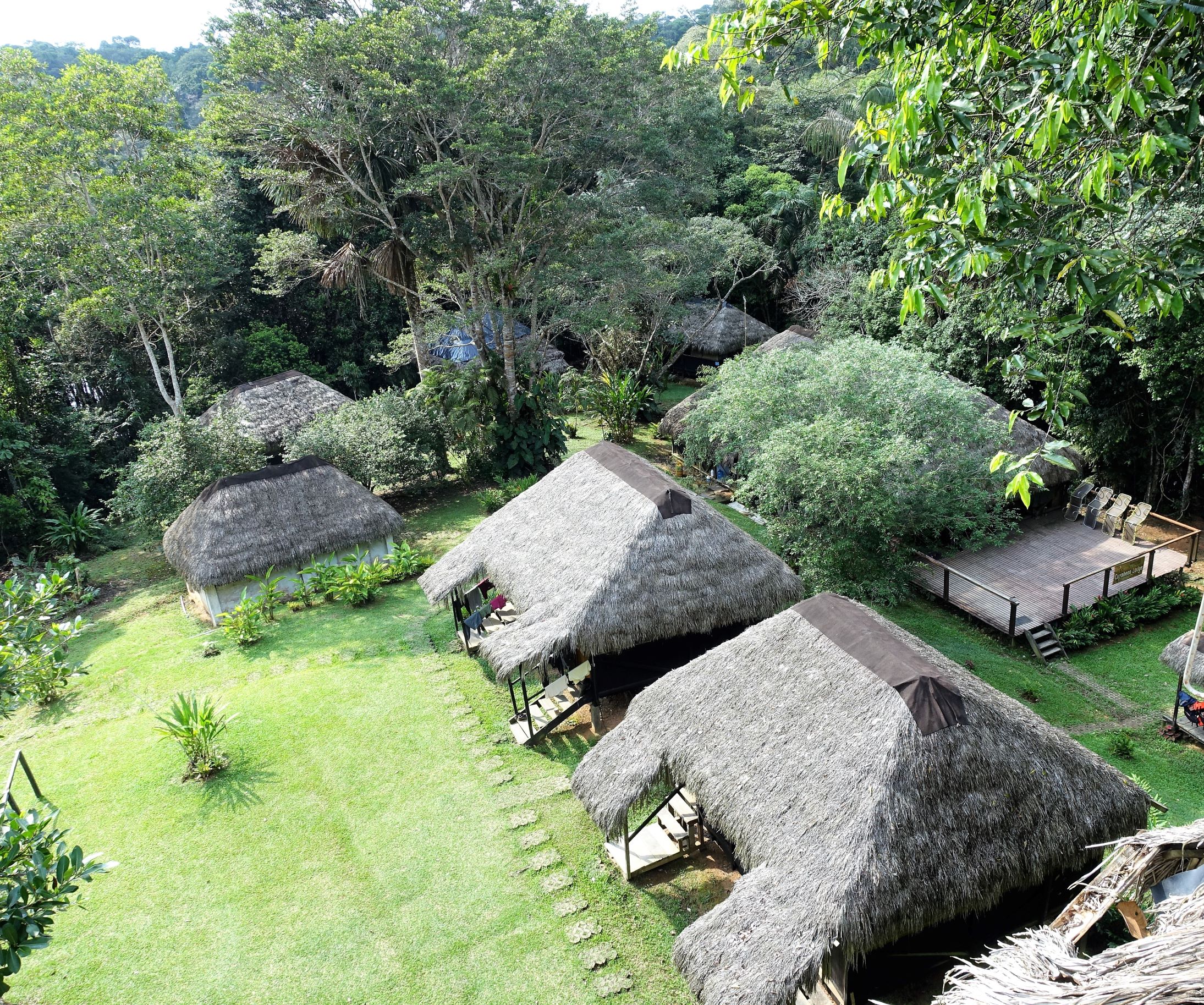
Cuyabeno lodge is one of only two lodges perched in prime position right on the edge of Laguna Grande. It consists of a number of thatched huts in a garden on a small hill, surrounded by jungle and water. The standard huts (where we stayed) are fairly basic but do have some screens, private bathrooms with flushing toilets and hot water, mosquito nets on the beds and low-voltage electricity – to be used sparingly as it’s solar powered. There is no air conditioning, wifi or fans and small animals can and will invade the huts from time to time. There is a separate hut where you can lounge in hammocks and charge your devices during the day. The restaurant hut is where everyone meets for (delicious) meals and hangs out when it rains hard. It’s open to the elements and the sides can get a bit damp, but you can sit and chat or play games and watch troops of monkeys passing through during the day and fireflies flitting between the trees at night.
Cuyabeno Lodge from the top of the viewing tower.
Somewhat to our surprise, the heat and damp turned out to be tolerable and we were both comfortable and relaxed at Cuyabeno Lodge. We spent hours reading in the hammocks or watching monkeys and other animals right outside our hut.
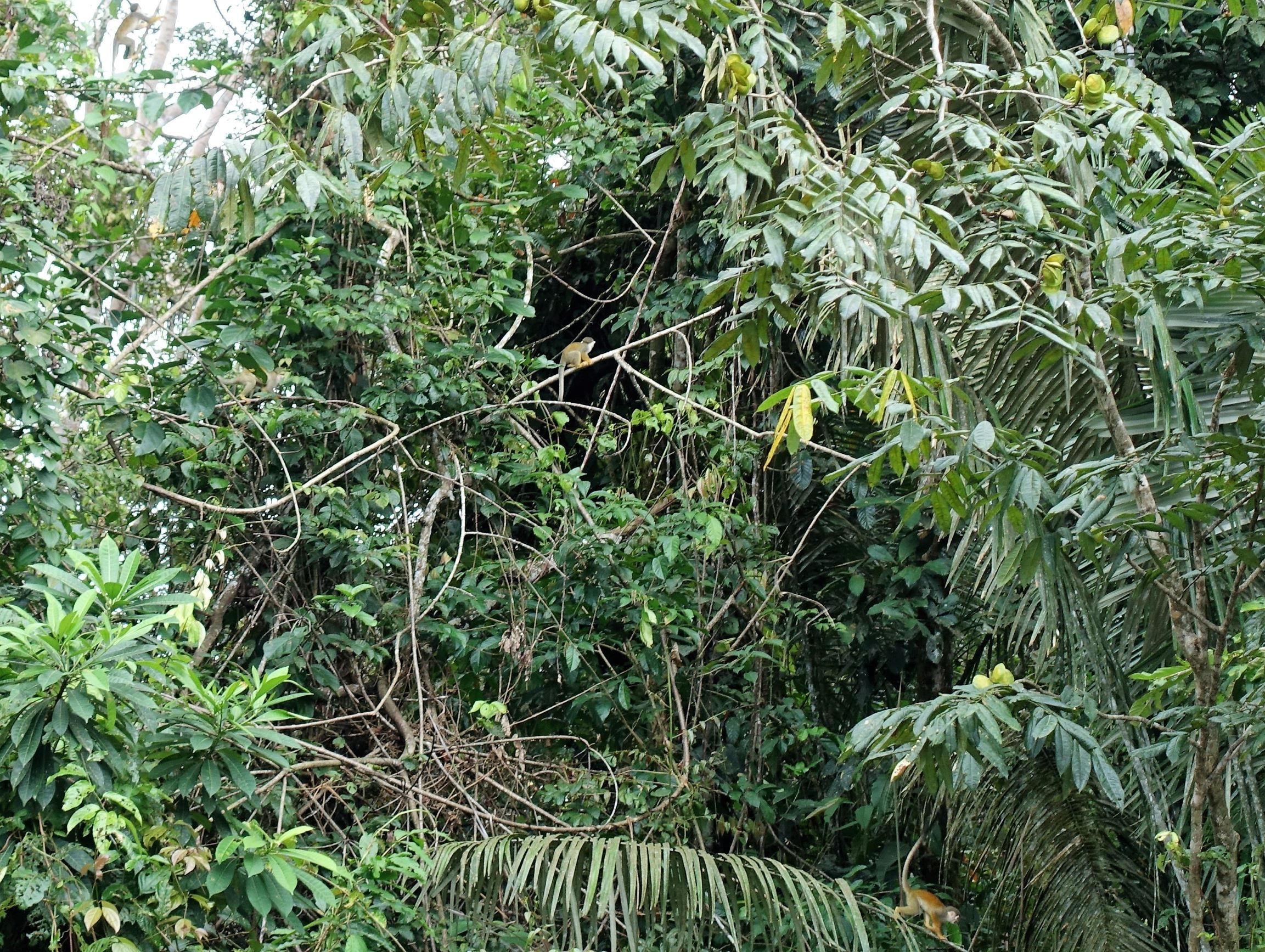
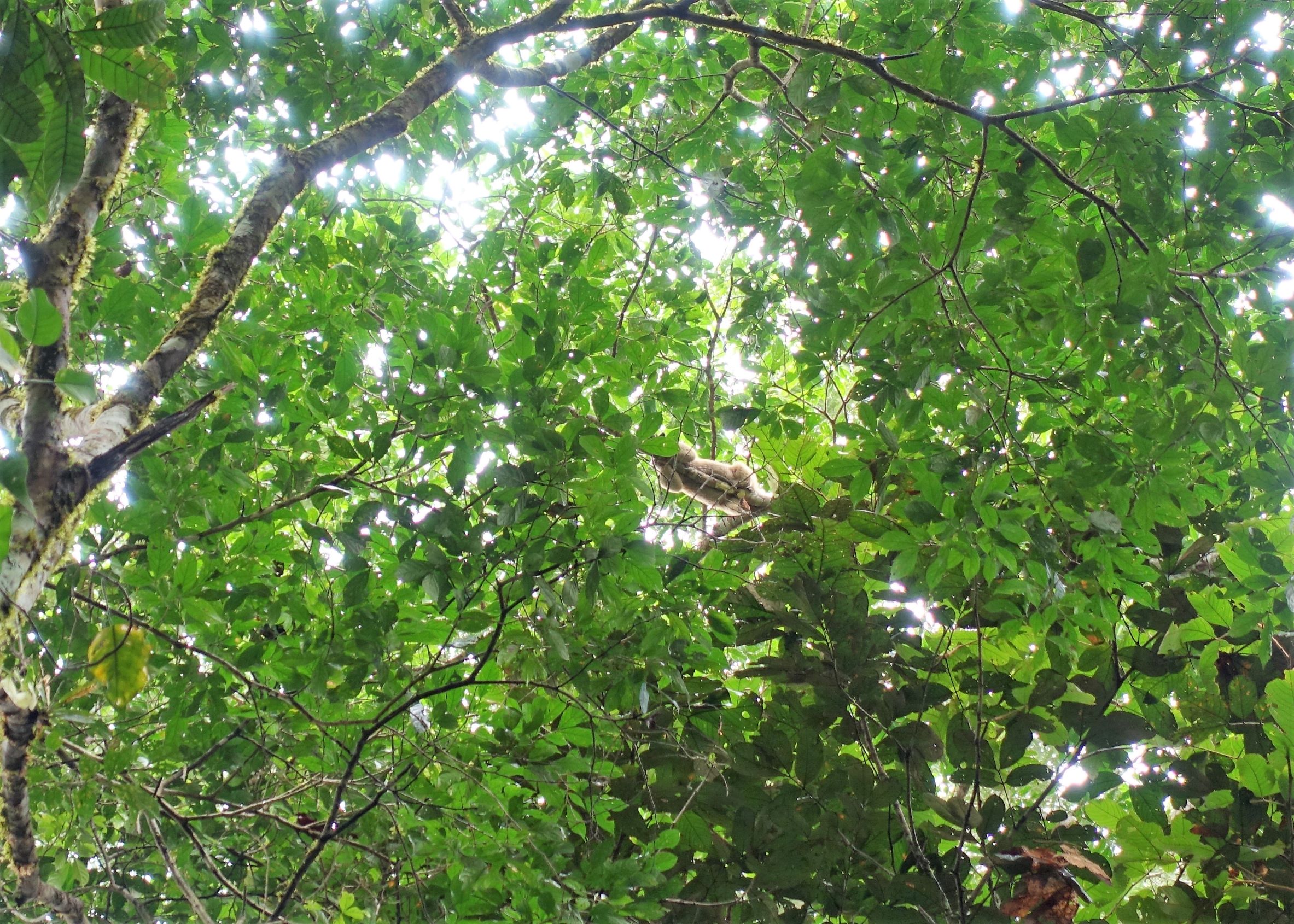
There are at least 4 squirrel monkeys in this picture. Can you see them?Watching an army of Leafcutter ants carrying their haul back to the nest.
But the rest of the time we were having adventures!
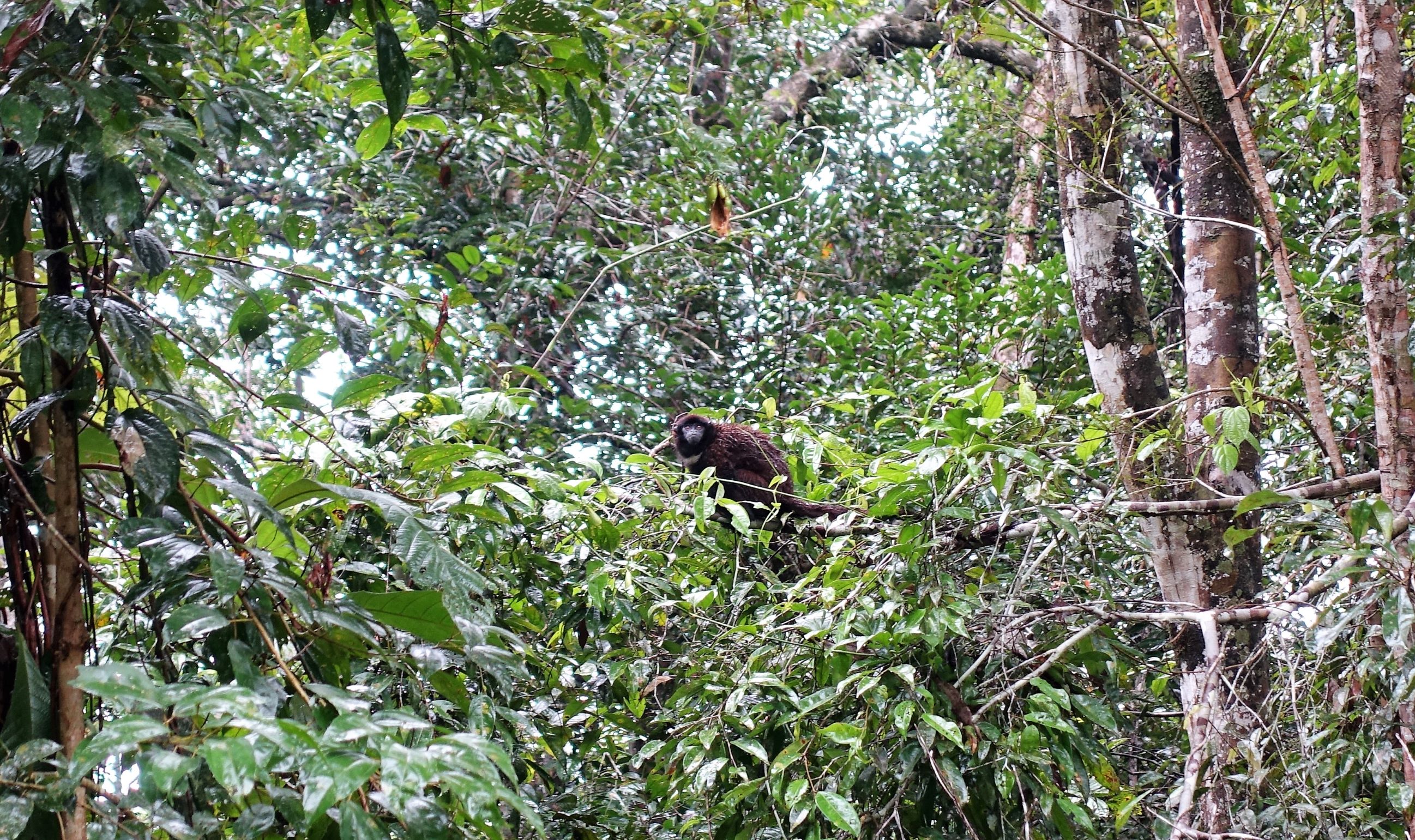
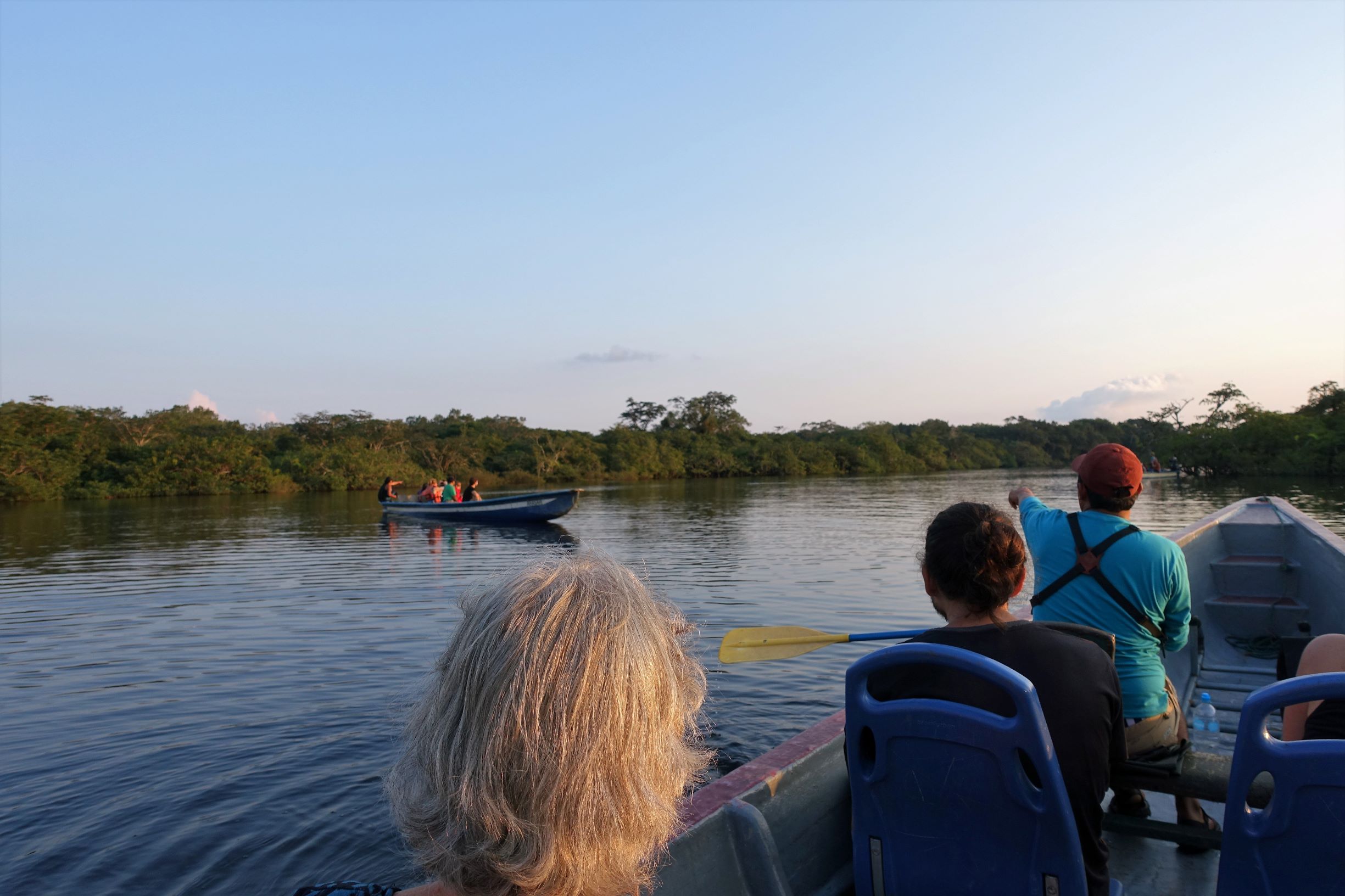
Maille: On the first day we went out on the canoe to see some monkeys. There were lots of different types of monkeys like squirrel monkeys and black monkeys. They jump and swing from tree to tree. They were funny!
Black monkey
Next we saw pink dolphins, but they weren’t pink they were
grey. They actually were the young ones but when they grow up they will be
pink. I wanted to enjoy the dolphins because they are my favourite animals, but
I needed to pee!
Our guide William pointing out a dolphin. They were quick!
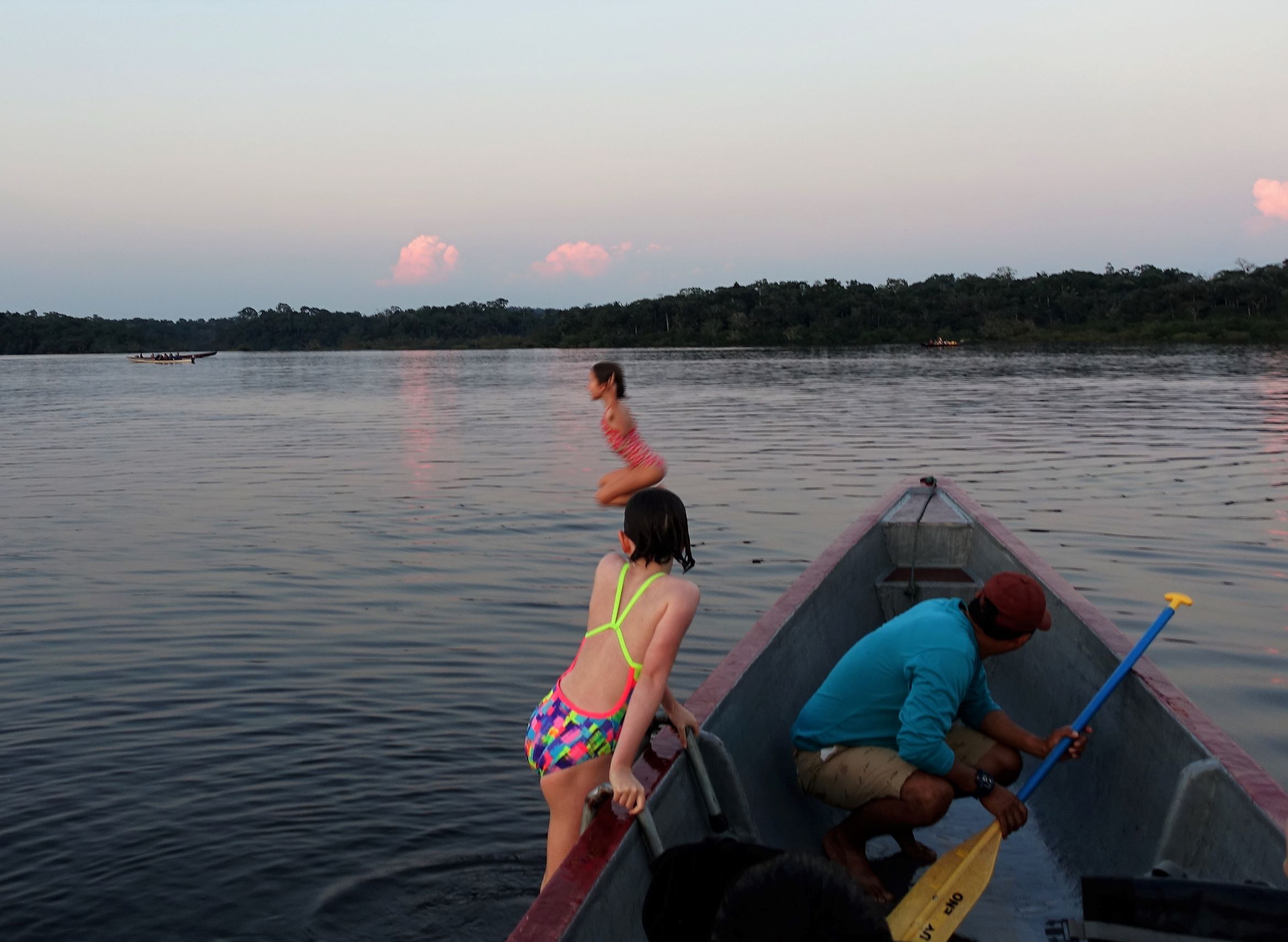
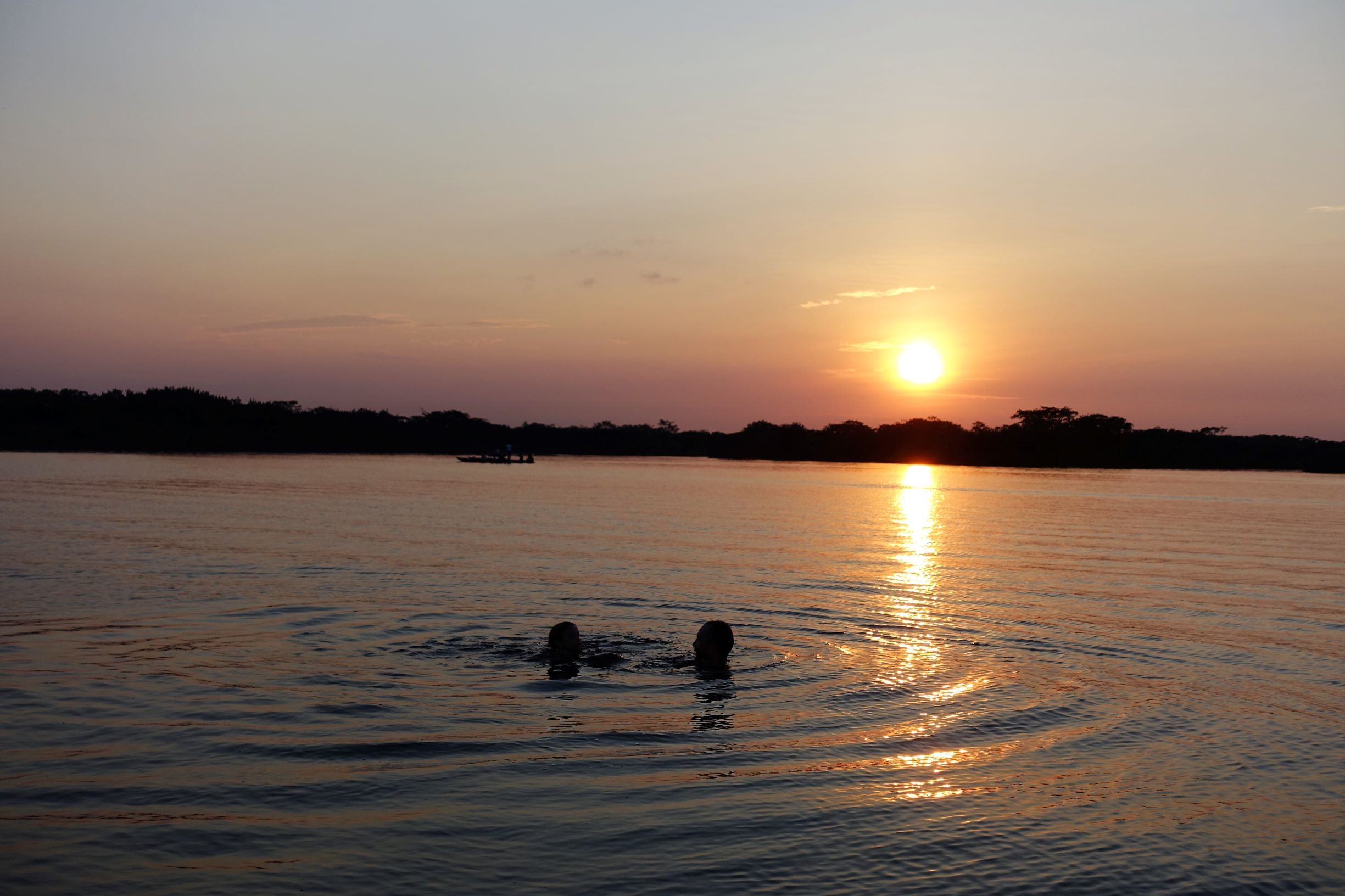
Then we went swimming in the middle of the lake (TIP: go swimming in the middle of the lake to avoid caiman and piranhas.) We dived off the boat! The water was nice and cool plus it was sunset. I felt so happy!
Eliane: HOW TO SURVIVE HIKING IN THE AMAZON JUNGLE
Don’t touch anything
Watch where you are stepping
Follow the guide
Our guide William told us these rules on our first hike. It was
through tierra firma rainforest and swamp. We walked for three hours, always on
the lookout for interesting animals and plants – and we definitely found some.
The coolest plant had sap that you could use for candles because it was soft
like wax but smelled really nice. Other plants did things like repel insects or
were made into canoes. The most interesting animal was definitely the anteater.
We were very lucky to see it, as it’s only spotted about three times per year.
The anteater was tan coloured and quite small. It was cuddling a branch.
Sleeping anteaterThe jungle girl’s new home?
The swamp was awesome too. The mud was very deep and it
reminded us of the fire swamp in the Princess Bride, although not dangerous. It
was so deep it got up to my mum’s knees! Maille and me had to be carried
across!
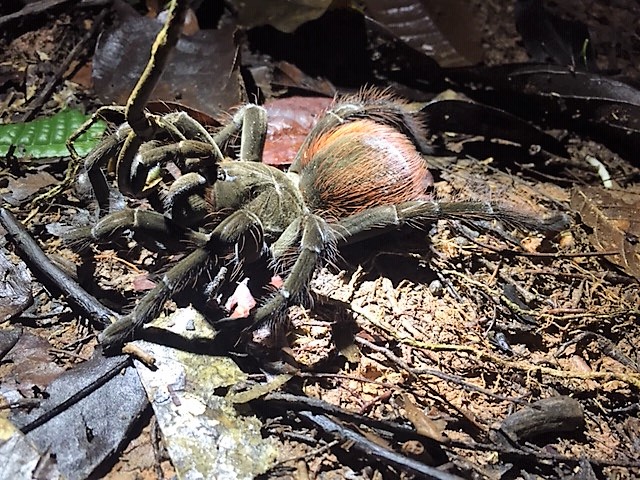
Then we did the night hike. I loved the night hike because we saw loads of amazing nocturnal creatures that you can’t see anywhere else. My favourite thing was the Tarantula. It was enormous, its bottom was almost as big as a golf ball and its legs were as thick as a pencil!
Tarantula
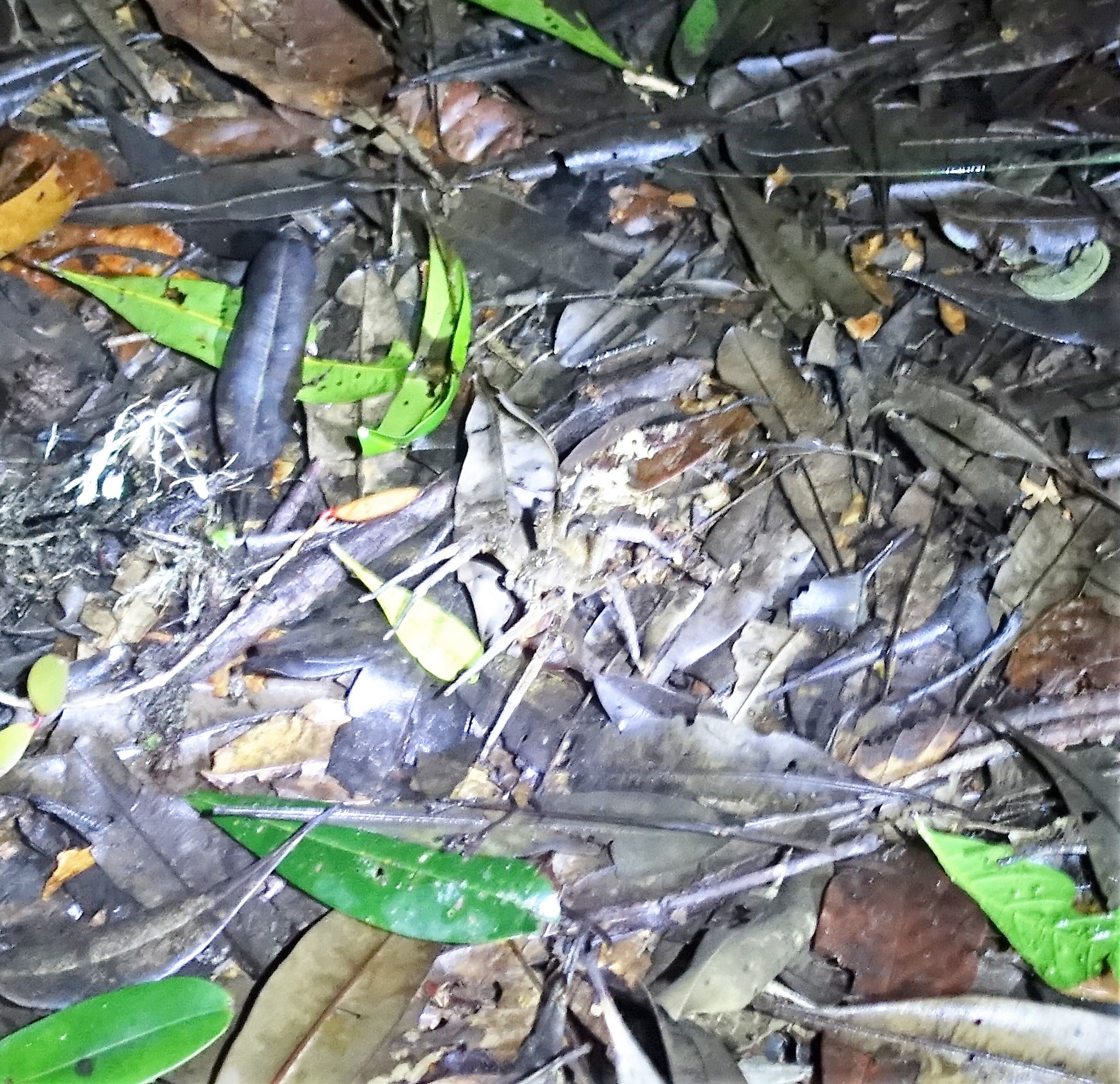
The creepiest spider was the Banana Spider. The Banana Spider got its name by turning up in shipments of bananas. It is a hunting spider like the tarantula and almost as big. It gets its prey by jumping on it and sinking its highly venomous fangs into the body and dragging it away. If you want to end up in hospital then annoying a Banana Spider is the right thing to do, because it’s the most aggressive and venomous spider in the world. Though you will not die. As long as you follow these survival rules you will have no problem at all.
Banana spider
The cutest thing we saw was the cat snake, by far. The cat snake is not venomous. Our guide took the snake off the branch and put it around a lady’s wrist. It held itself straight up in the air. I can’t describe how amazing it was. Unfortunately we didn’t get a picture.
Despite all the freaky things I just described we actually felt quite safe in the Amazon. It’s not scary because the people at Cuyabeno Lodge make you feel secure and welcome.
Sunset on the last night. It was so hard to say good-bye to all this beauty.
Those of you who know me well will know my fascination with history and old (i.e. historical) buildings. In fact, the itinerary and accommodations on this journey are heavily weighted towards the old, over the new. This is a growing source of annoyance to Maille, who much prefers modern architecture, and has started to ask suspiciously whether the next place we stay at will be ‘old or new?’
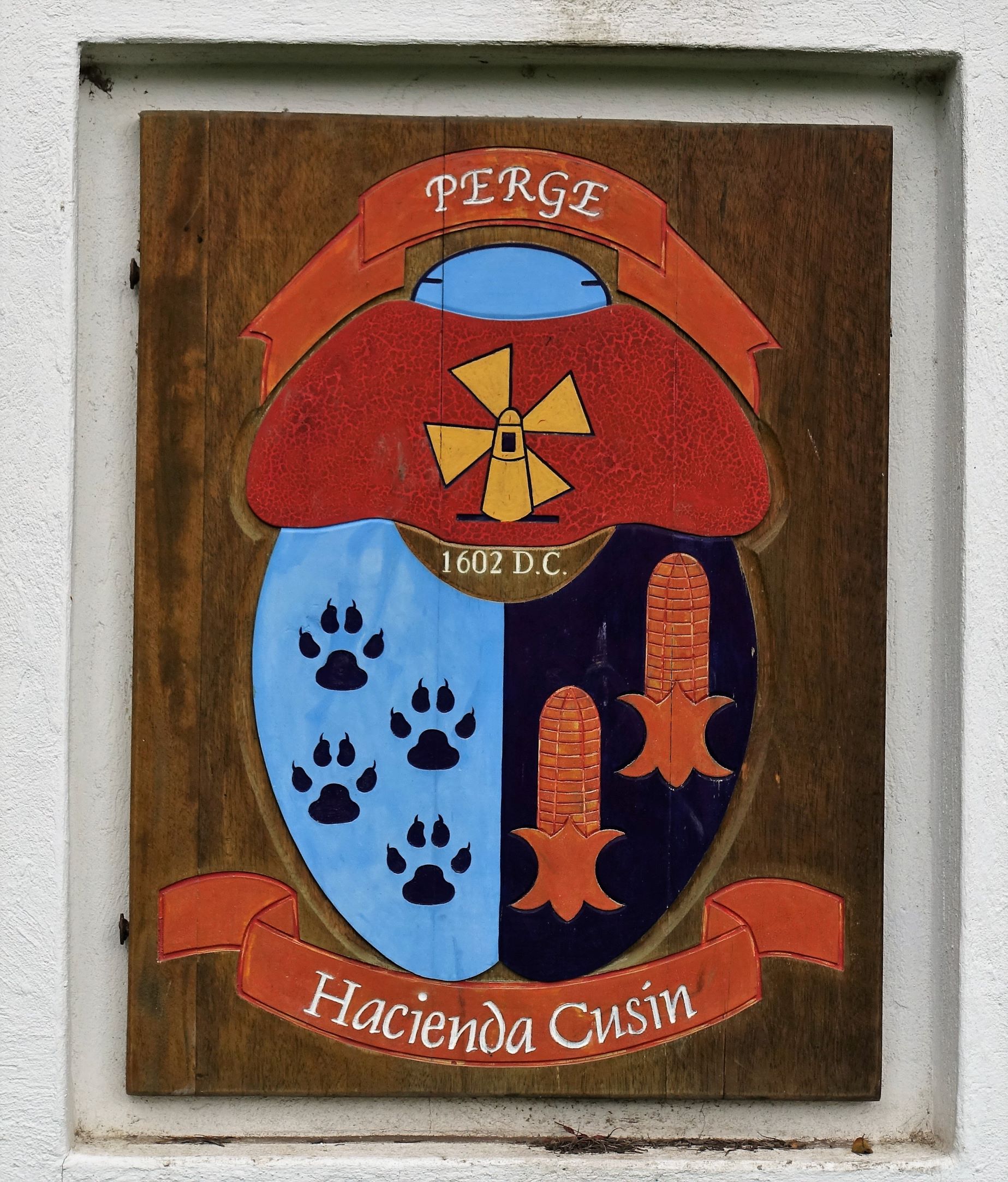
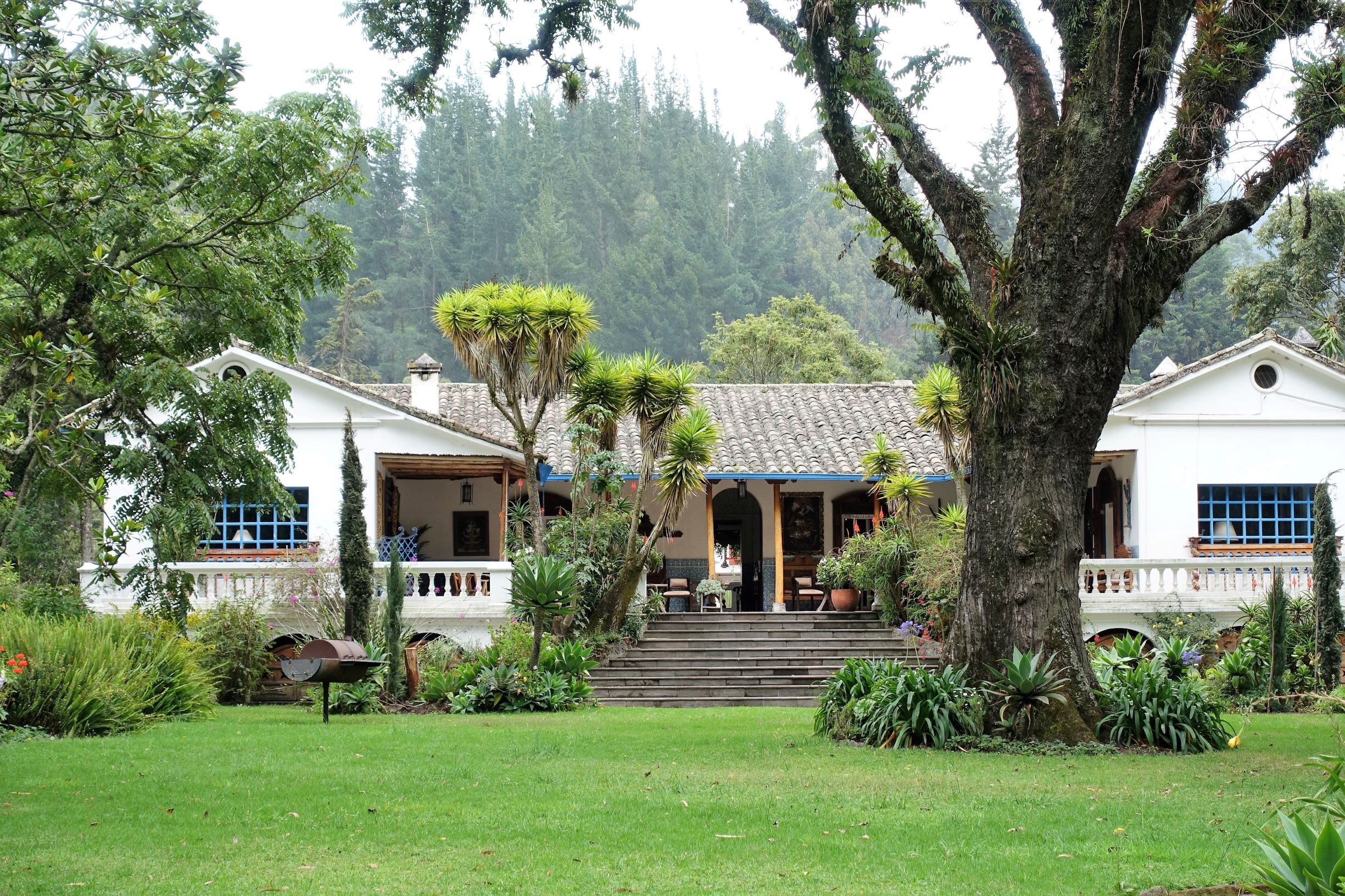
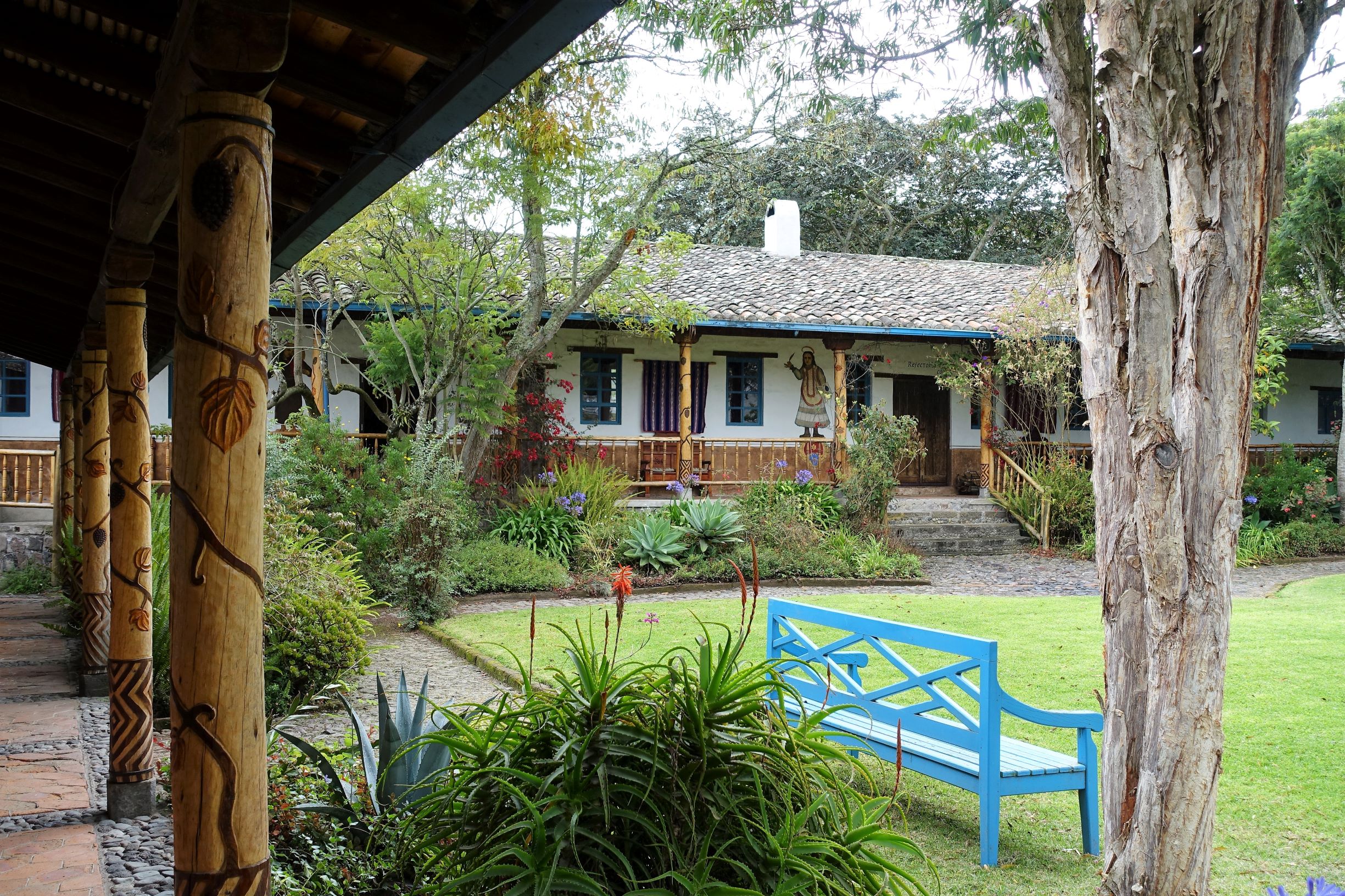
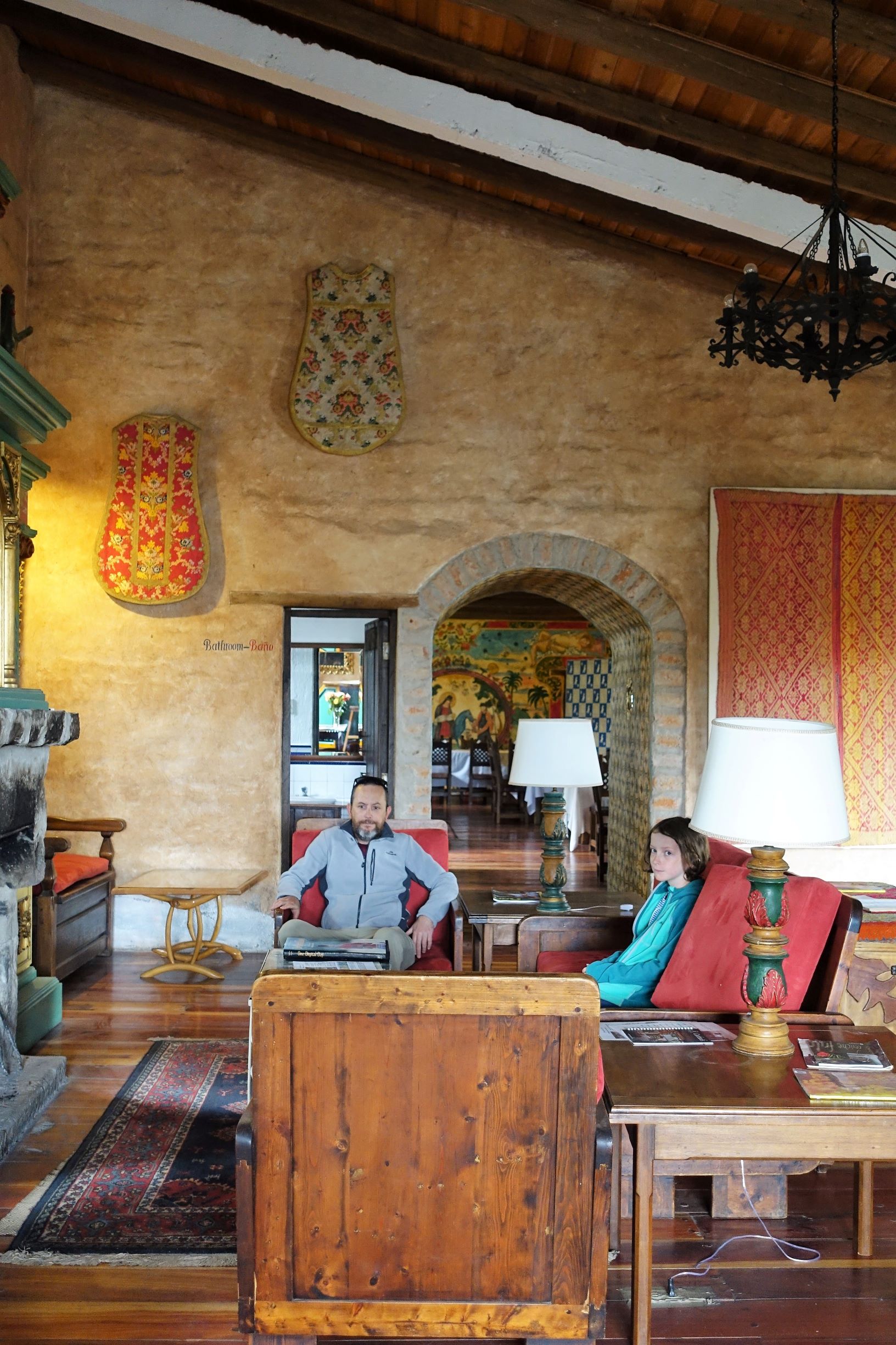
So when I realised we could stay at a 400 year old hotel that has been lovingly restored and converted from it’s great house/monastery origins I jumped at the chance.
Hacienda Cusin is situated high in the Ecuadorean Andes, near Otavalo, a town renowned for it’s market featuring traditional handicrafts. The area also attracts hikers with its snow-capped volcanoes and limpid lakes. We spent most of our two day stay exploring and enjoying the property itself.
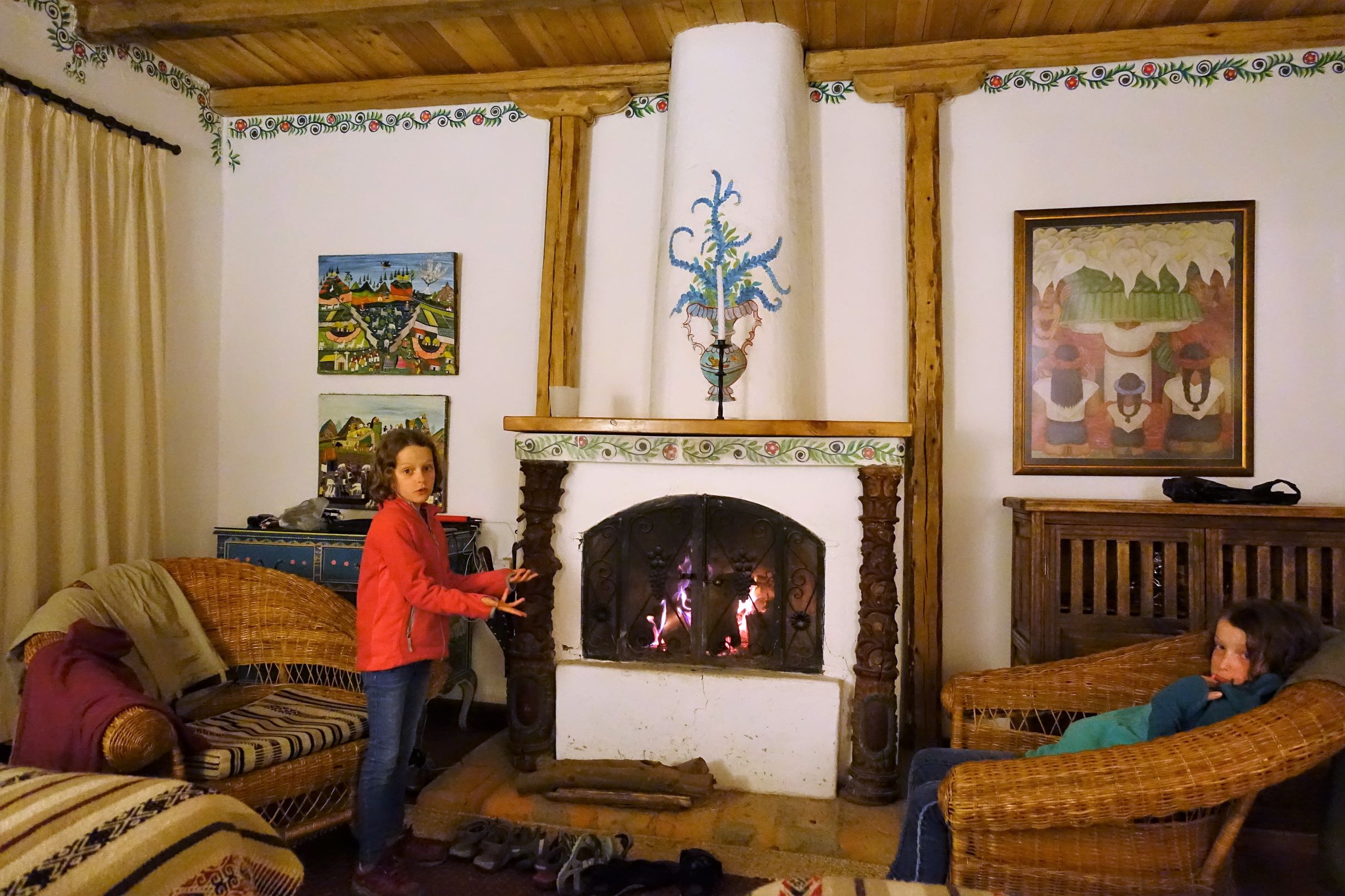
The main house lounge, with roaring fireplace, was a good location for pre-dinner drinks
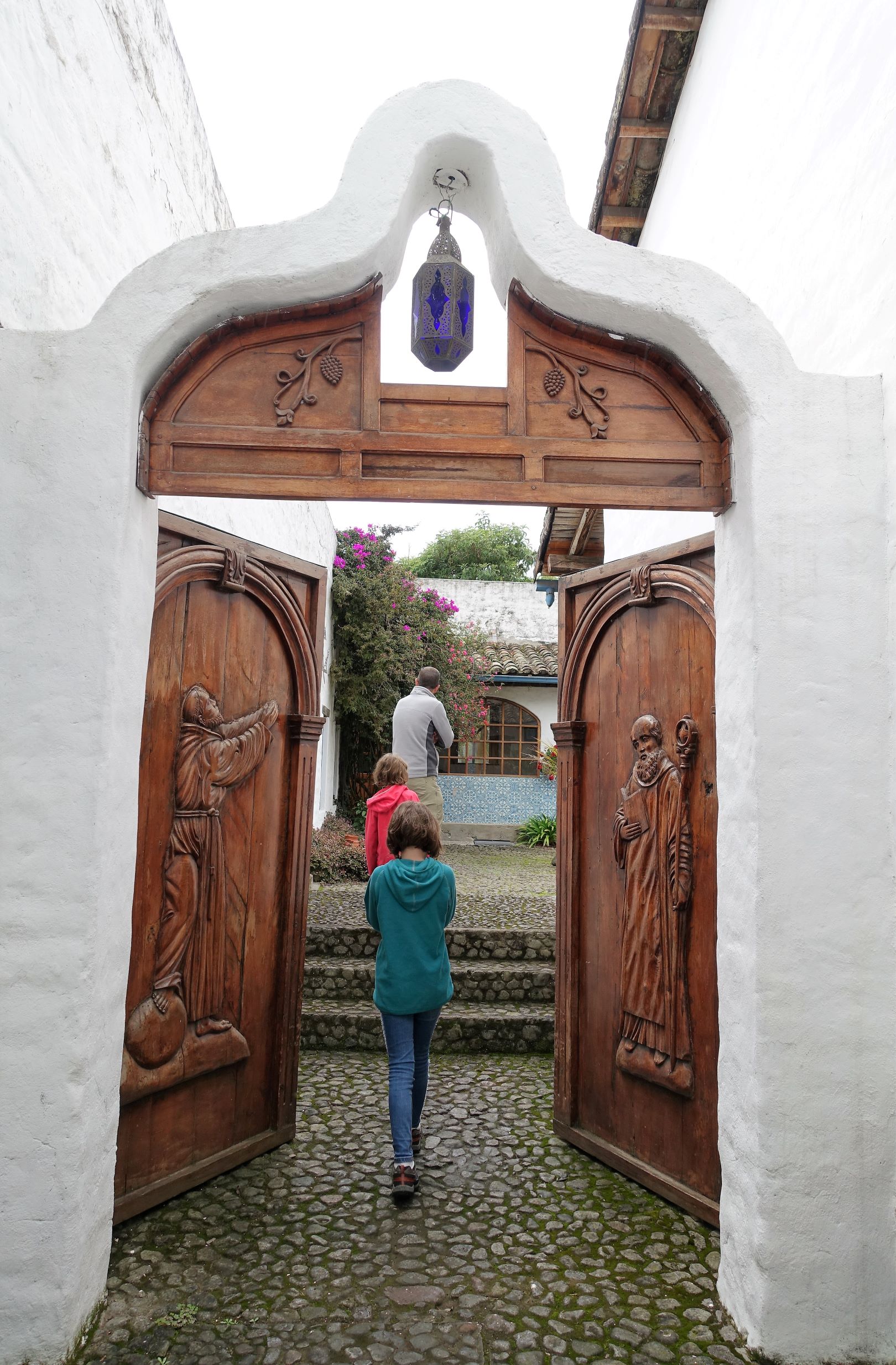
In addition to sprawling gardens, including a large organic fruit and vegetable garden supplying the kitchen, Hacienda Cusin offers a home farm with a multitude of animals to pet and horses to ride. Then there is the monastery, complete with tower and secret passage. Once you are done exploring there is a games room with table tennis and billiards and we even made use of the basketball court!
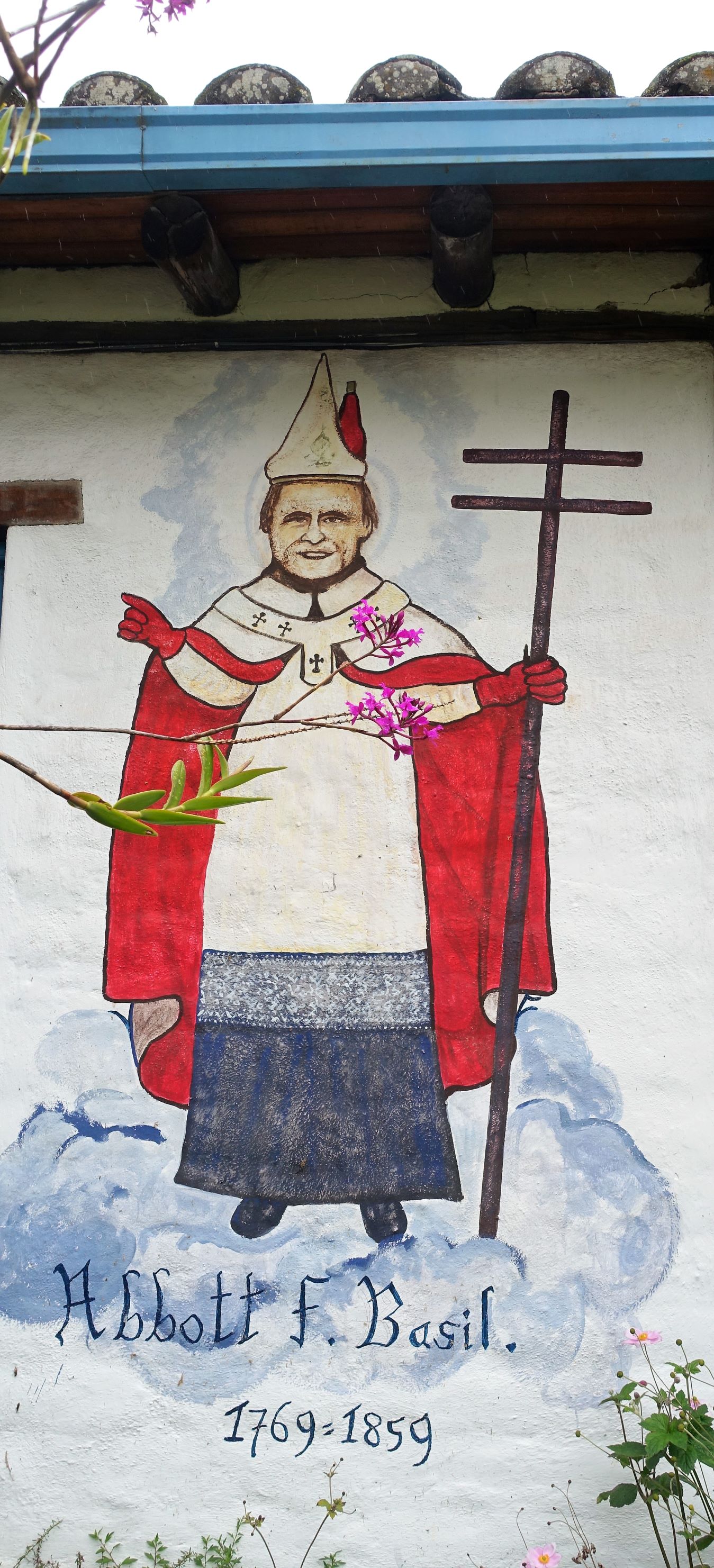
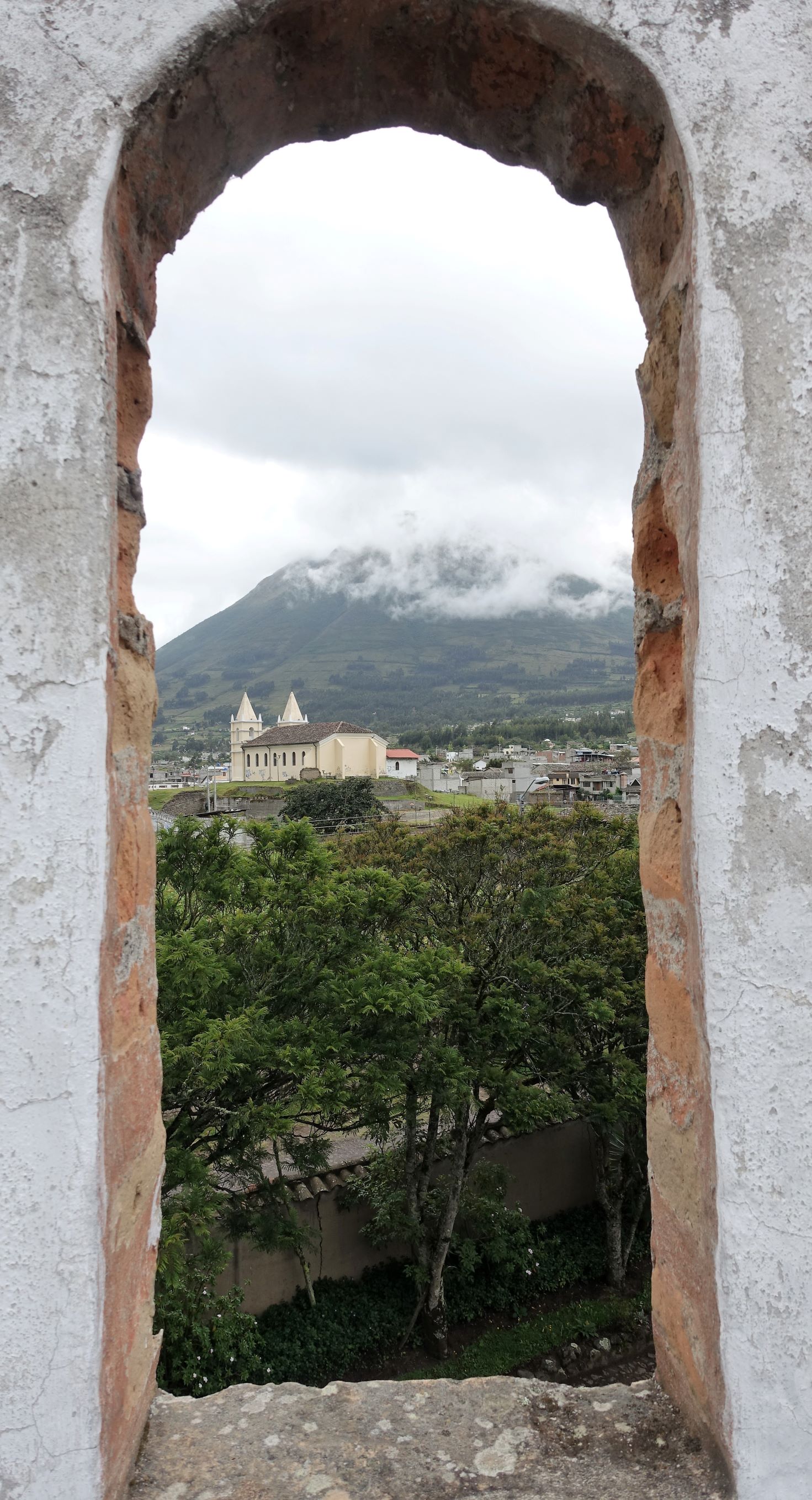
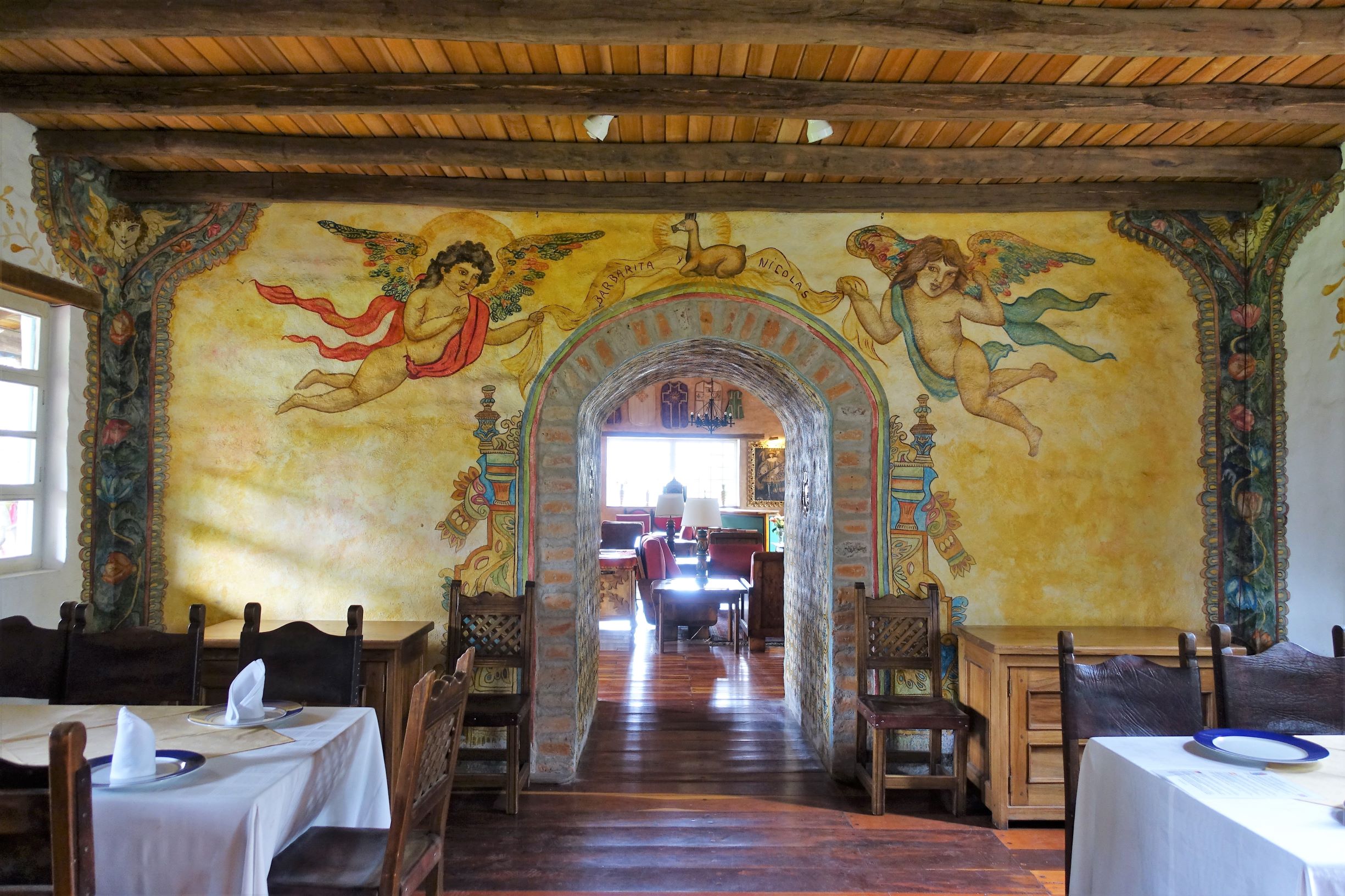
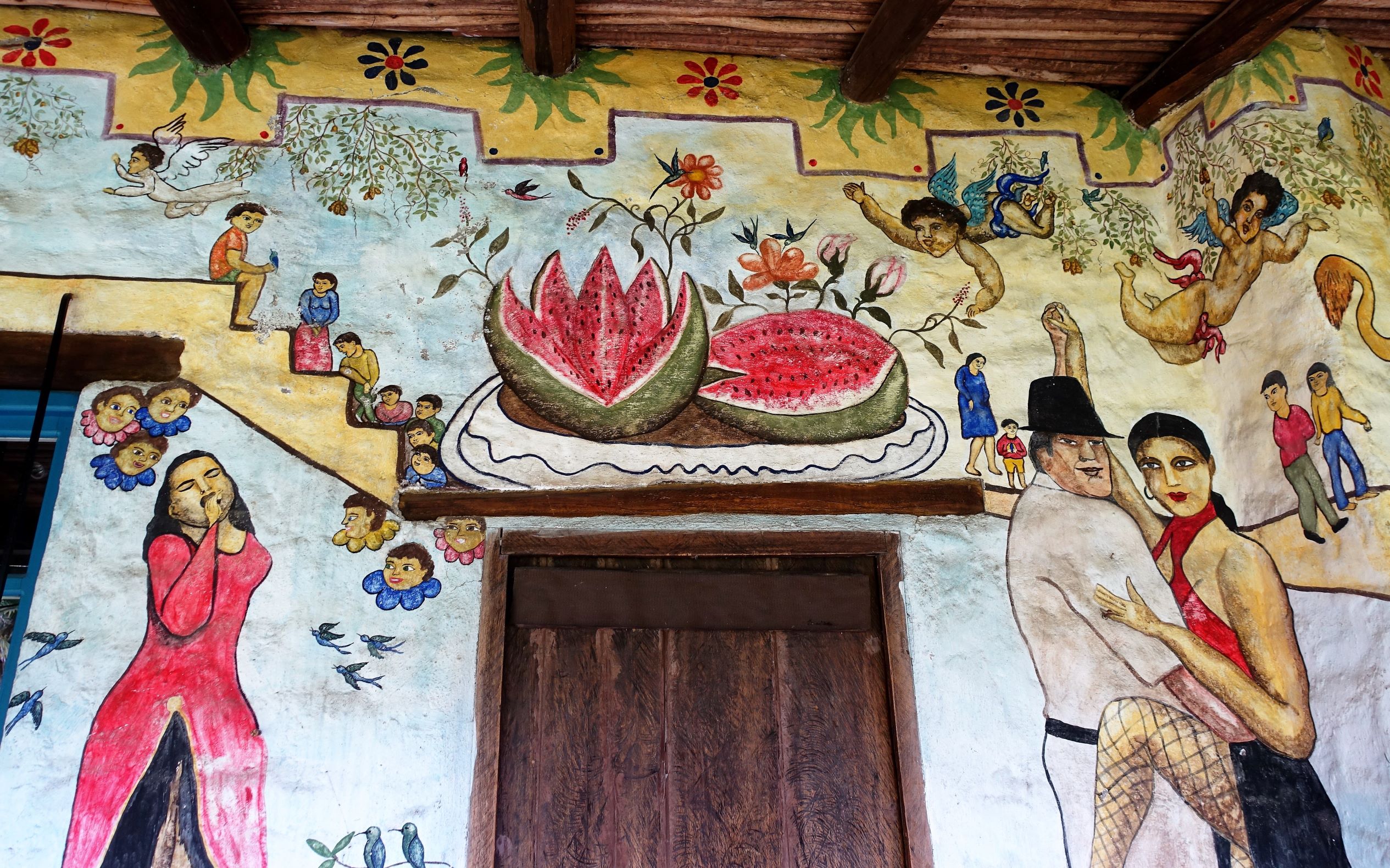
Entering the monasteryOne of the more illustrious former Abbots View from the towerFormal sitting room in the monastery areaSitting room looking through to dining room. Curiously enough, we virtually had the whole huge place to ourselves, only seeing other people occasionally near Reception or at mealsIt was kind of like a ghost hotel…with fabulous muralsfrankly, I loved it!Our 2-bedroom suite with a fireplace that was lit each night while we enjoyed a 3-course meal in the dining room, in front of yet another roaring fire
Of course this all comes at a price (we paid AU$224 per night, almost the most expensive accommodation of our trip), but for us it really was a little taste of luxury. An enormous and delicious breakfast with plenty of choices was included (again in front of that roaring fire) and hot water bottles were placed in our beds while we were at dinner. I’m going to dream of Hacienda Cusin.
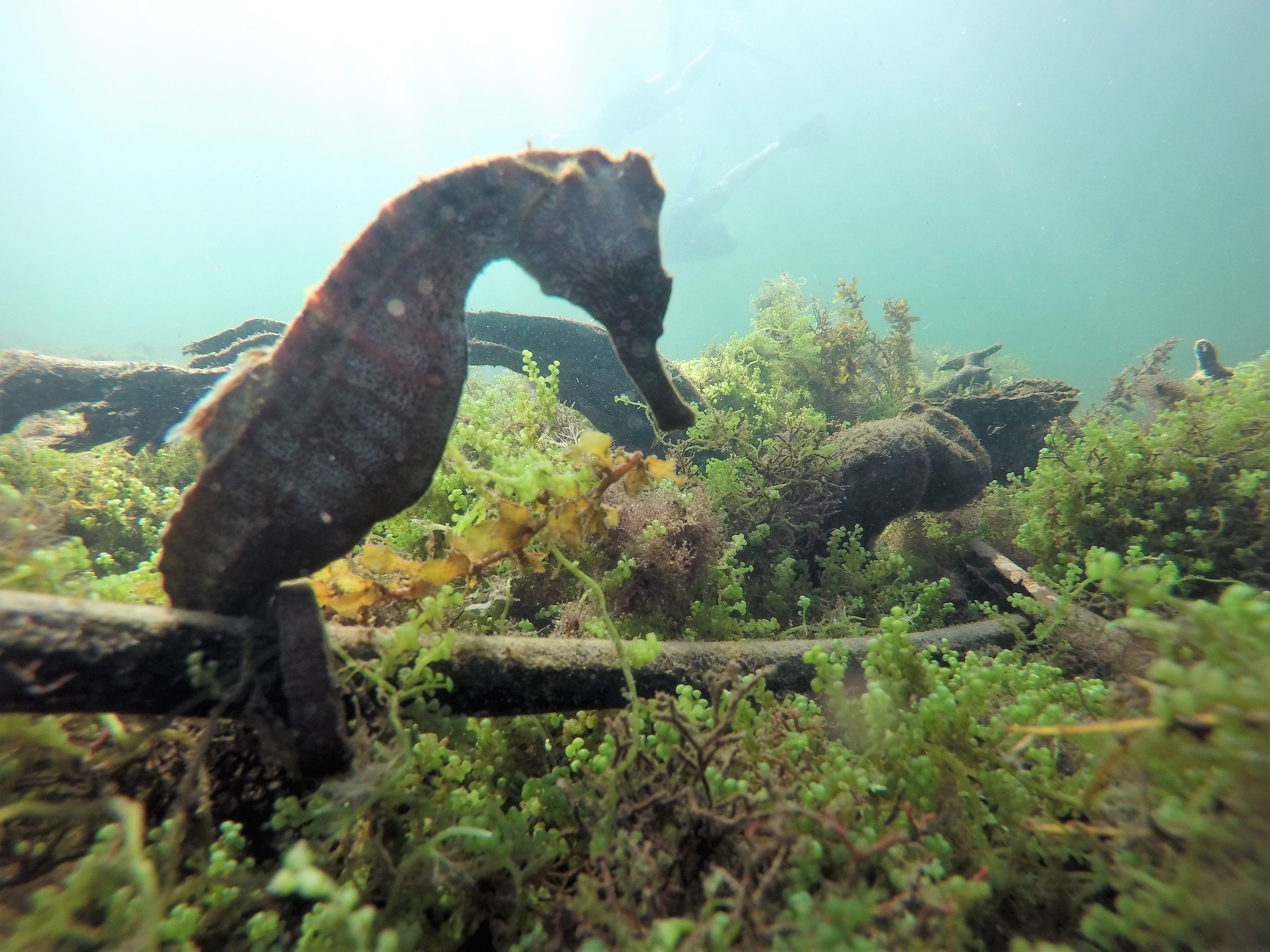
I loved this tour because we saw soooooooo many animals it was unbelievable. Before the Lava Tunnels we went on a boat that took us out to an AMAZING snorkeling place full to the brim with animals. One of my favourite animals was the sea-horse because it was so interesting. The sea-horses in Australia are nothing compared to the ones on Isla Isabela. The ones in the Galapagos are big, detailed and cute. Our guide (who was very nice) almost touched the sea-horse while he was playing with it, as it curled its long tail around a stick.
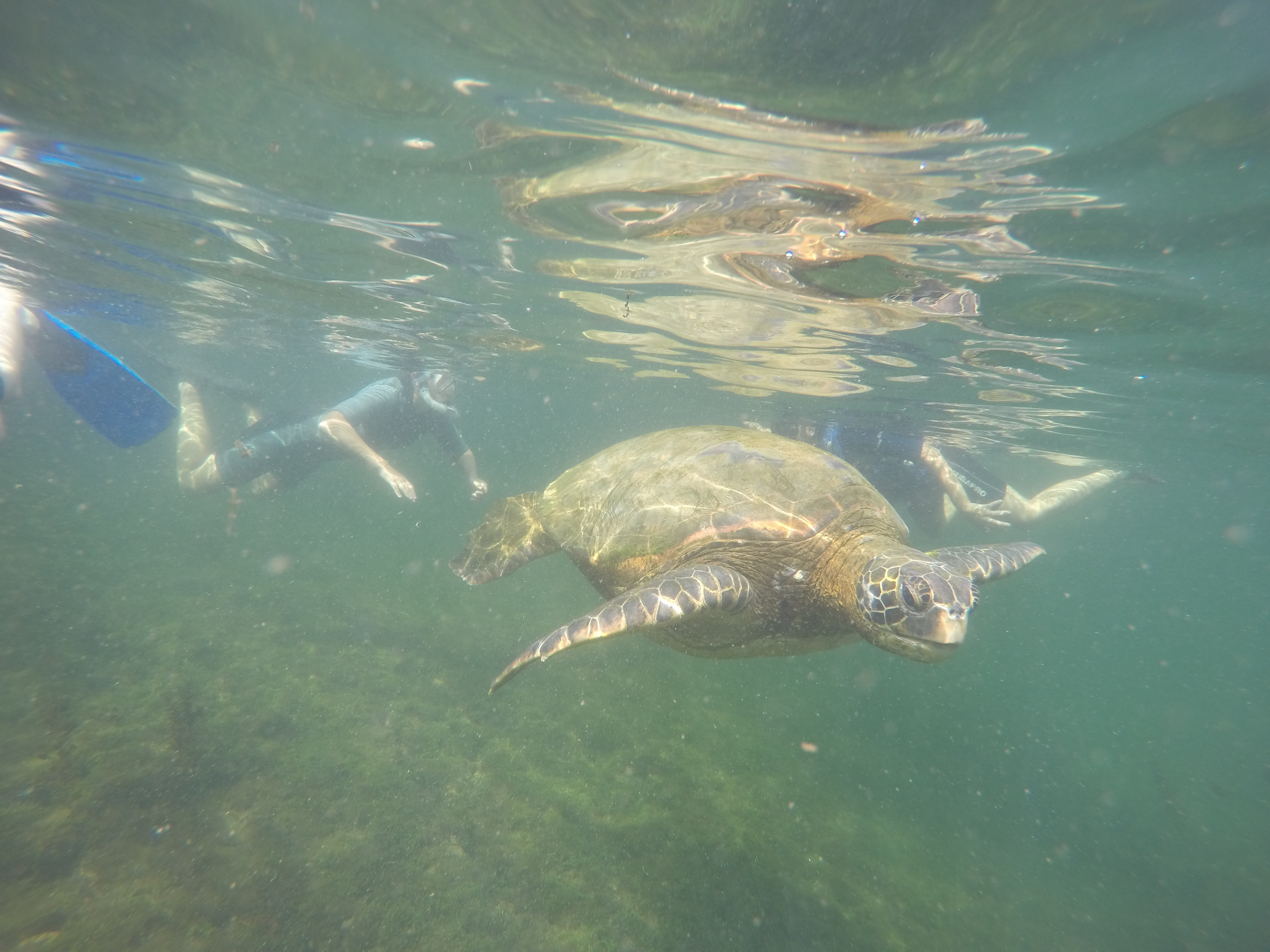
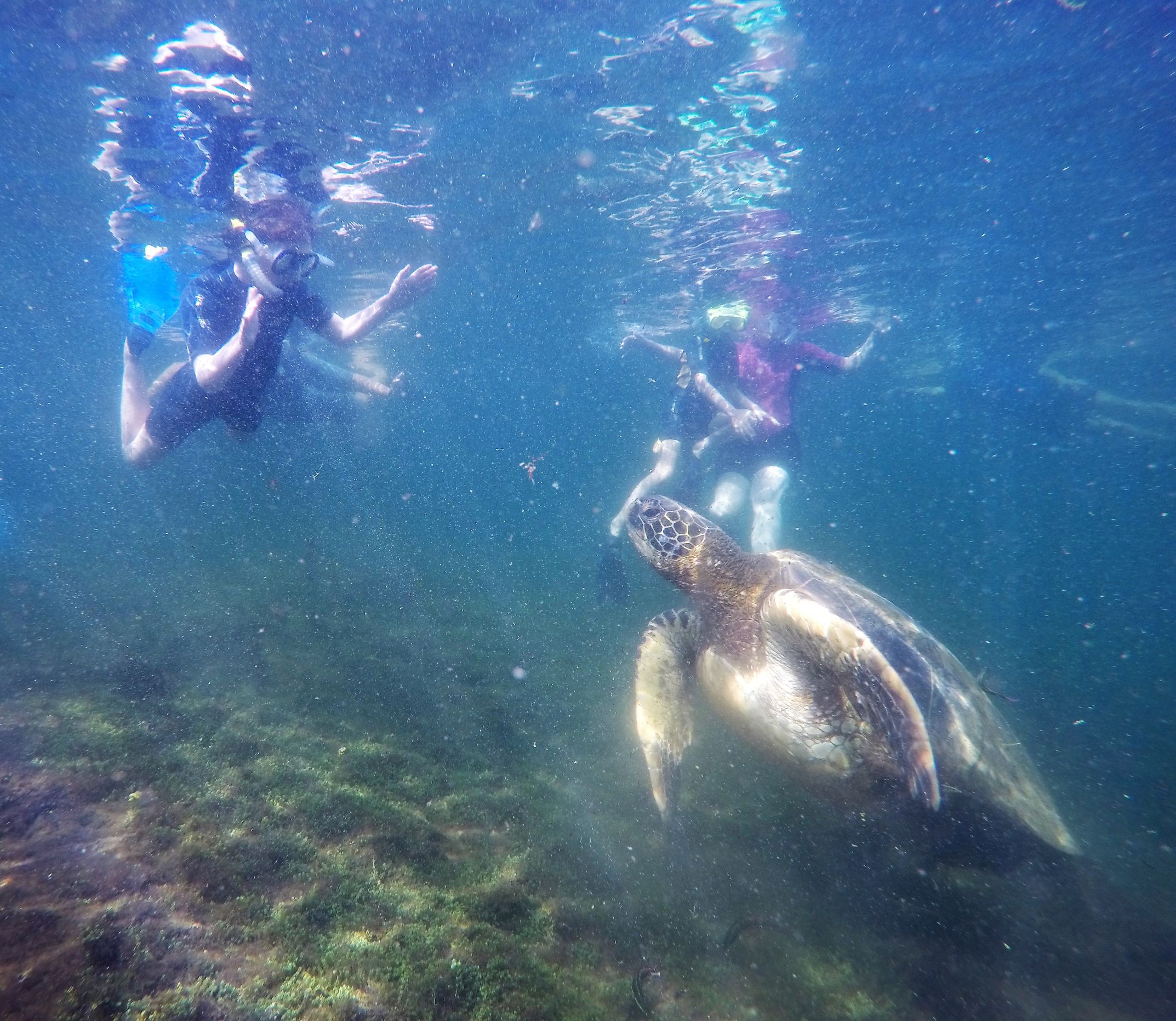
Another thing I really liked was the turtles. They were enormous. Some were bigger than Maille! Their heads were about the size of a football and their bodies were GIGANTIC! Some were the size of a medium sized table! It was awesome.
Me, Mum, Maille and a HUGE turtle!
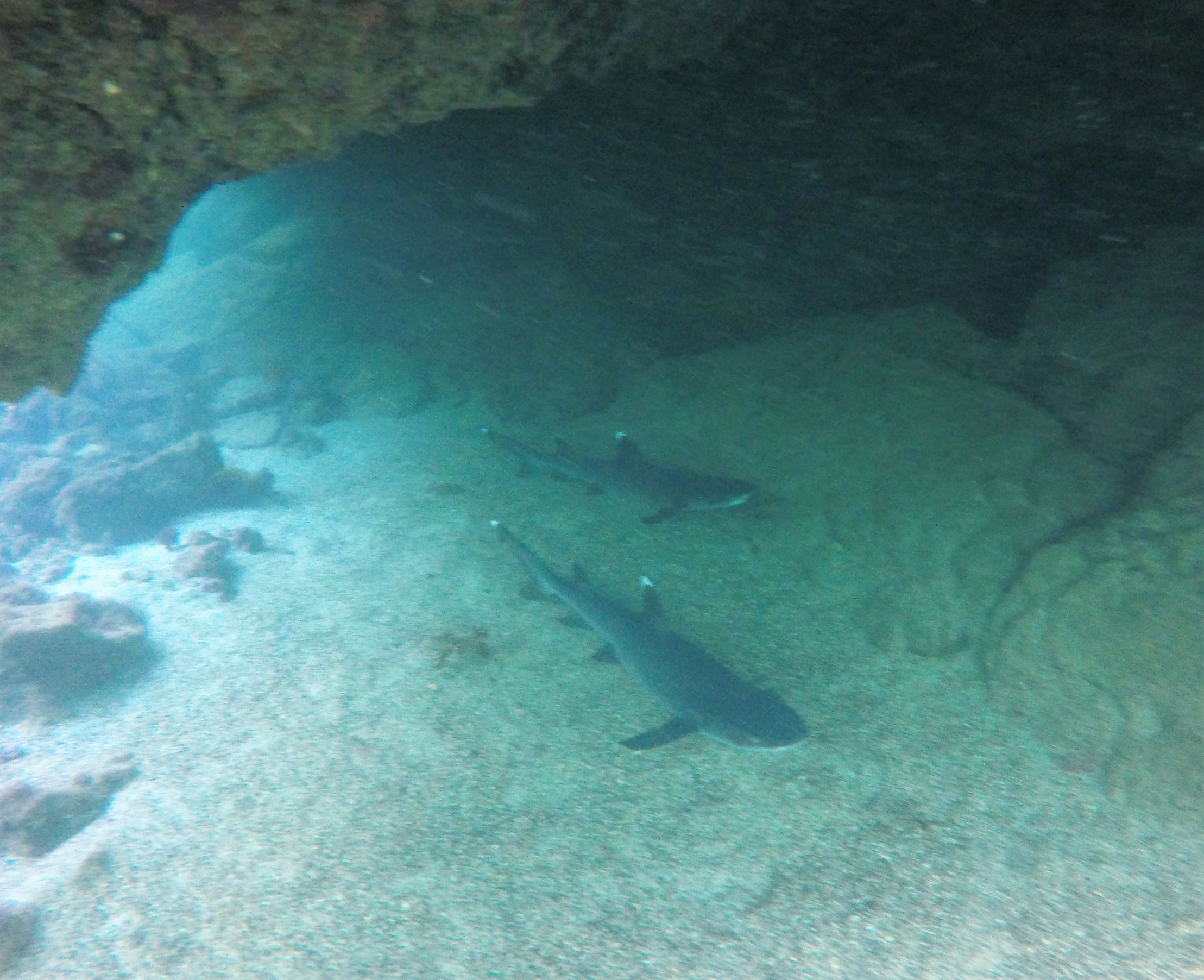
The best thing there was the sharks though. There were two types of sharks, black tip and white tip (the white tip ones were the biggest). The sharks were swimming in little caves where they were resting. It was absolutely thrilling looking at them.
white tip sharkswhite tip sharks
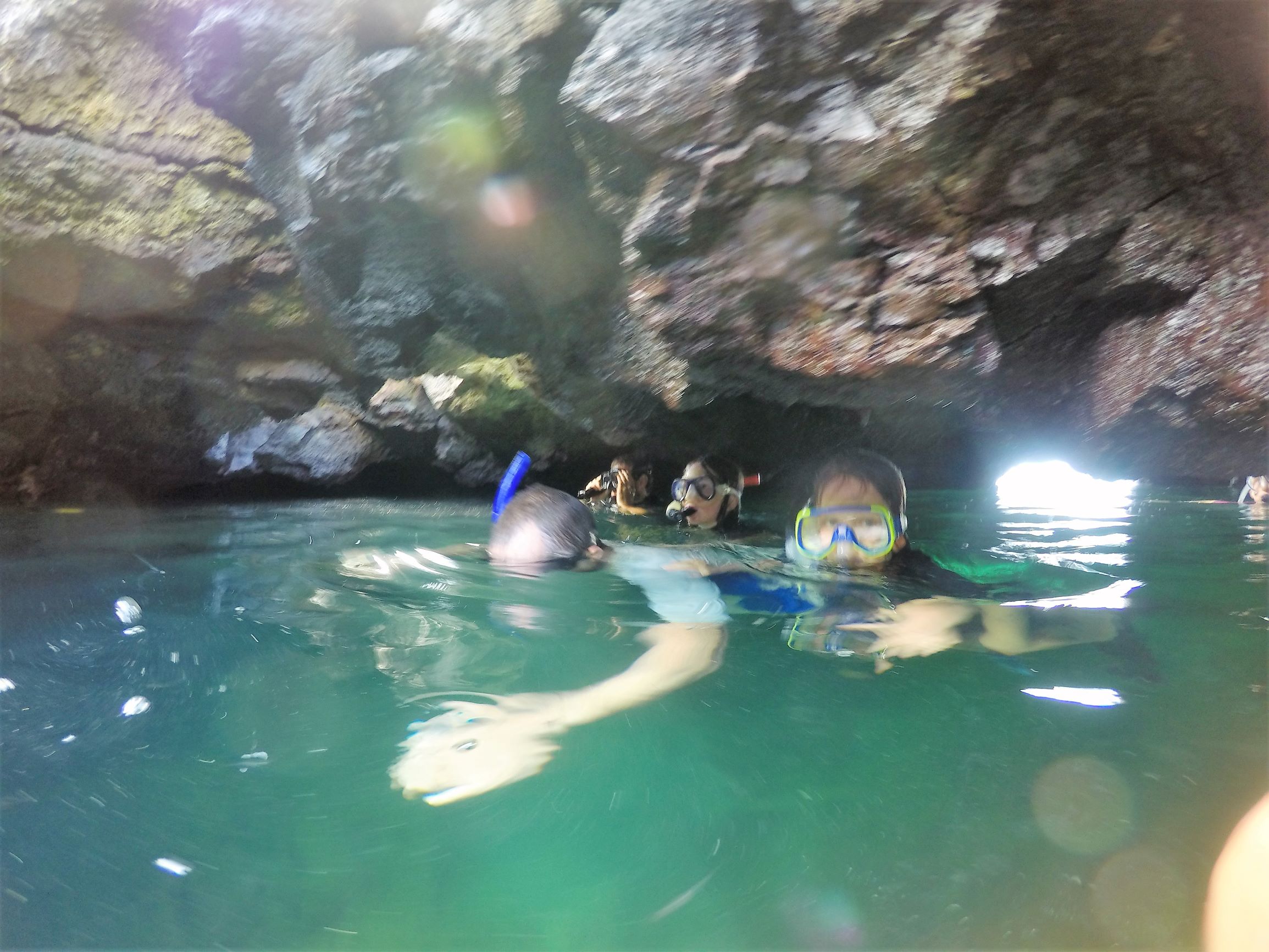
What are lava tunnels? Lava tunnels are like a tube made underground or through rock. How are lava tunnels formed? When the outside layer of lava cools it forms a crust while the interior flows hot and fast. Eventually the lava inside the crust flowed out and left a tube or tunnel behind. And then as time passed the sea flowed in and that is why we can swim in them today.
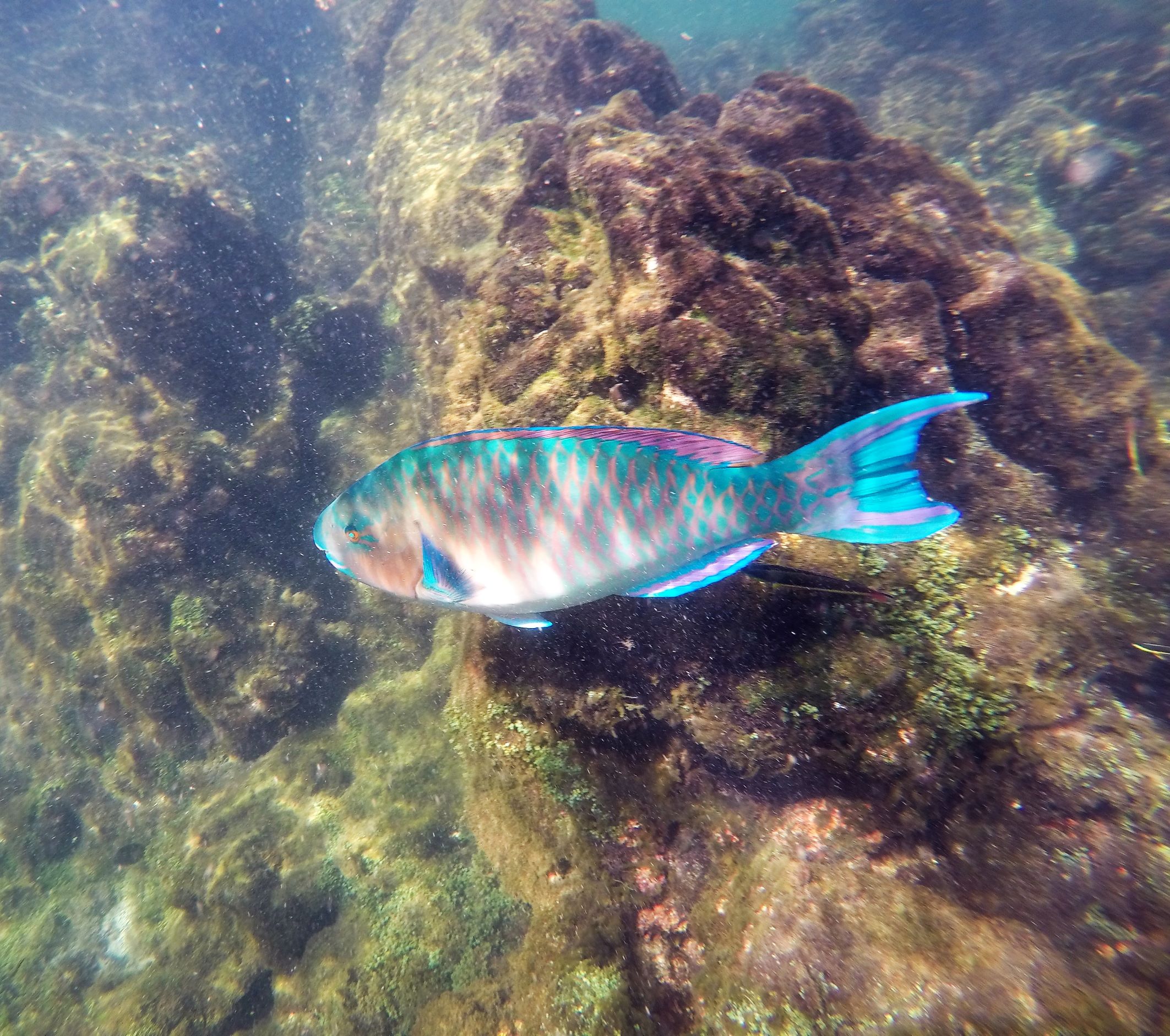
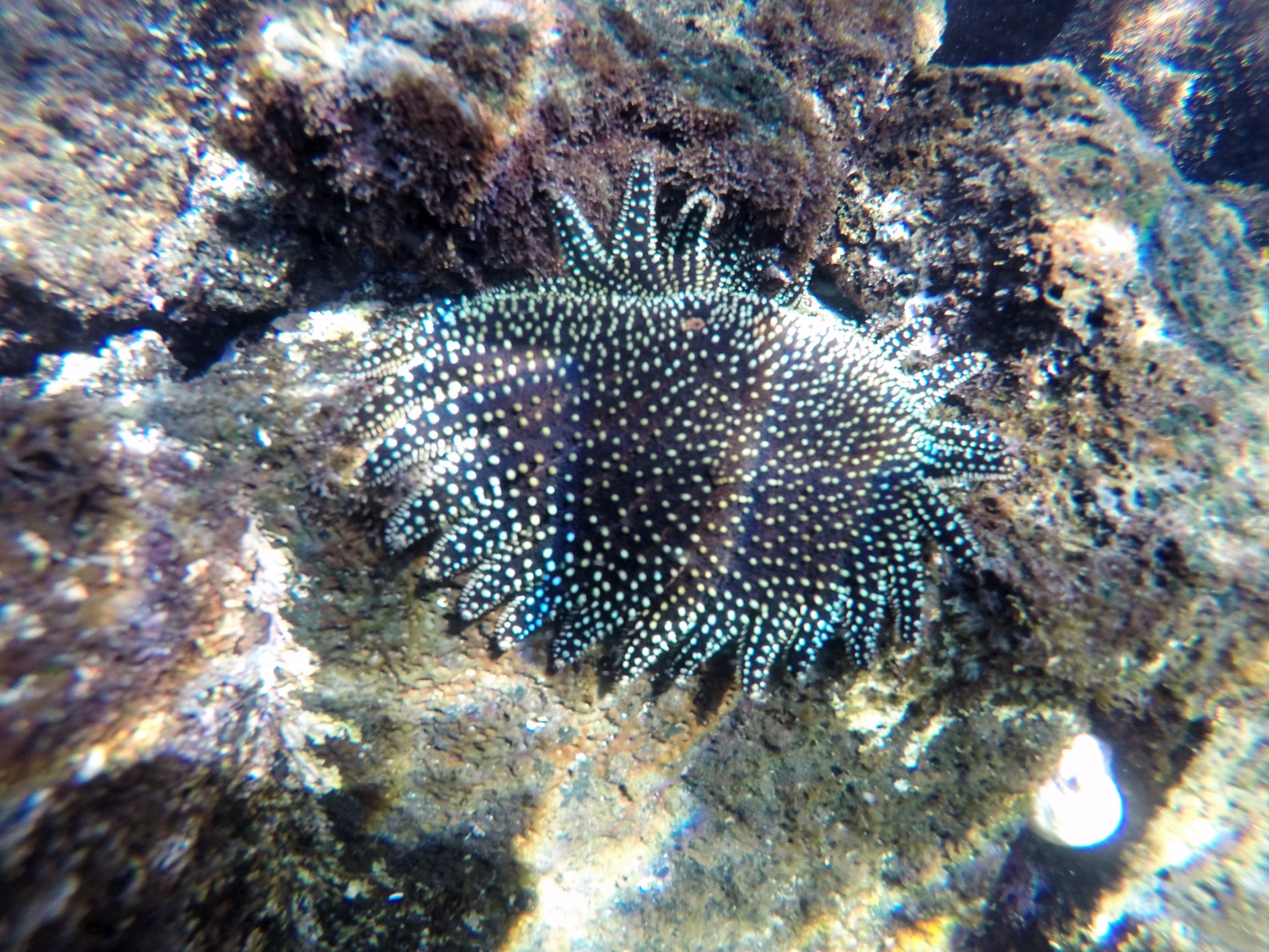
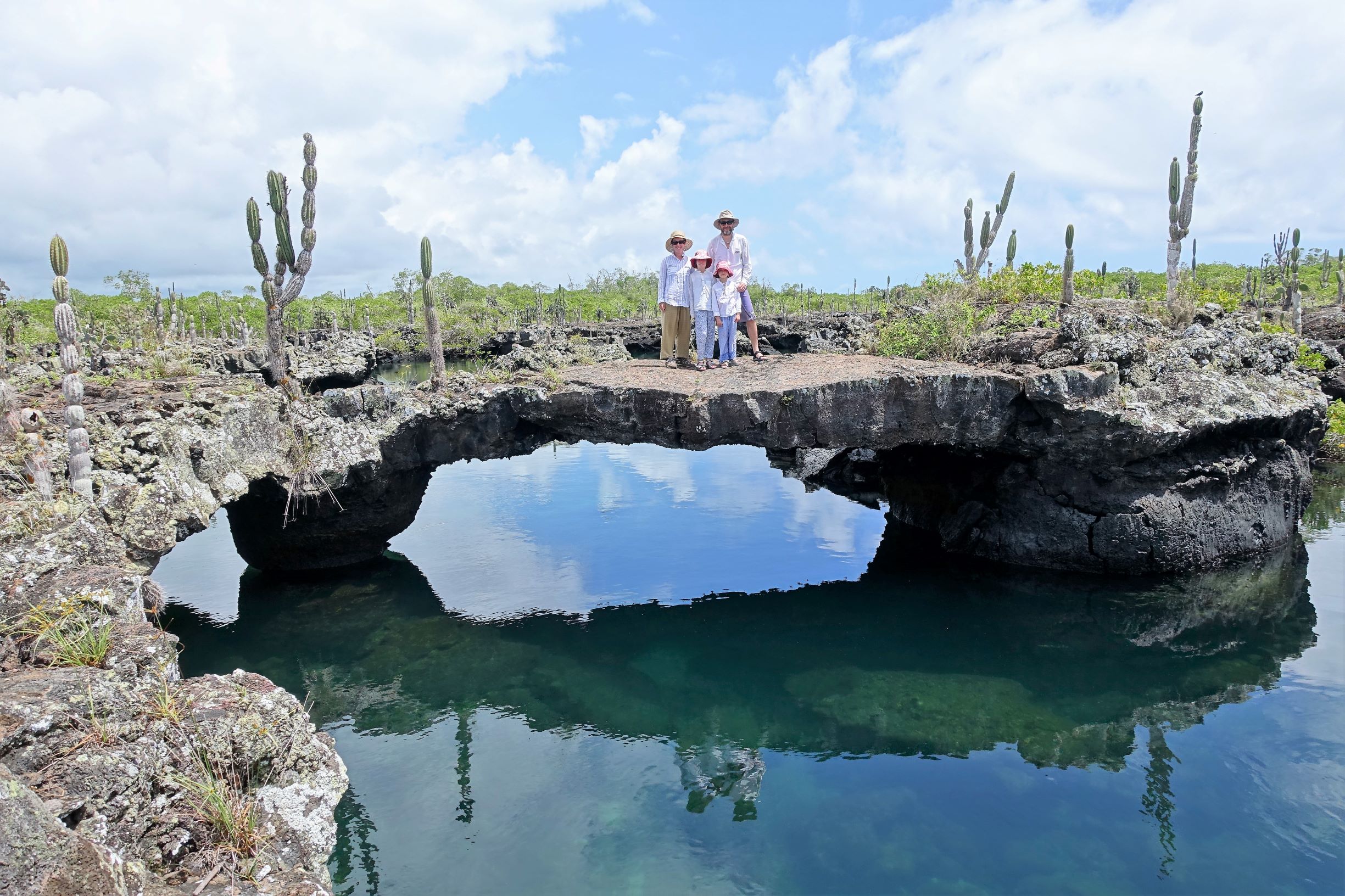
us swimming inside lava tunnelshuge fish!starfishon top of lava tunnels
1.You will spend much more money in the first 4 weeks than you budgeted for. This is mostly due to the ‘We’re on holiday, yeah let’s do it!’ effect. After a reality wake-up call – on looking at the bank balance – you will adjust from ‘holiday mode’ to ‘traveler mode’.
2. You will put your hand into a dirty toilet bowl to retrieve paper placed there in error more times than you can count, before getting used to putting it in the bin. The horror fades with time and practice.
3. A 3-night stay is insufficient time if you have traveled hard to get there. You will spend the first full day recovering and doing necessary jobs, leaving only 1 day to actually see something of the place.
4. Make good use of fast internet when you have it. Don’t assume that you can download or upload anything at your next destination – even if it’s in the middle of a capital city.
5. Book at least 5 days, preferably 7, on Isla Isabela in the Galapagos. It is a paradise on earth and everyone will blame you bitterly when when we have to leave after 3 days.
6. Create a daily routine for the kids that involves journal writing from the start. Otherwise they will never do it.
7. Pack a universal plug. You will not see a kitchen or bathroom plug again for months, which makes doing dishes or hand-washing far more difficult than it should be.
8. Your 45 year old body will cope well without the creature comforts of home, like your comfy bed and pillow. You will usually be too tired to notice or care if a bed is hard or a pillow lumpy.
9. You should steal the little sachets of salt, pepper, jam etc. from hotel breakfasts EVERY SINGLE CHANCE you get. Backpacking life involves far too few hotels.
10. Have faith that the kids will cope with life on the road. Of course they will miss their friends, but they will rise to the challenges and generally go with the flow.
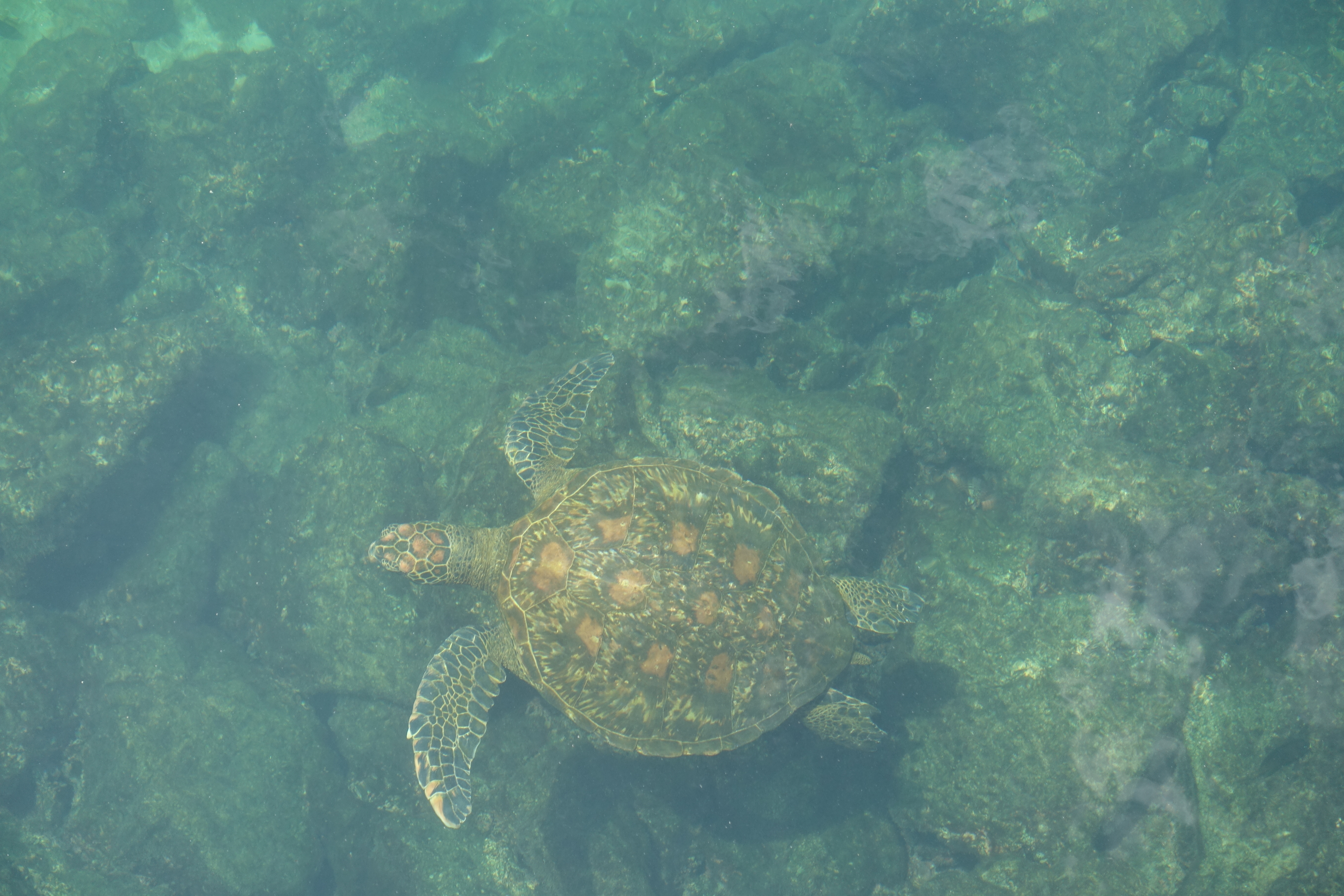
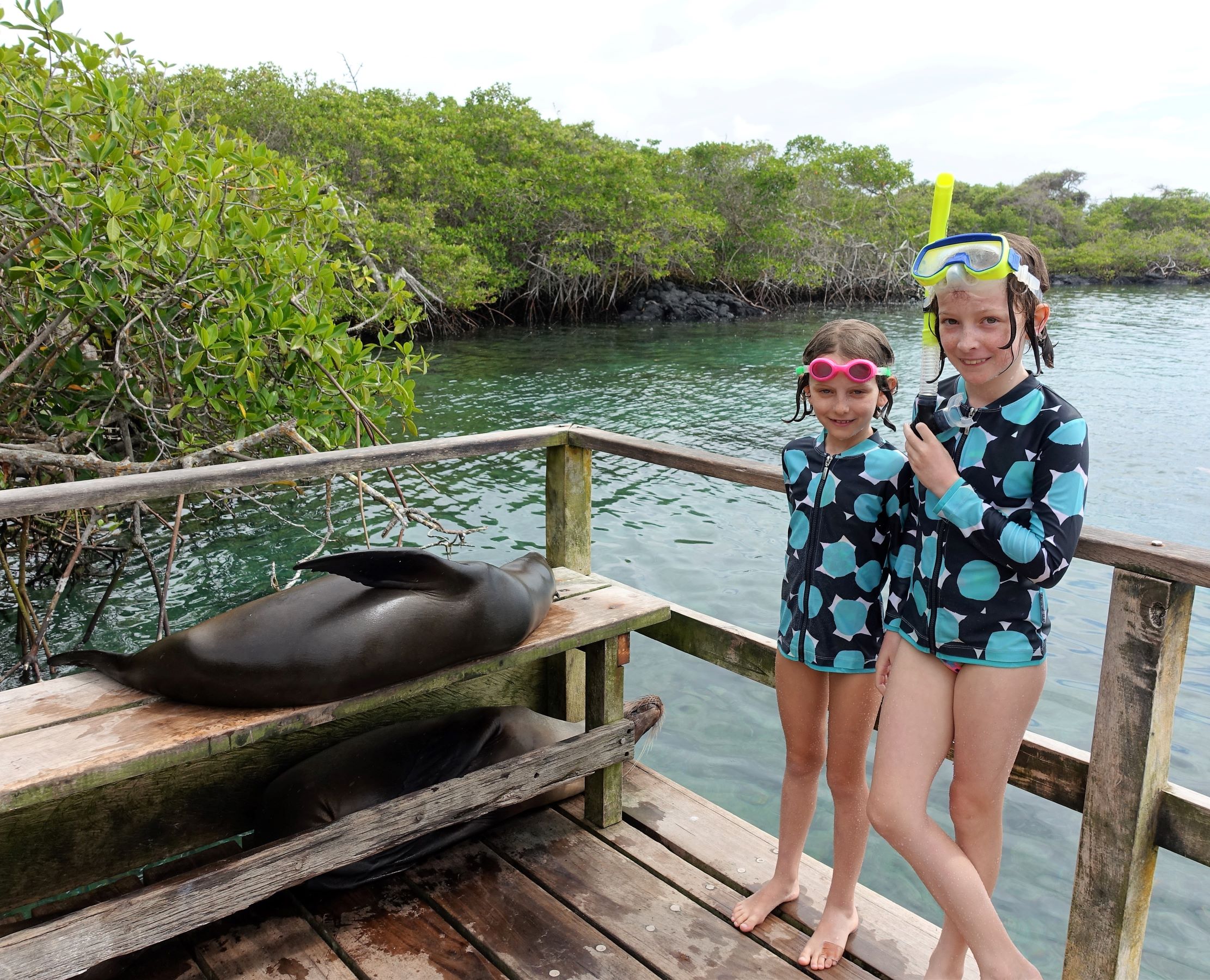
The Galapagos is a wild life place for animal lovers. In the Galapagos on Isabella there is a place called Concha de Perla. Concha de Perla is a great snorkeling place. There are millions of fish and lots of other different animals such as turtles, starfish, sharks, manta rays and sea lions.
turtle
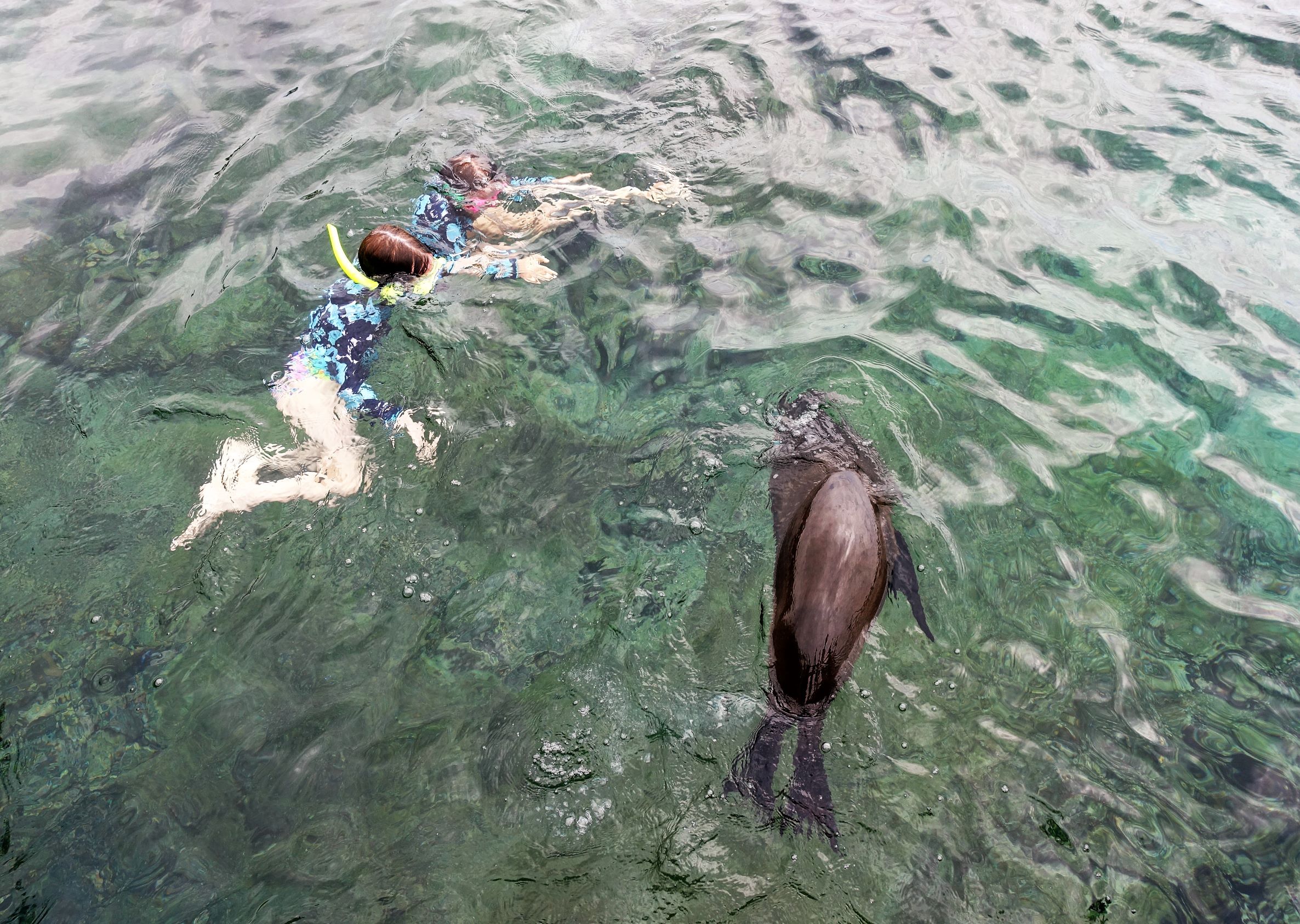
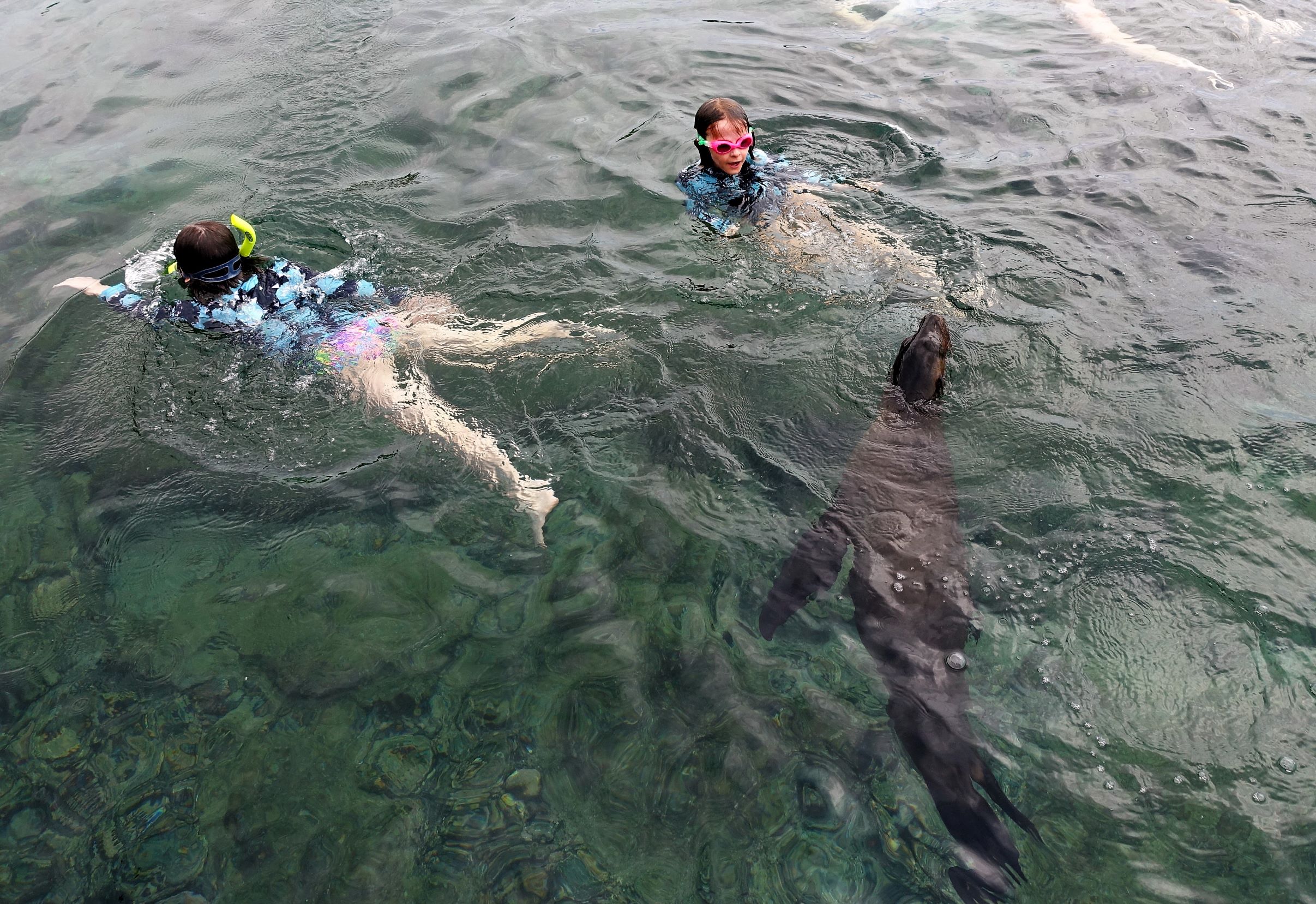
At Concha de Perla Eliane and I swam with a baby sea lion.
baby sea lion
It chased me and Eliane around. It twirled around in the water and showed off its tricks. We copied it. I felt a bit scared when it chased me. But I also felt happy and excited. This was my favourite experience in the Galapagos. Maille.
What makes this place so special? Why were we so keen to go there and what was it that blew us away when we did? The short answer is: the beauty and the beasts.
The Galapagos Islands, situated on the equator in a lonely part of the Pacific, were not inhabited by humans until the 1800s. Like Antarctica, its wildlife didn’t evolve in response to the presence of humans and don’t behave like animals elsewhere. A short history of human intervention means there is a greater diversity and abundance of animals on both the land and in the water. It’s a rare glimpse of a paradise lost to us elsewhere.
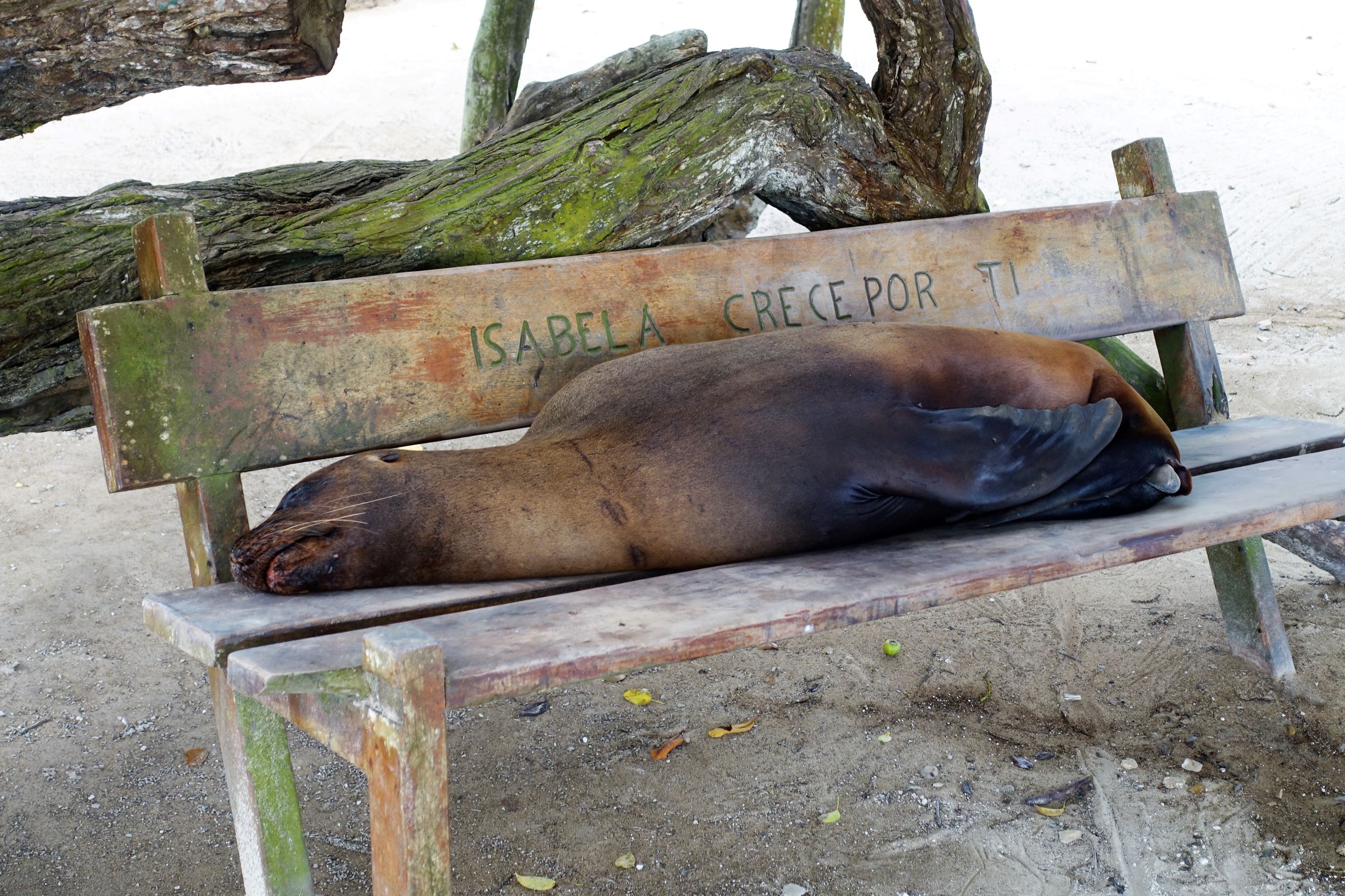
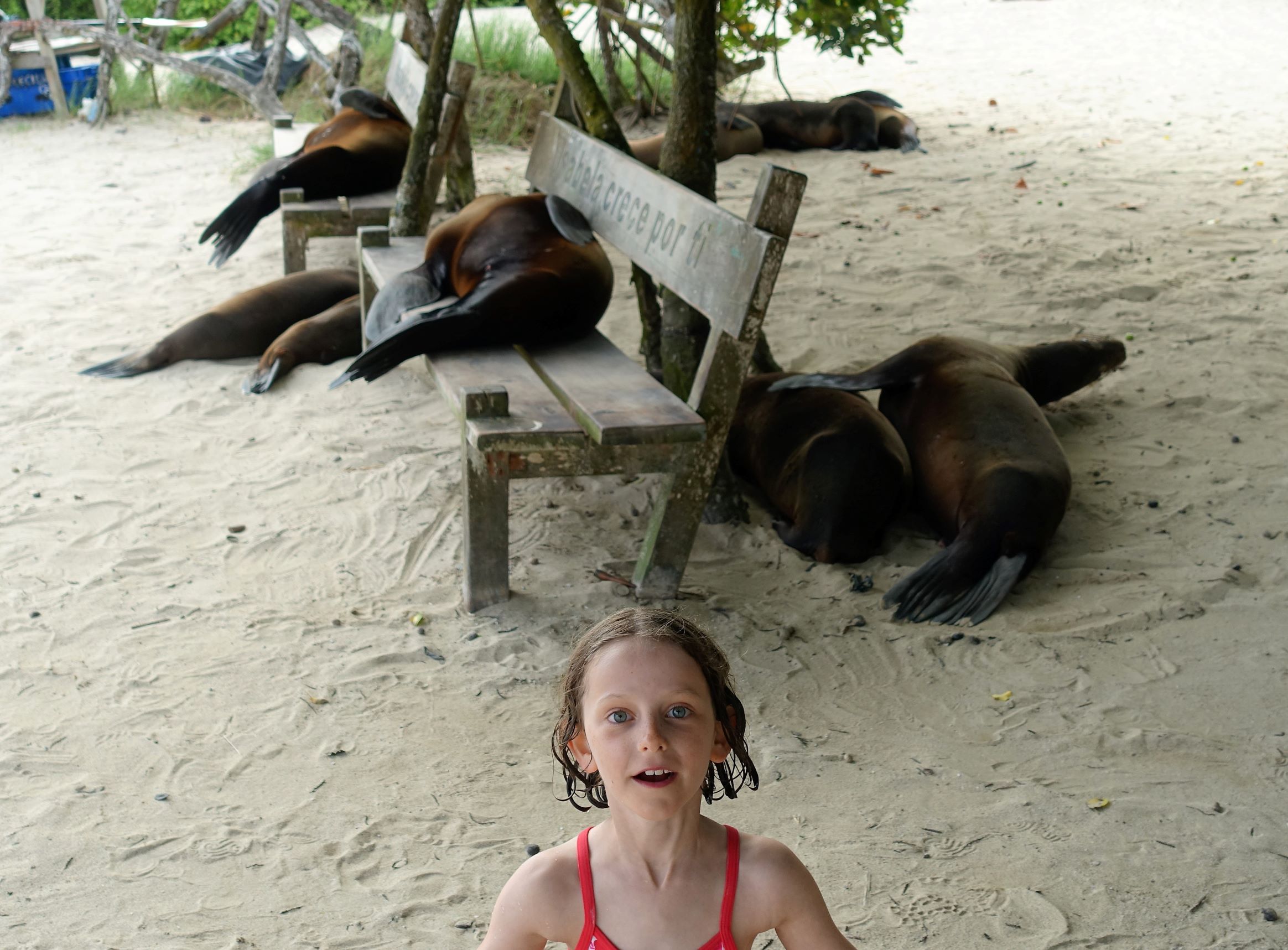
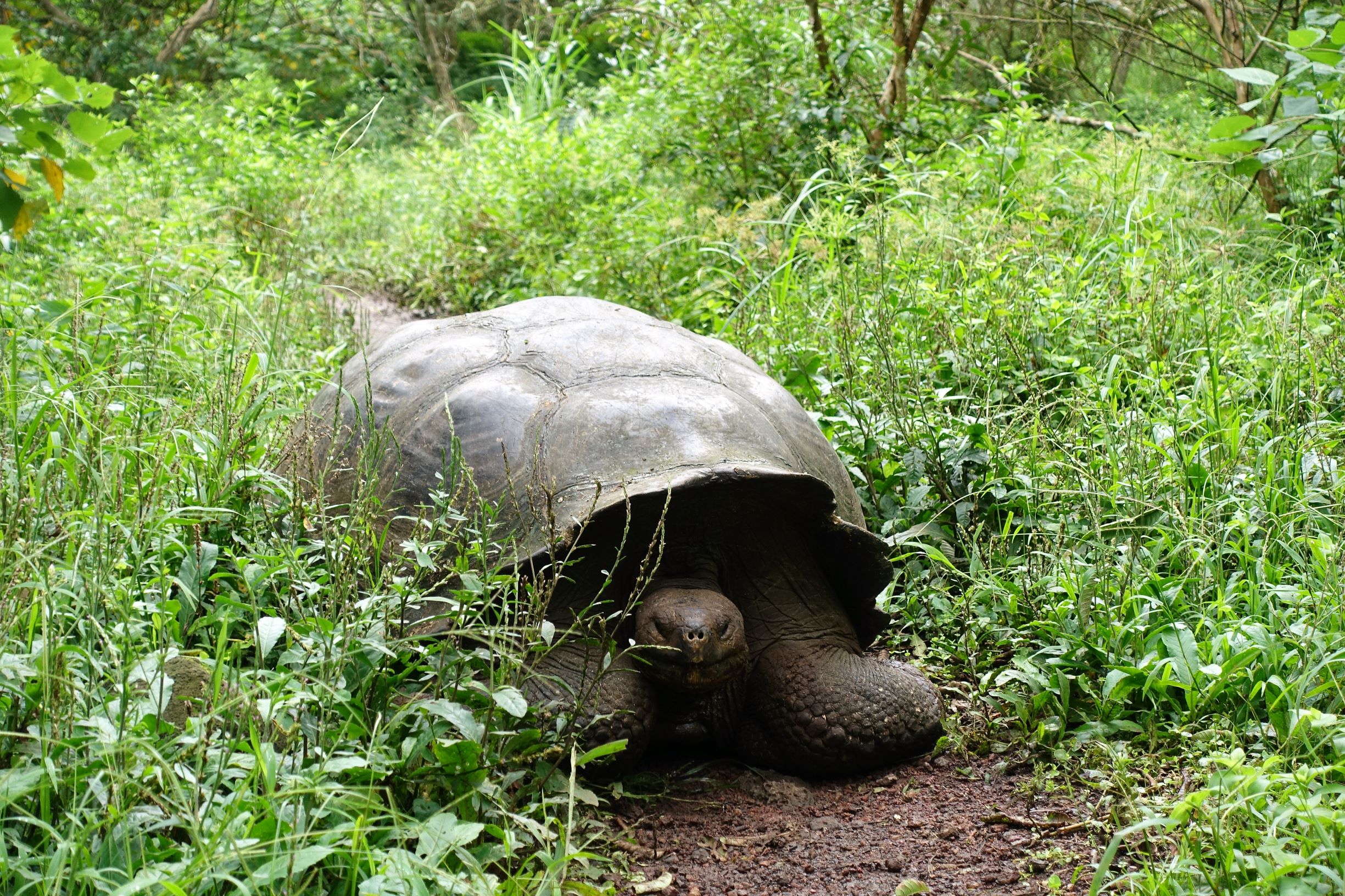
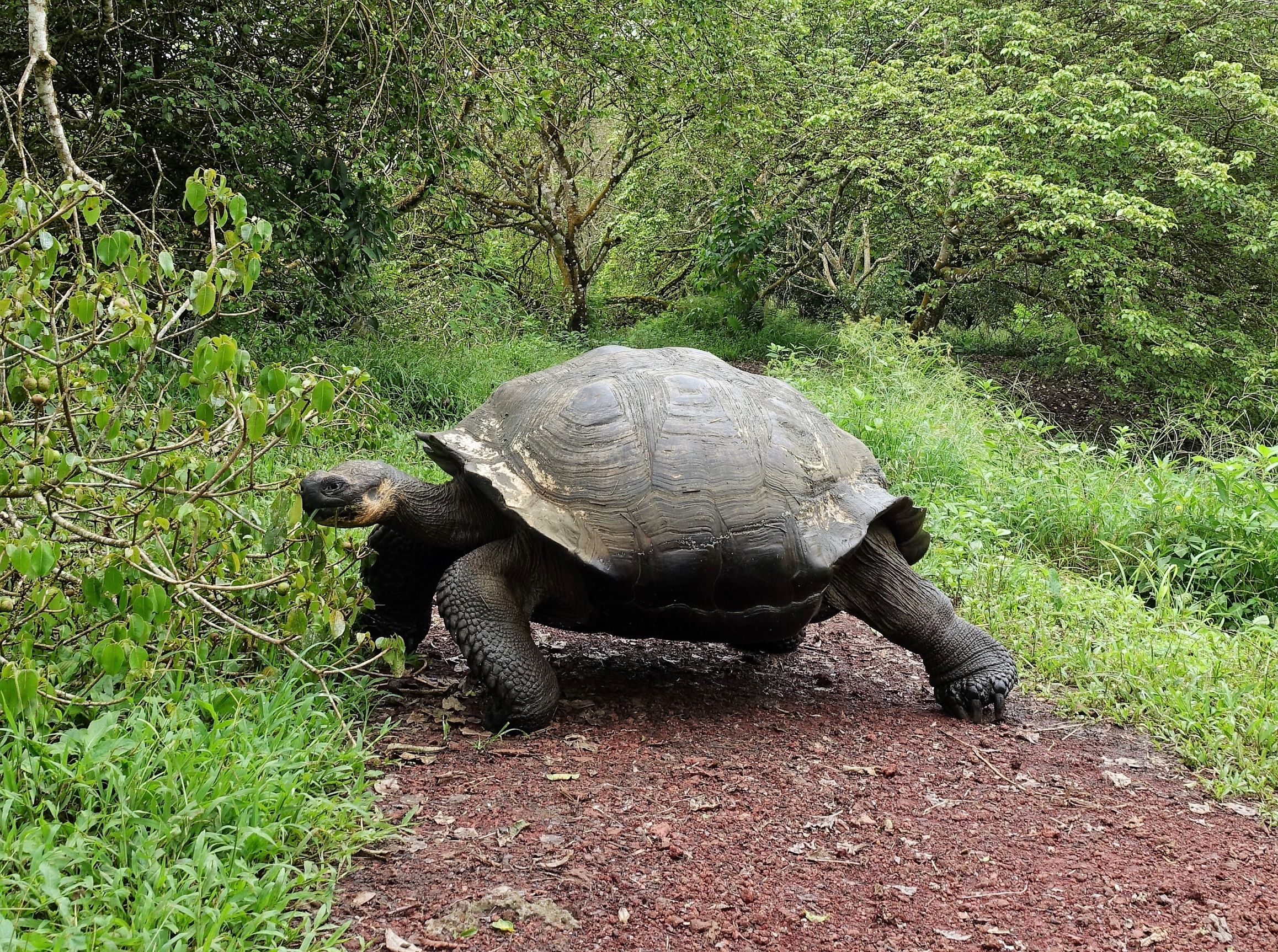
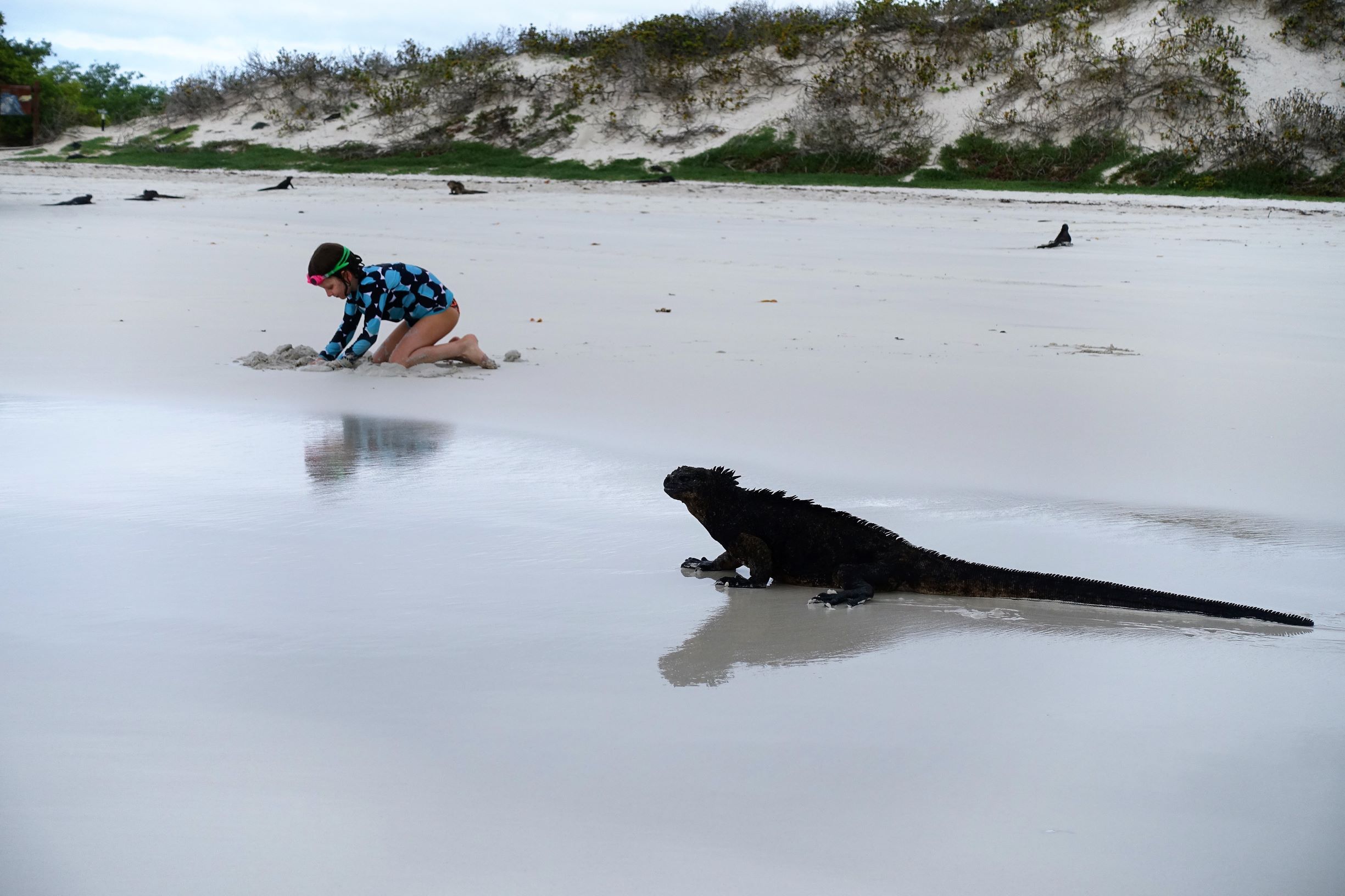
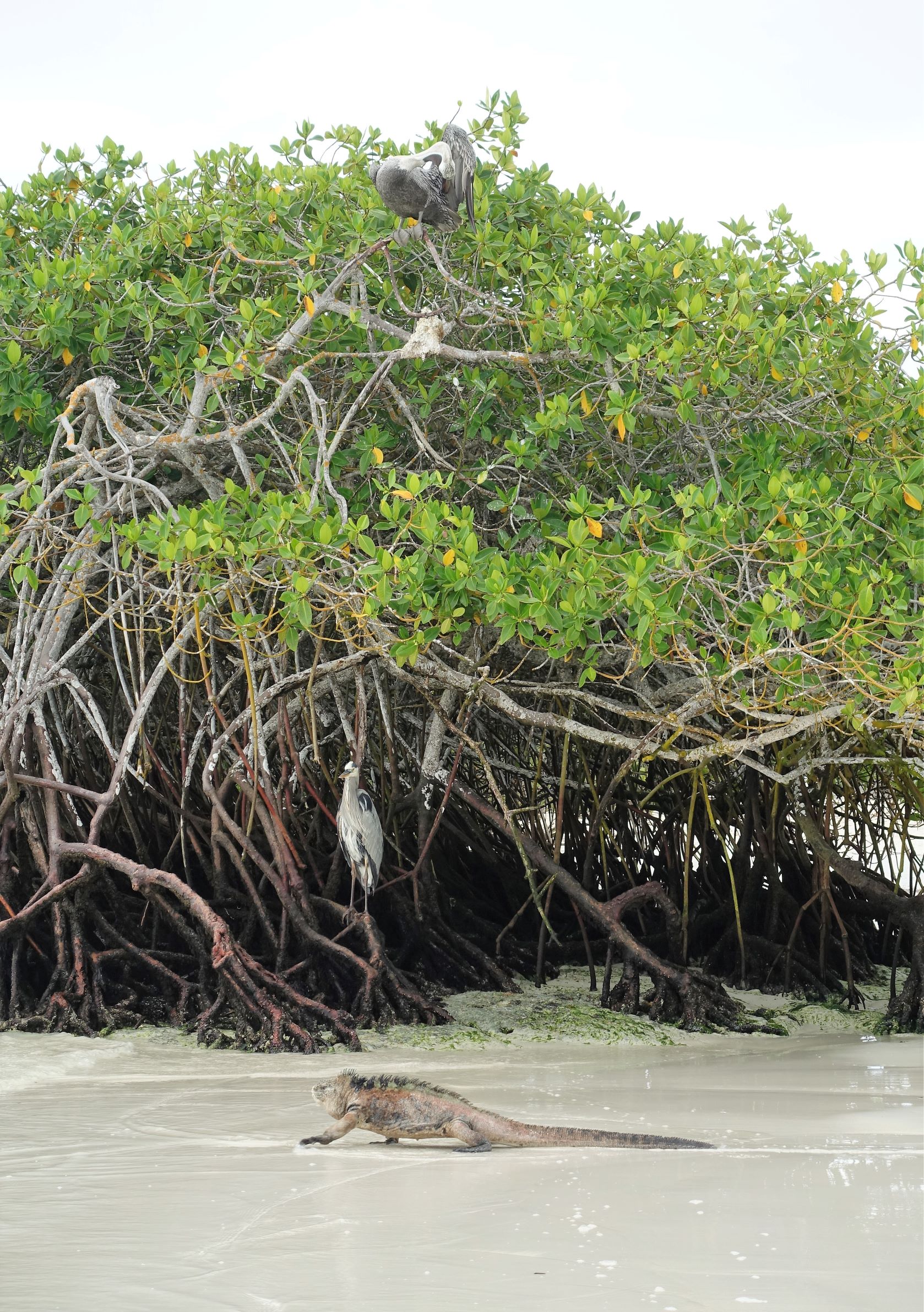
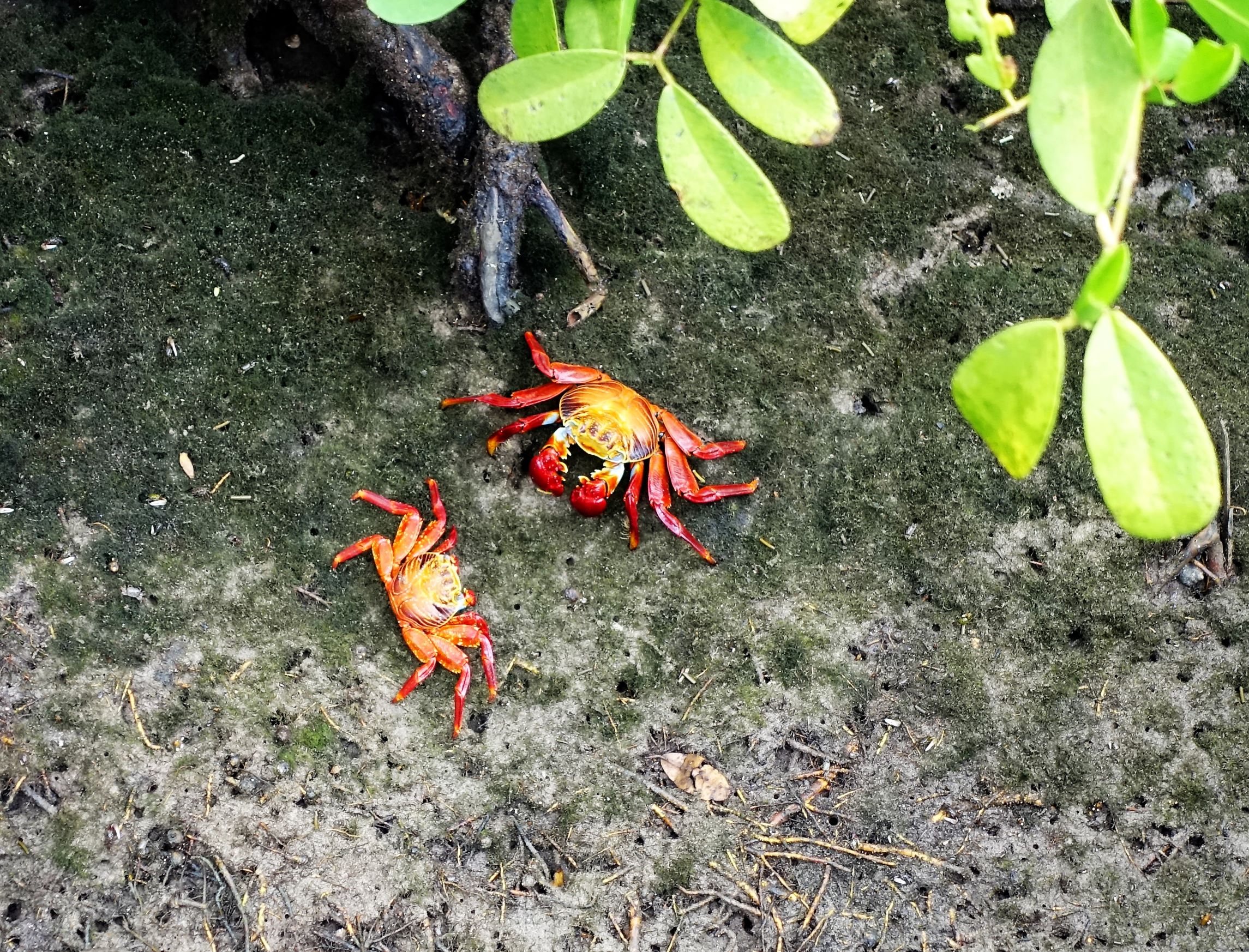
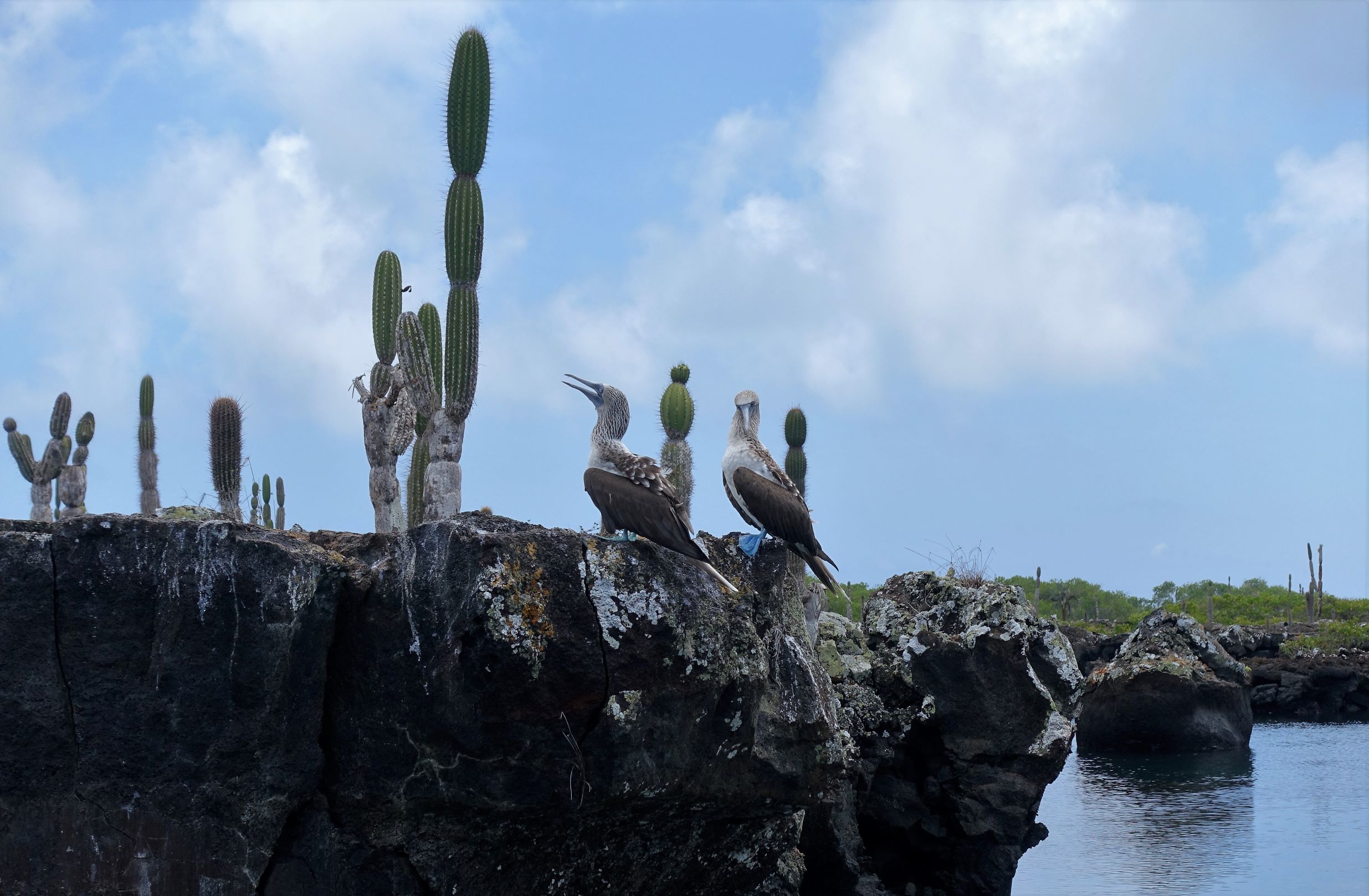
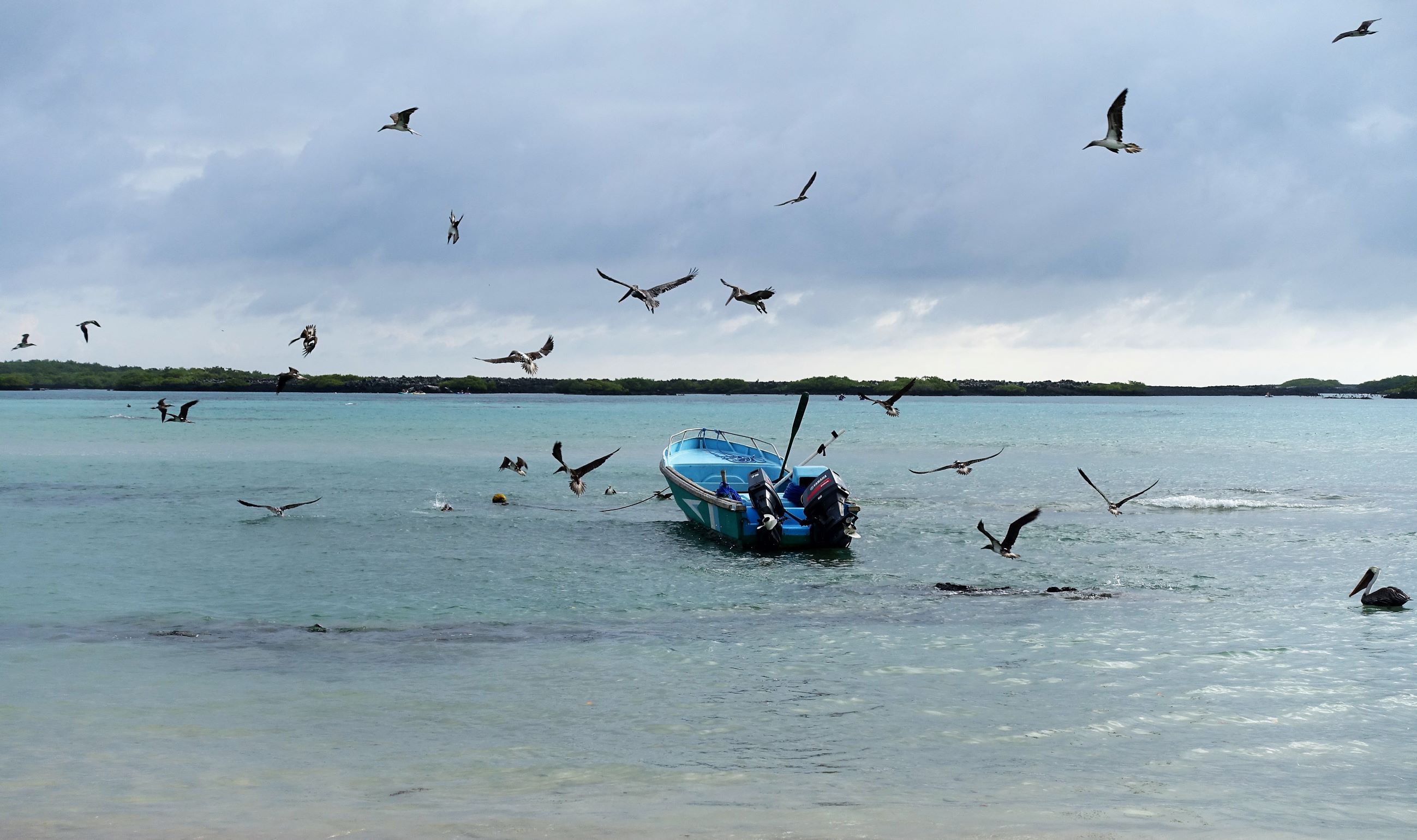
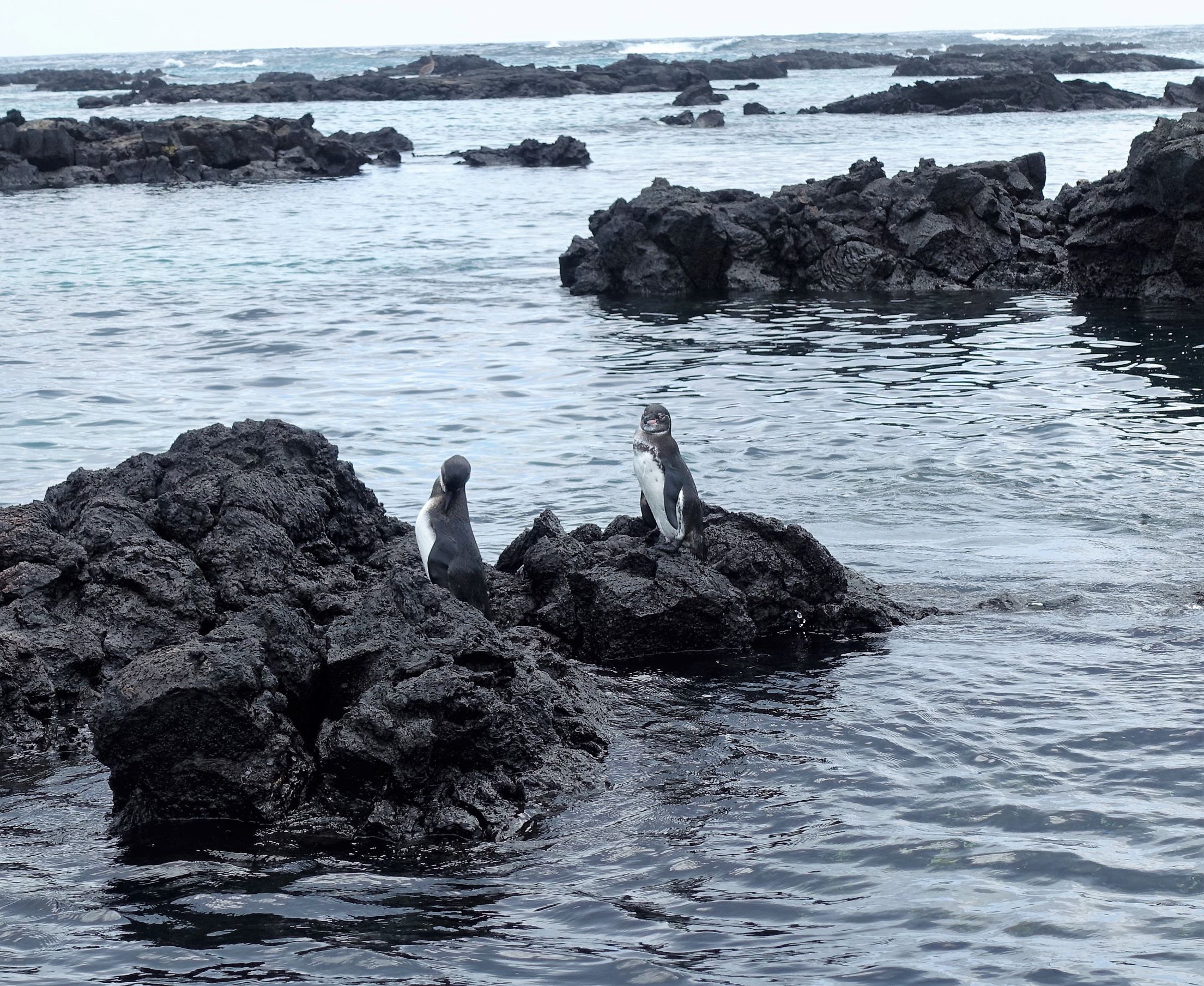
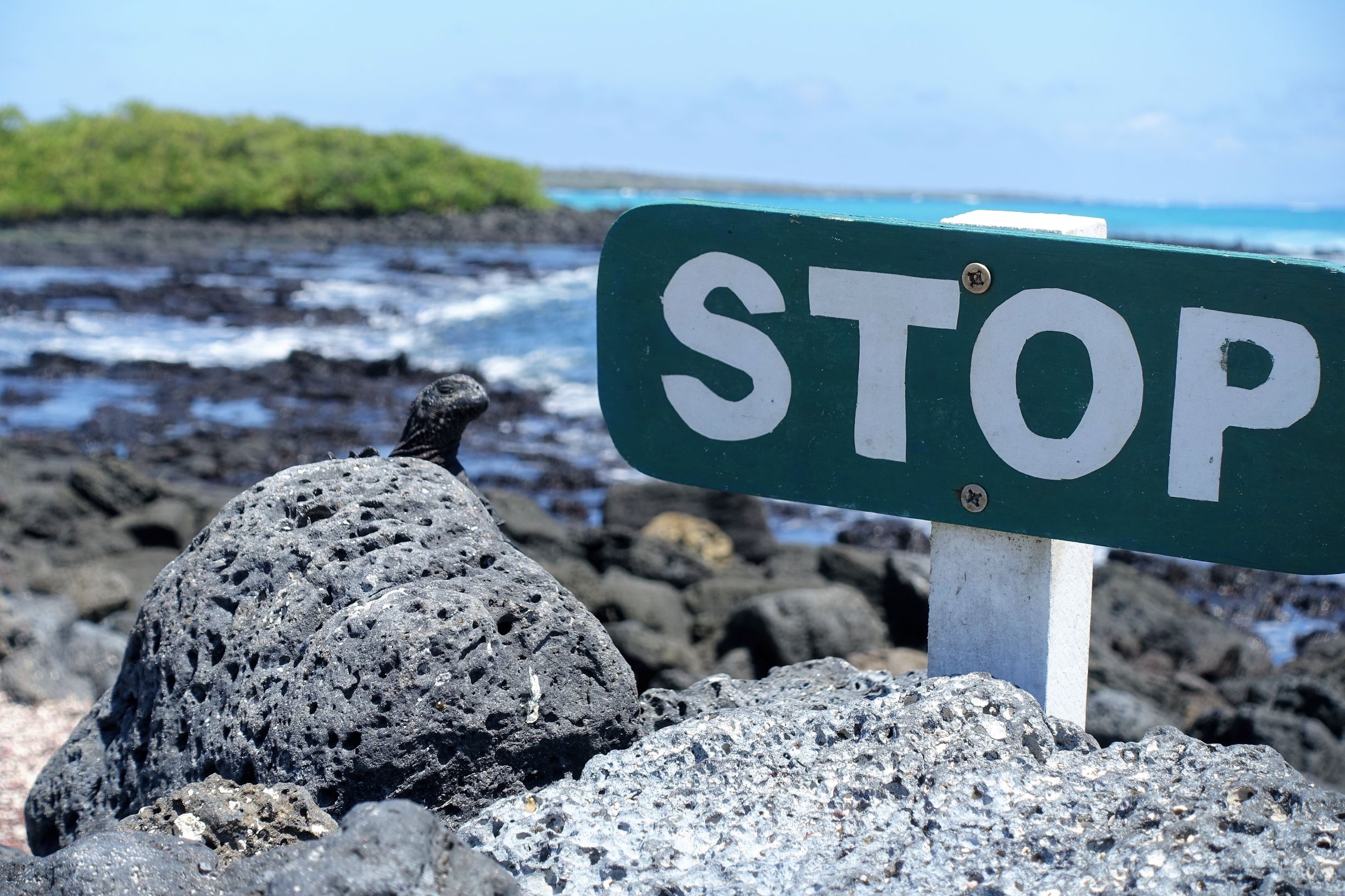
Sea lions are waiting to greet you at every port and beach, preferring to snooze while they wait.The sea lions and the monkey.The giant tortoises are equally unfazed by humans, going about their business with complete unconcern.So long as you don’t get in between a marine iguana and its destination you’ll be OK.Three for the price of one!Every time I saw the big and beautiful crabs I remembered the delicious crab risotto in Guayaquil – no wonder it was more crab than rice!Blue-footed booby showing off its best asset.Feeding frenzy involving Blue-footed boobies, penguins and pelicans. And fish.Galapagos penguins are the second smallest in the world after Fairy penguins. Not surprising, given they hang out on the equator where you would think it was just a tad too warm.OK enough about animals, I want to show you the amazing beaches!
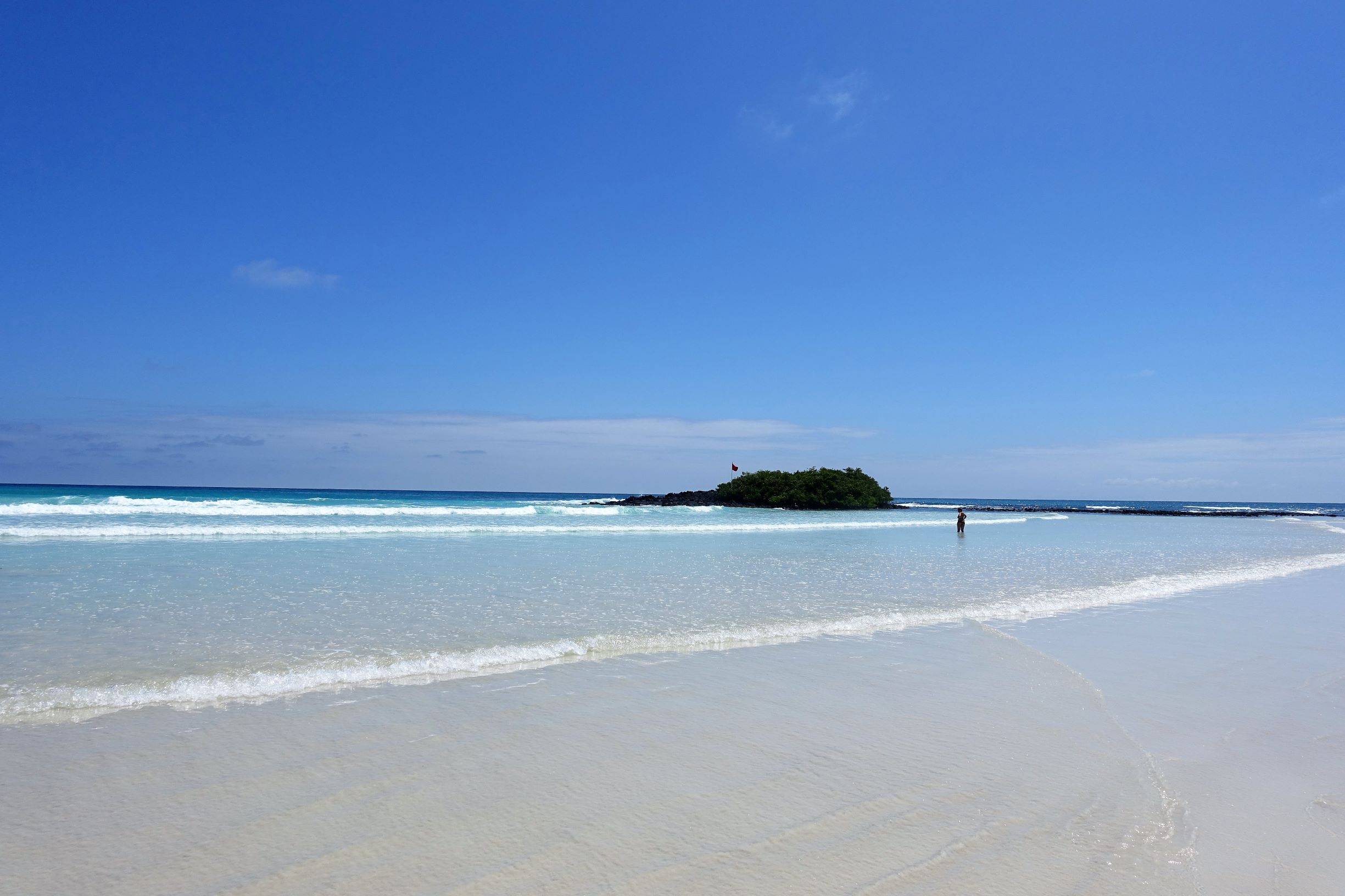
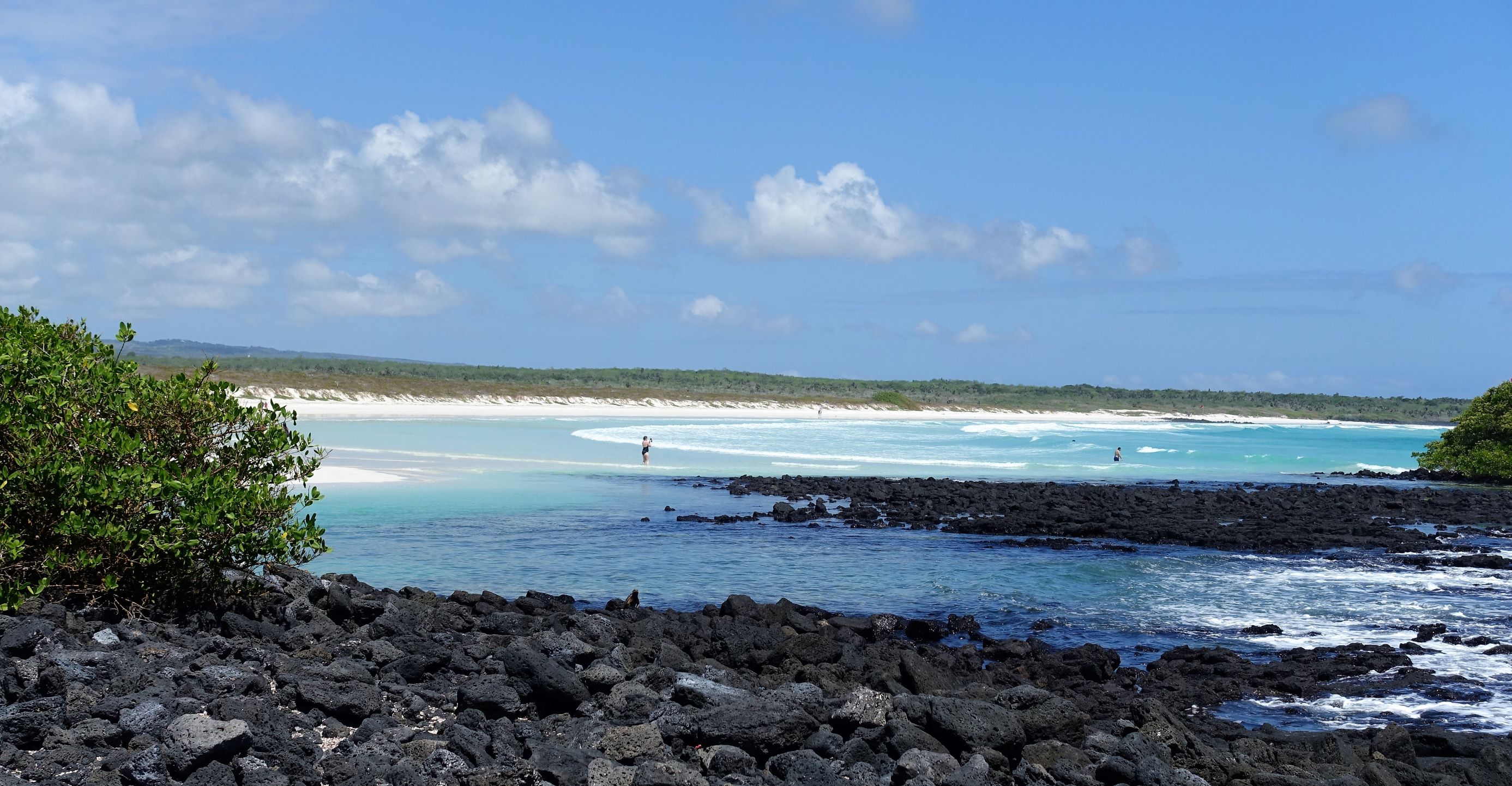
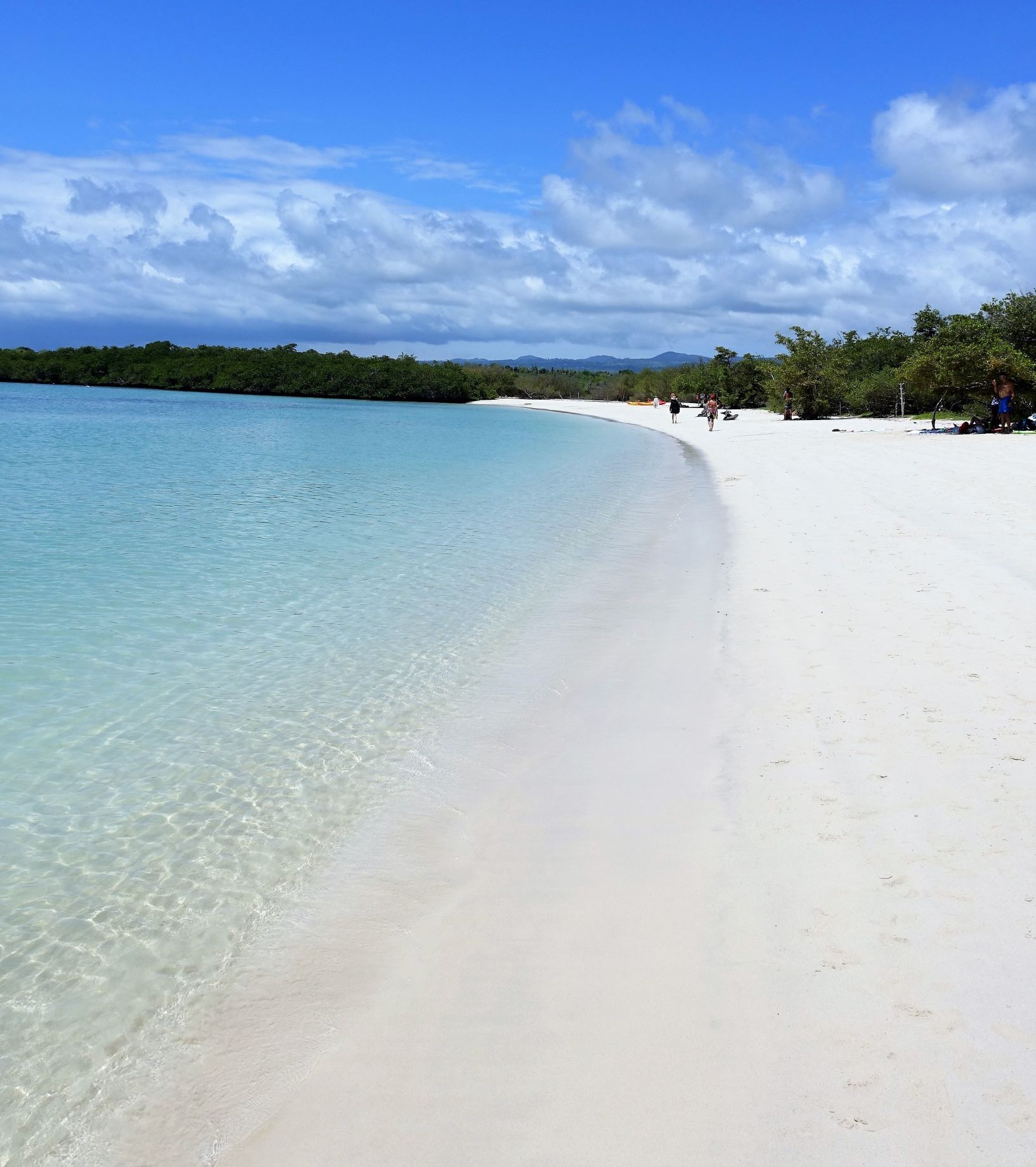
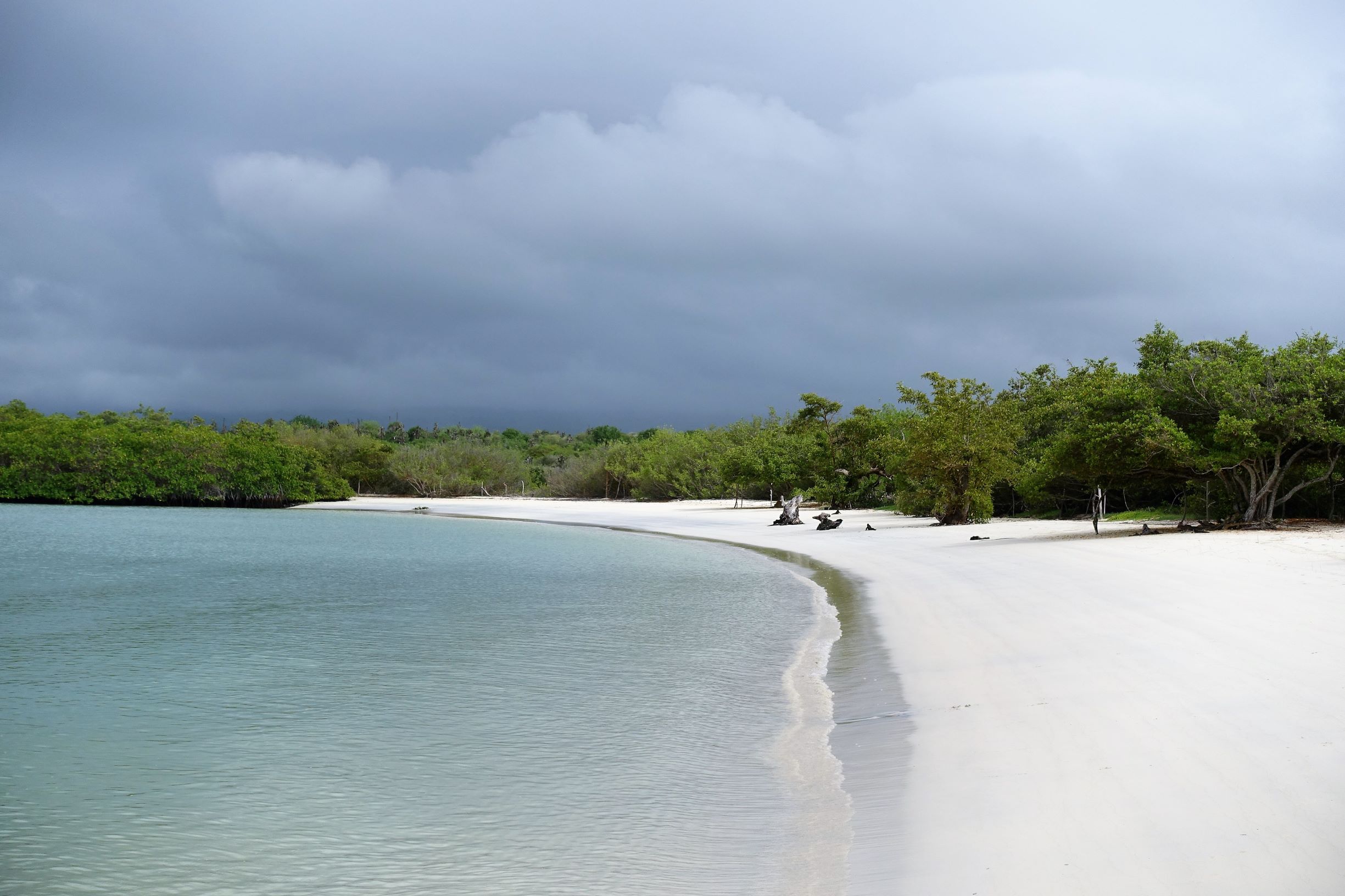
At the end of a hot and sweaty 2.5km walk from Puerto Ayorta on Santa Cruz Island you reach your reward: Tortuga Bay. Not one, but two gorgeous beaches, with a sensational small snorkeling spot in between. This place really has something for everyone.
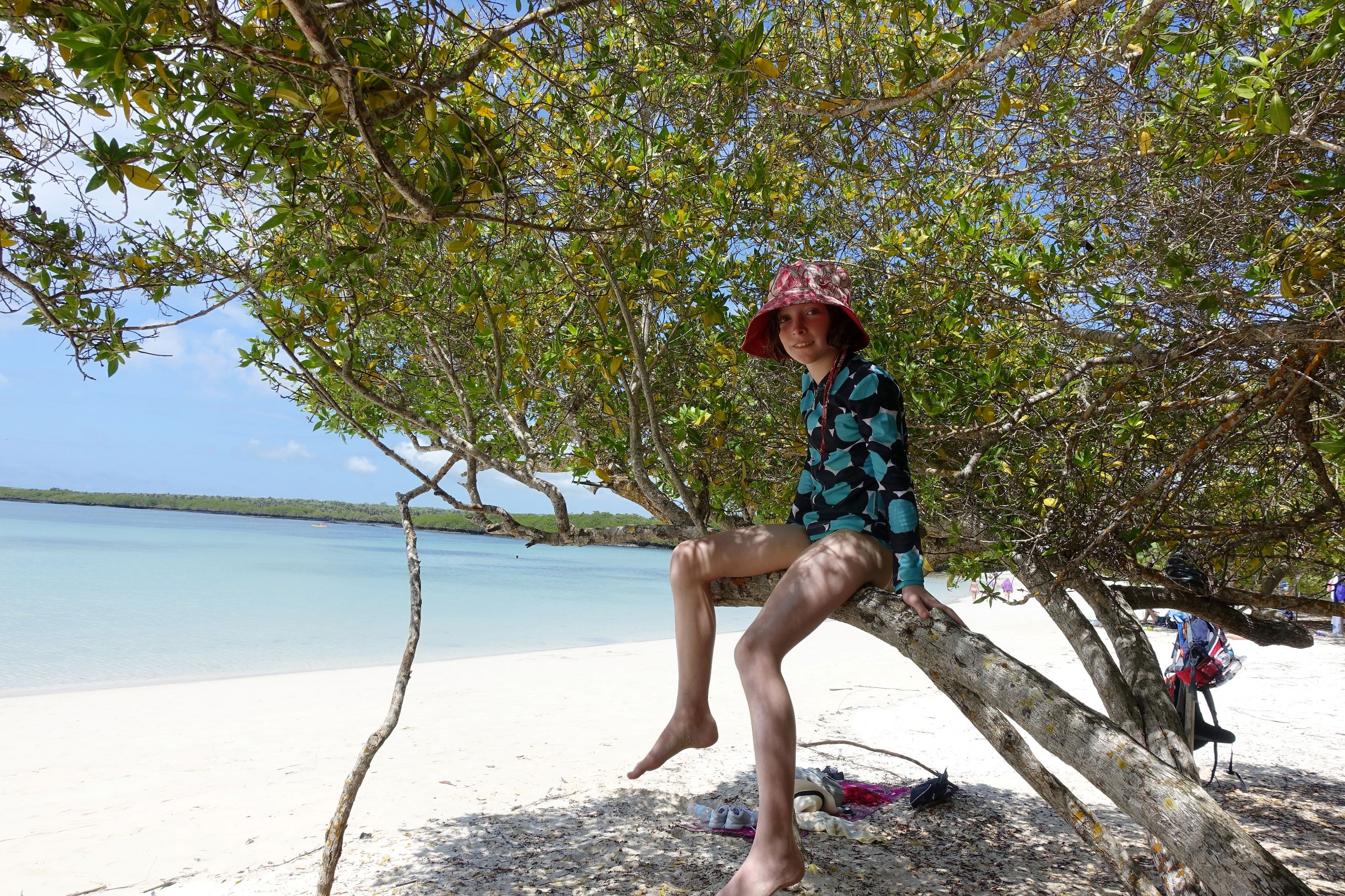
The surf beach at Tortuga Bay.Wading in the shallows we spotted baby reef sharks and other 2-3ft long fish.Surf beach in background, snorkel spot in foreground.The lagoon at Tortuga Bay.The lagoon and its trees are a great place to hang out.Getting there early one morning meant we were able to follow a group of Manta rays swimming along next to the sand (and no it didn’t rain despite the clouds).
The animal encounters were continuous at Tortuga Bay. Some of my favorites: swimming with 7 marine iguanas in the snorkel spot, being dazzled by at least five different species of fish swimming by me in schools, and feeling my heart beat faster on spotting a triangular fin cruising around an oblivious tourist in the lagoon (only a baby reef shark).
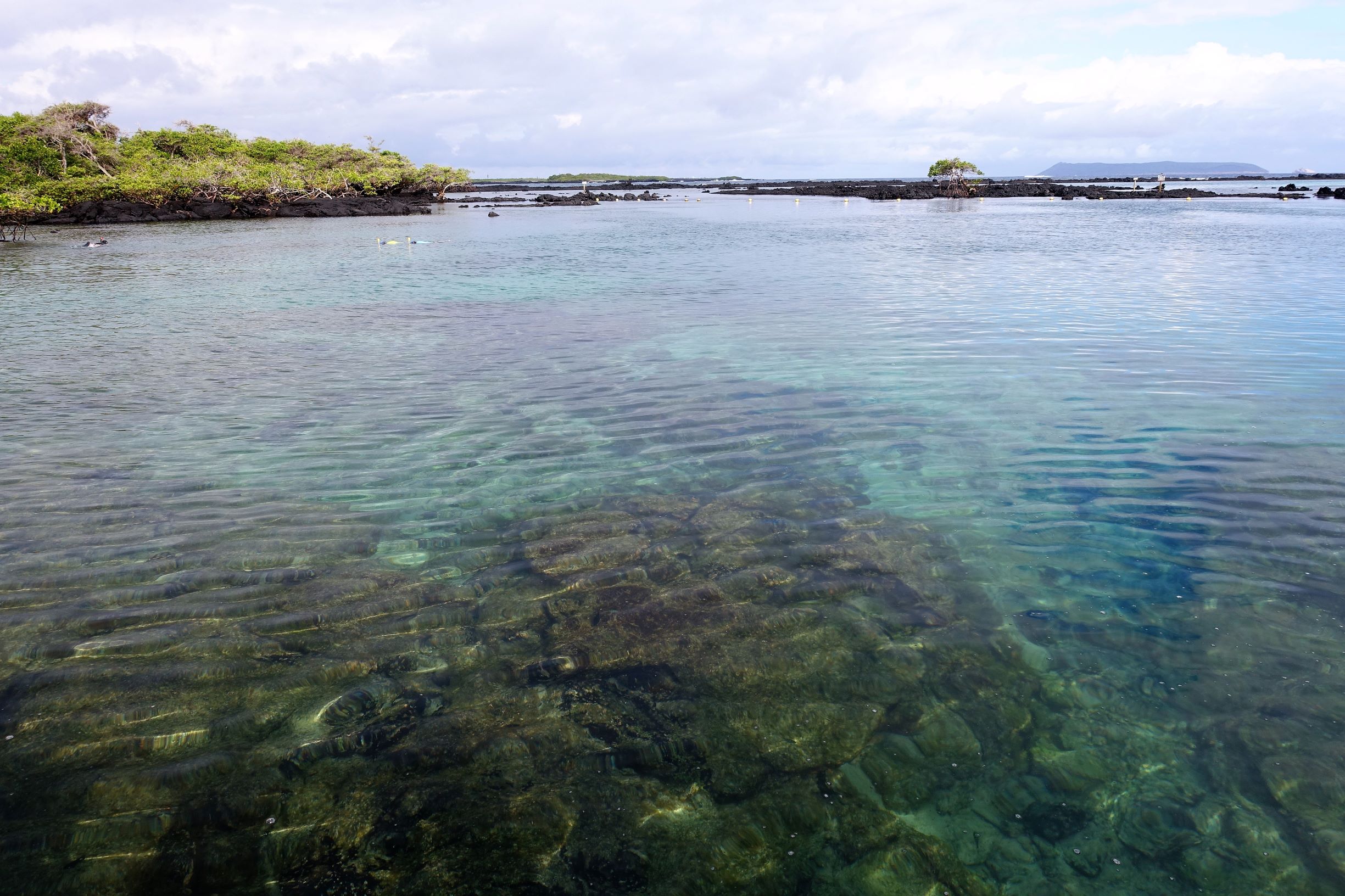
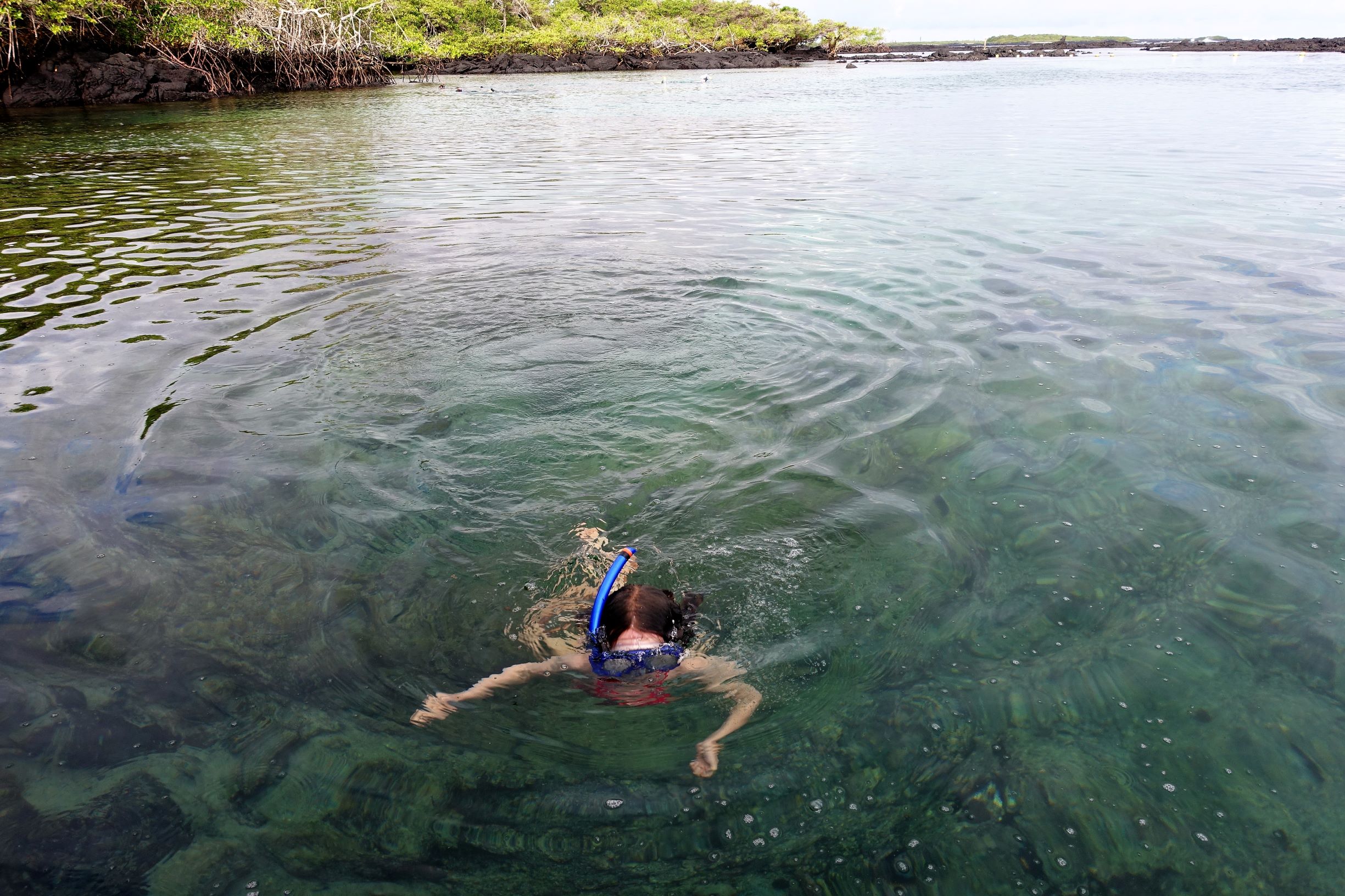
Concha la Perla: a sensational snorkeling spot on Isla Isabela.
Despite the allures of Tortuga Bay, our second island – Isla Isabela – was actually our favorite. We could have stayed here for far longer than three days and the whole family has been making plans to go back.
We did a fabulous snorkeling trip on Isla Isabela, where we saw a staggering variety of marine life, but actually most of these animals could be seen for free at Concha la Perla. Again my favorite experience involved a shark: snorkeling by myself above an underwater canyon a 2m reef shark casually cruised by below me and into a dark cave. And my heart jumped into my throat. But I’m looking forward to the prospect of more snorkeling with sharks in Belize!
Hiking the Short (2 day) Inca Trail Trek with Llama Path.
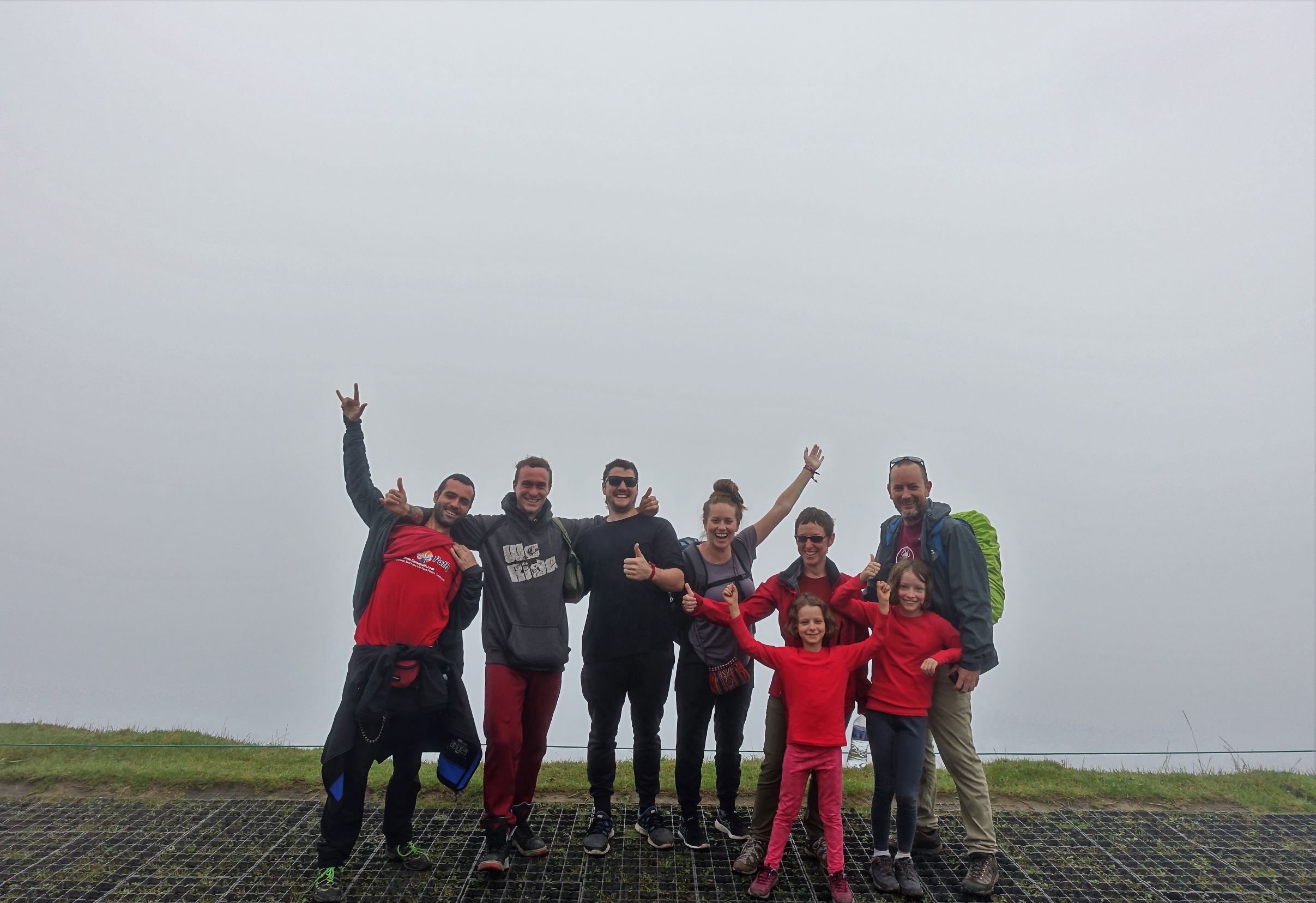
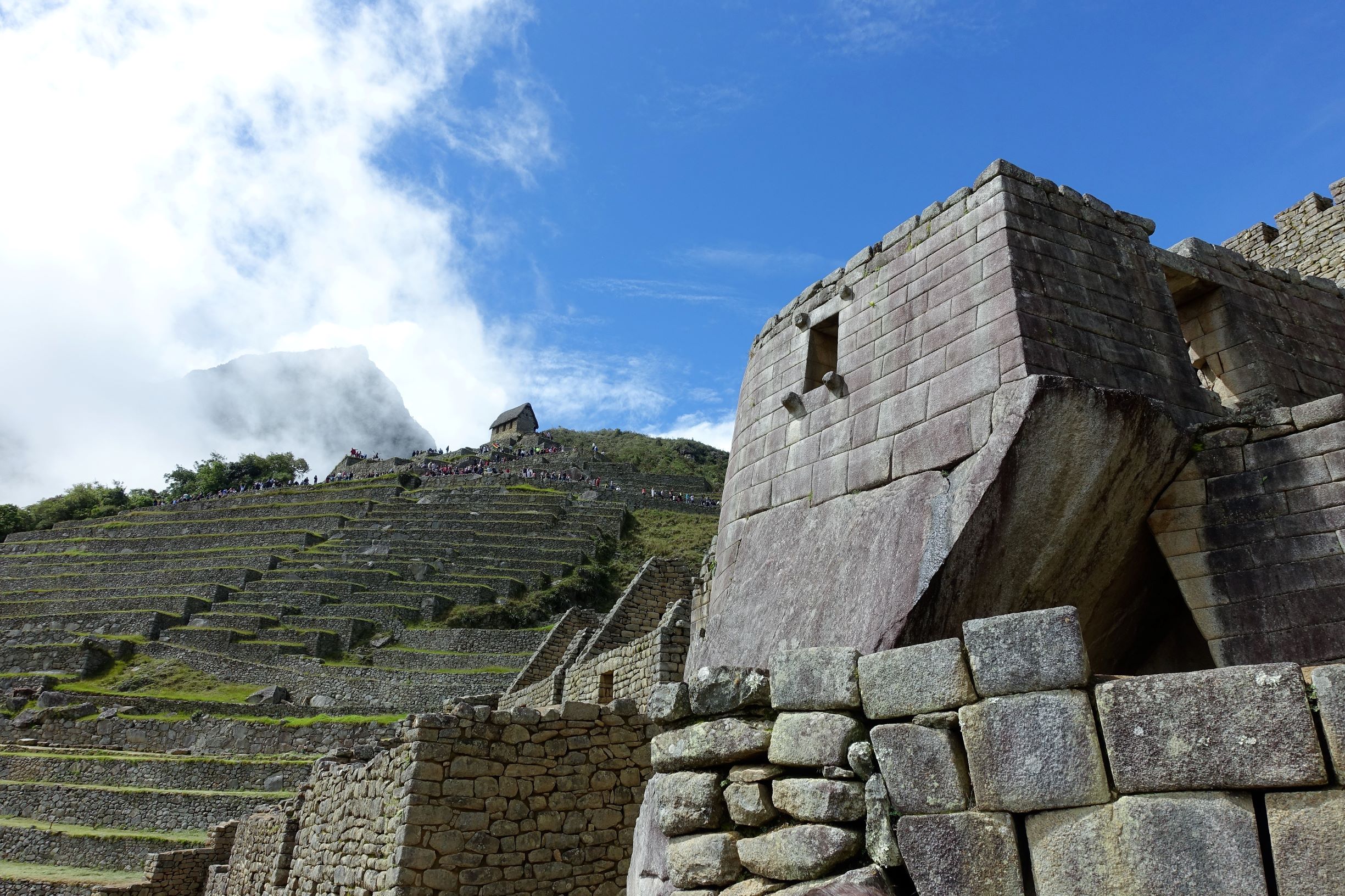
This is Machu Picchu! Apparently…
OK, so our group could afford to take a light hearted attitude to the morning mist shrouding Machu Picchu. Unlike most of the many, many people waiting hopefully for the cloud to rise, we’d already had our first views of this official wonder of the world.
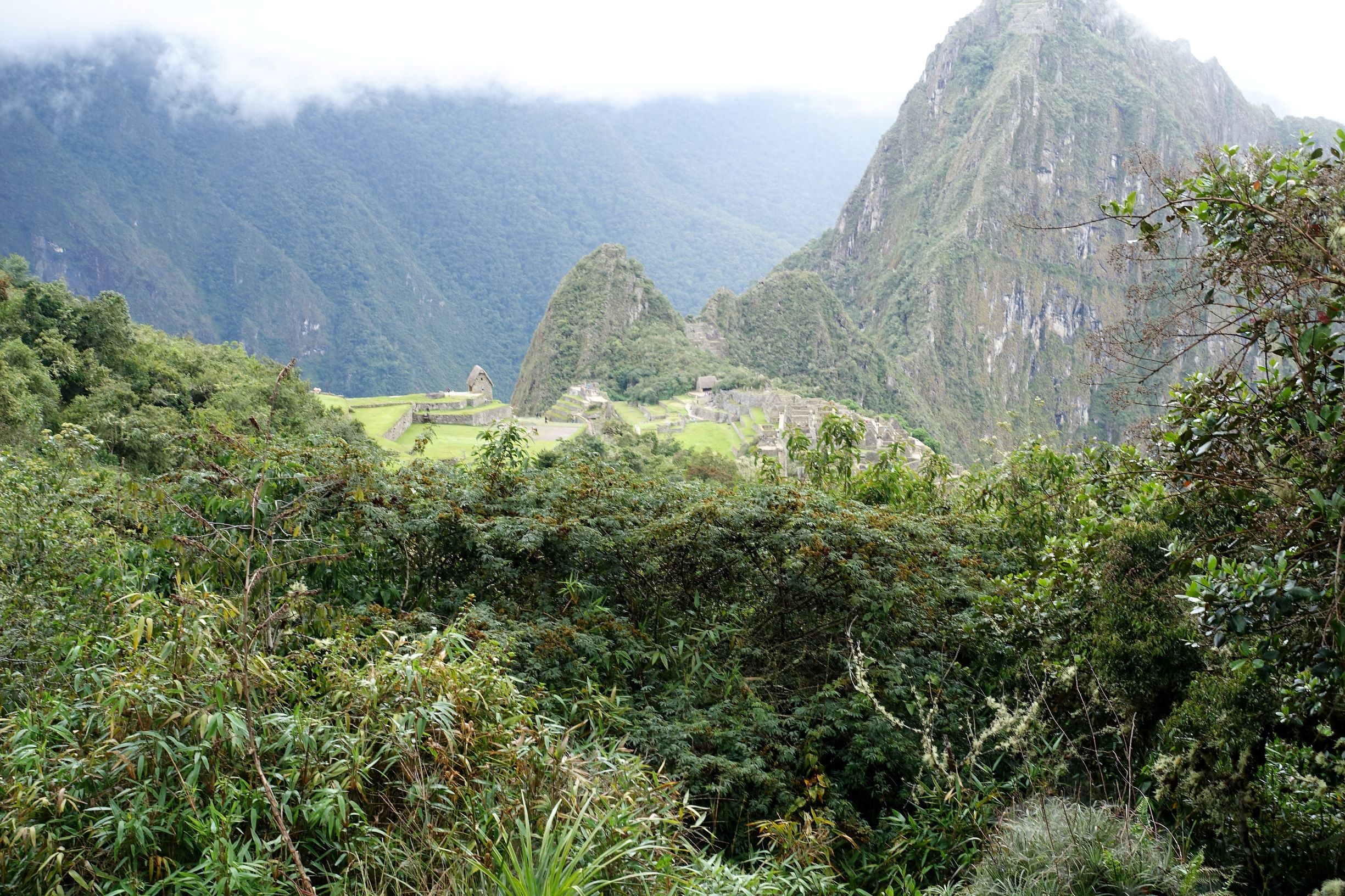
The conversation that morning was all about how lucky we were to have arrived at Machu Picchu, via an ancient Incan path, to find it almost deserted and glowing like the lost city in the brochures…
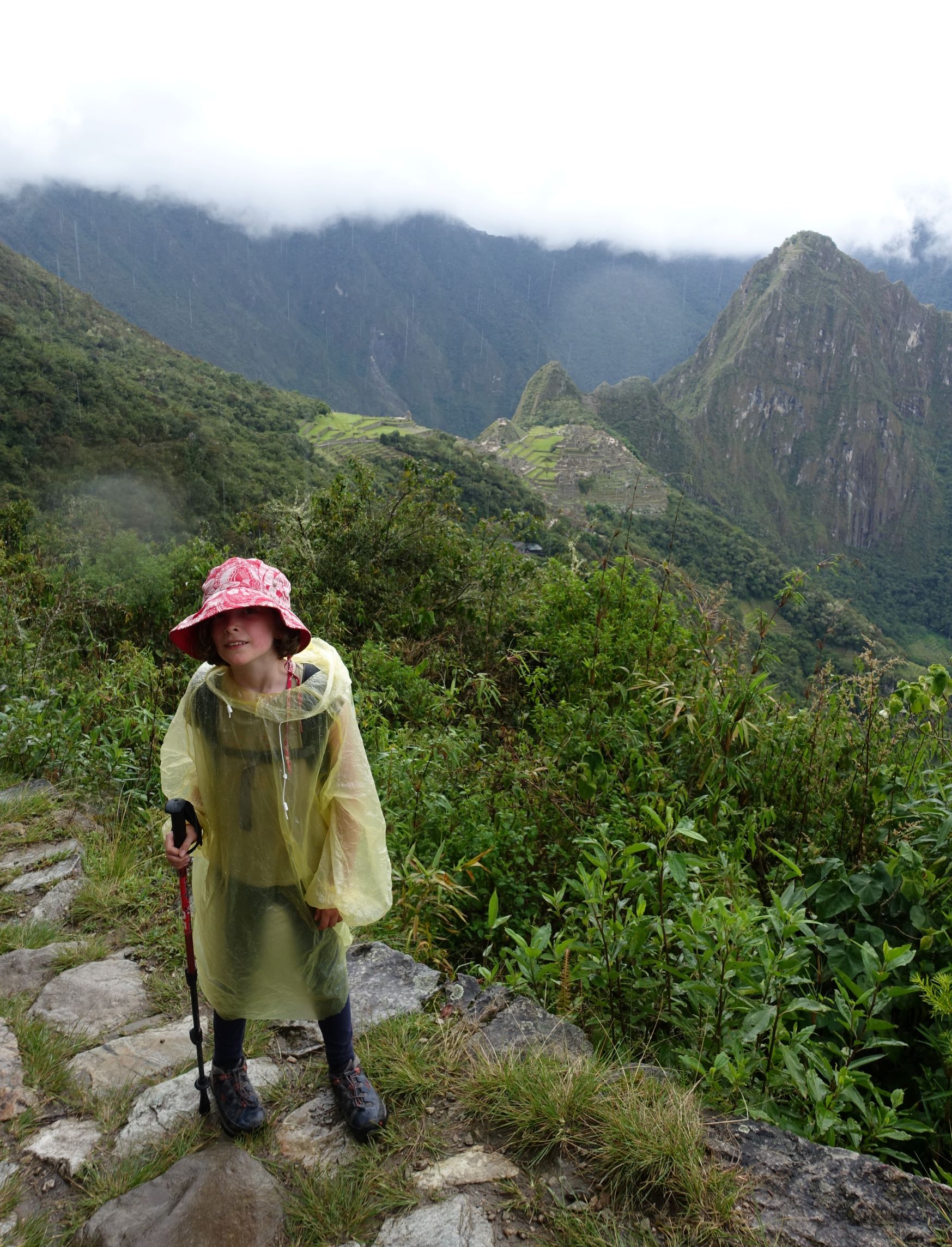
After our experience of trekking 10kms up the old Inca path from the valley, climbing through other Incan ruins, past waterfalls and through cloud forest to the Sun Gate, it was quite a shock to return the next morning via a convoy of buses carrying literally thousands of people.
But let me get back to the beginning. You may think that a 4 day trek up muddy mountain paths in the rainy season, camping in basic tents and using smelly squat toilets, is not attractive. We agree. On the other hand, arriving at Machu Picchu via a bus and missing out altogether on the beauty and challenges of the Inca trail was not attractive either. The 2-day trek is a happy alternative for those who don’t have the funds, time or commitment for the real deal.
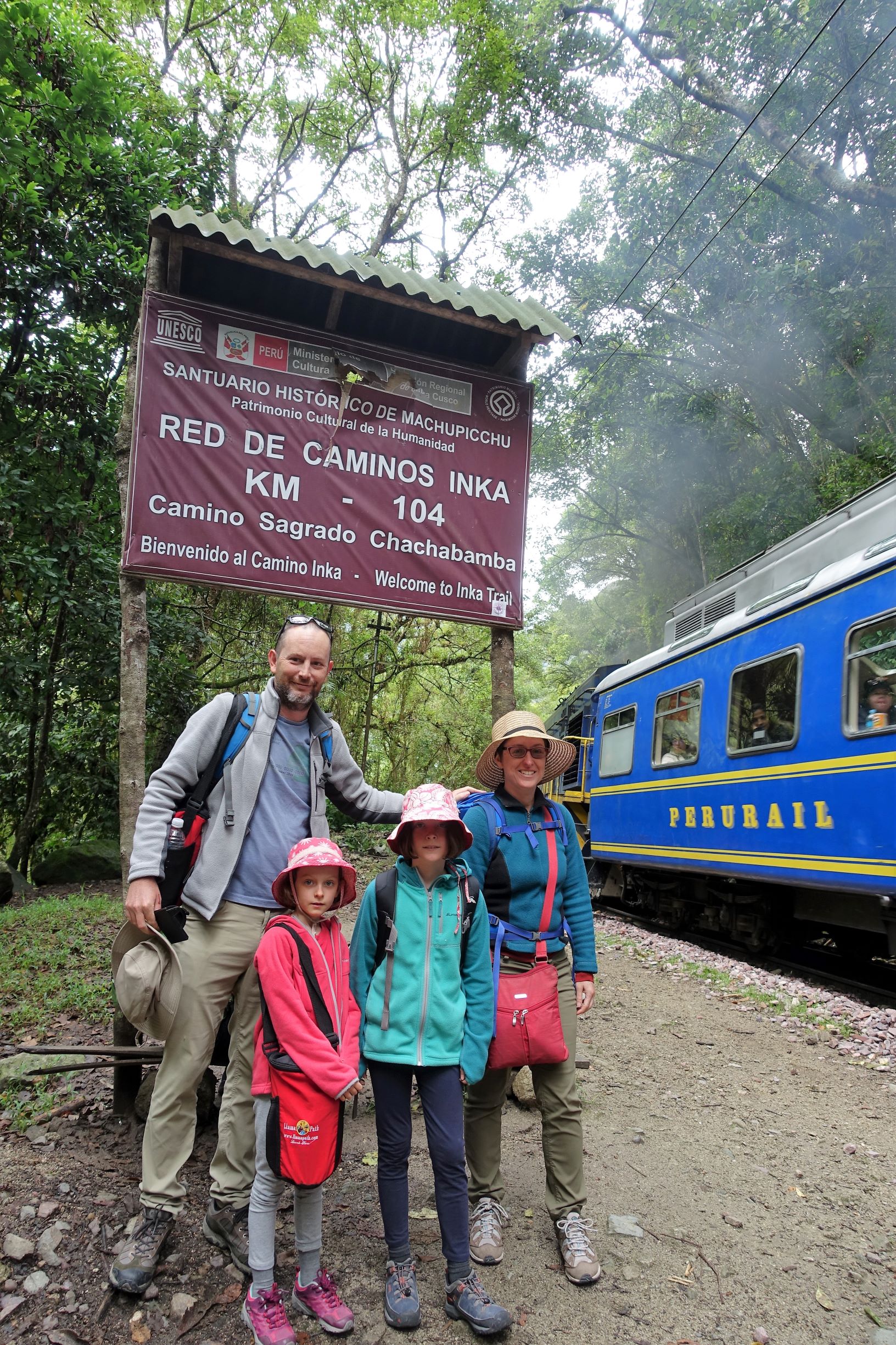
We joined four other travelers and our guide Will at 5.00am in Cusco and drove around 1 1/2 hours through the Sacred Valley to the train station at Ollantaytambo. The train winds it way along the valley floor to Machu Picchu Pueblo (formerly known as Aguas Calientes). It is a spectacular trip past snow-capped peaks and through a gradually changing landscape that becomes more and more jungle-like. Machu Picchu is essentially located at the start of the Peruvian Amazon jungle. But we didn’t travel that far – we got off the train early at stop no.104 to begin our hike.
Bye-bye train, hello Inca trail
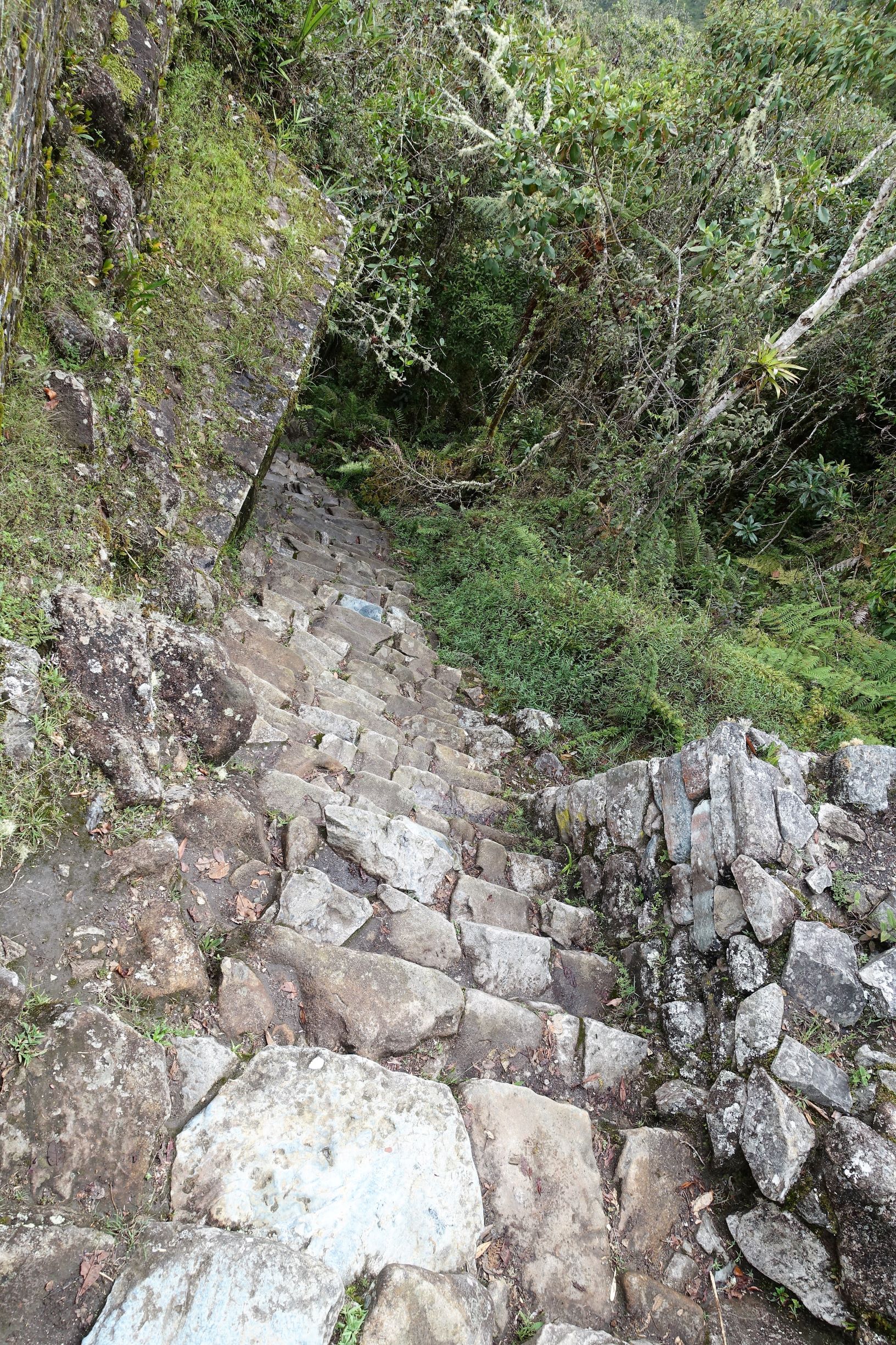
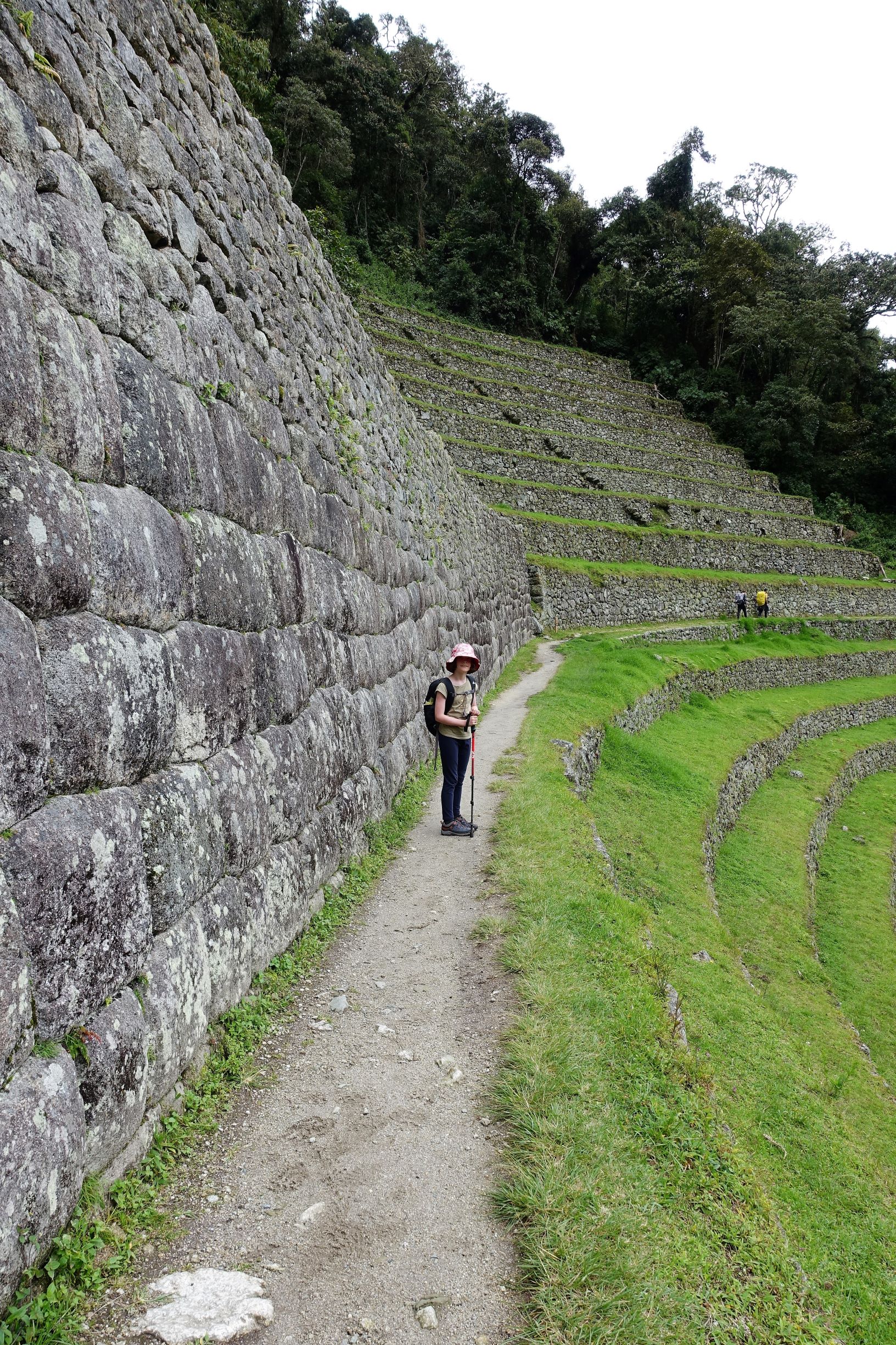
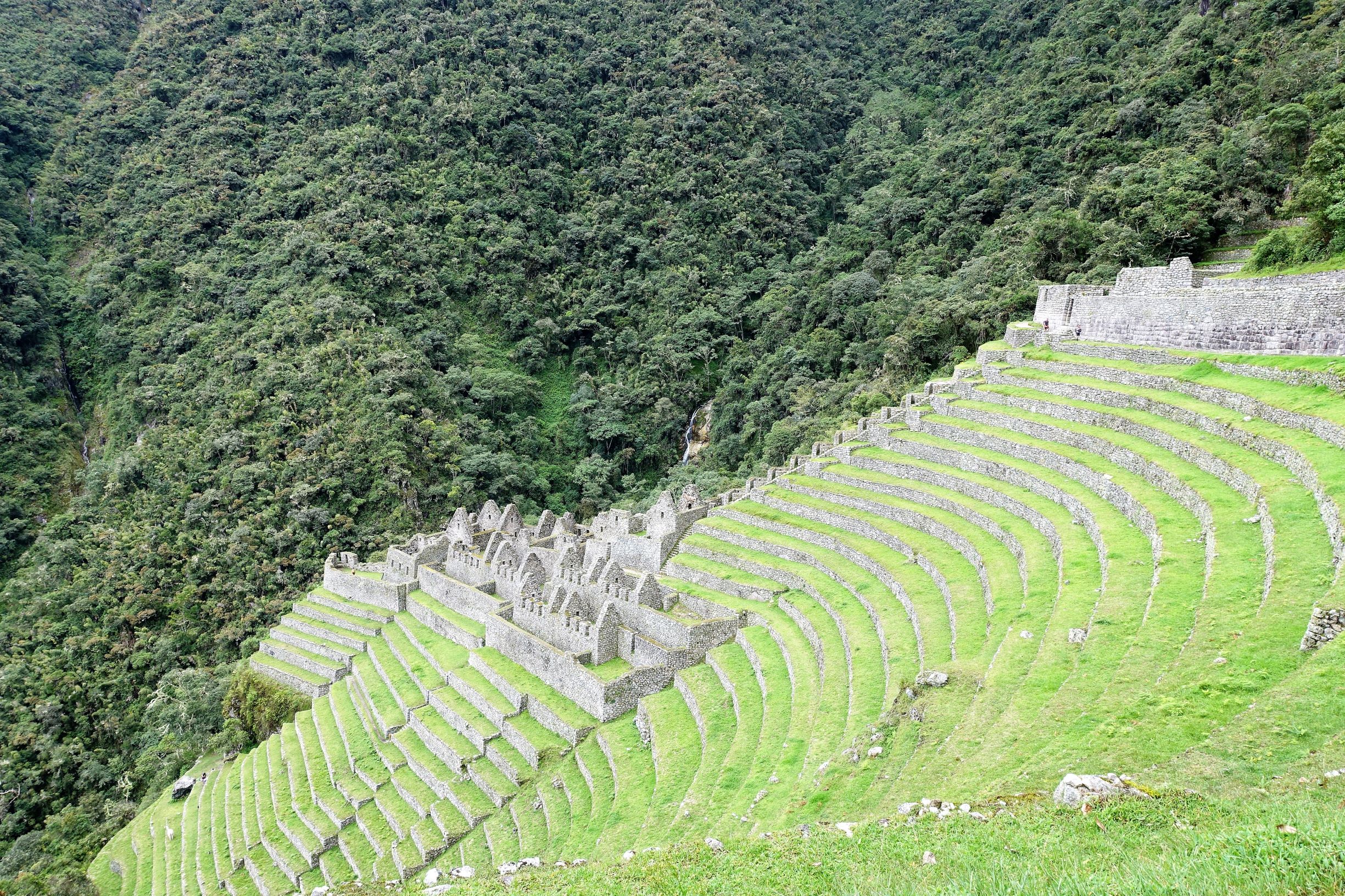
For the most part the trail winds gradually up, but with sections of more challenging stairs. Along the way Will guided us through two partially reconstructed Incan sites, including the impressive Winay Wayna.
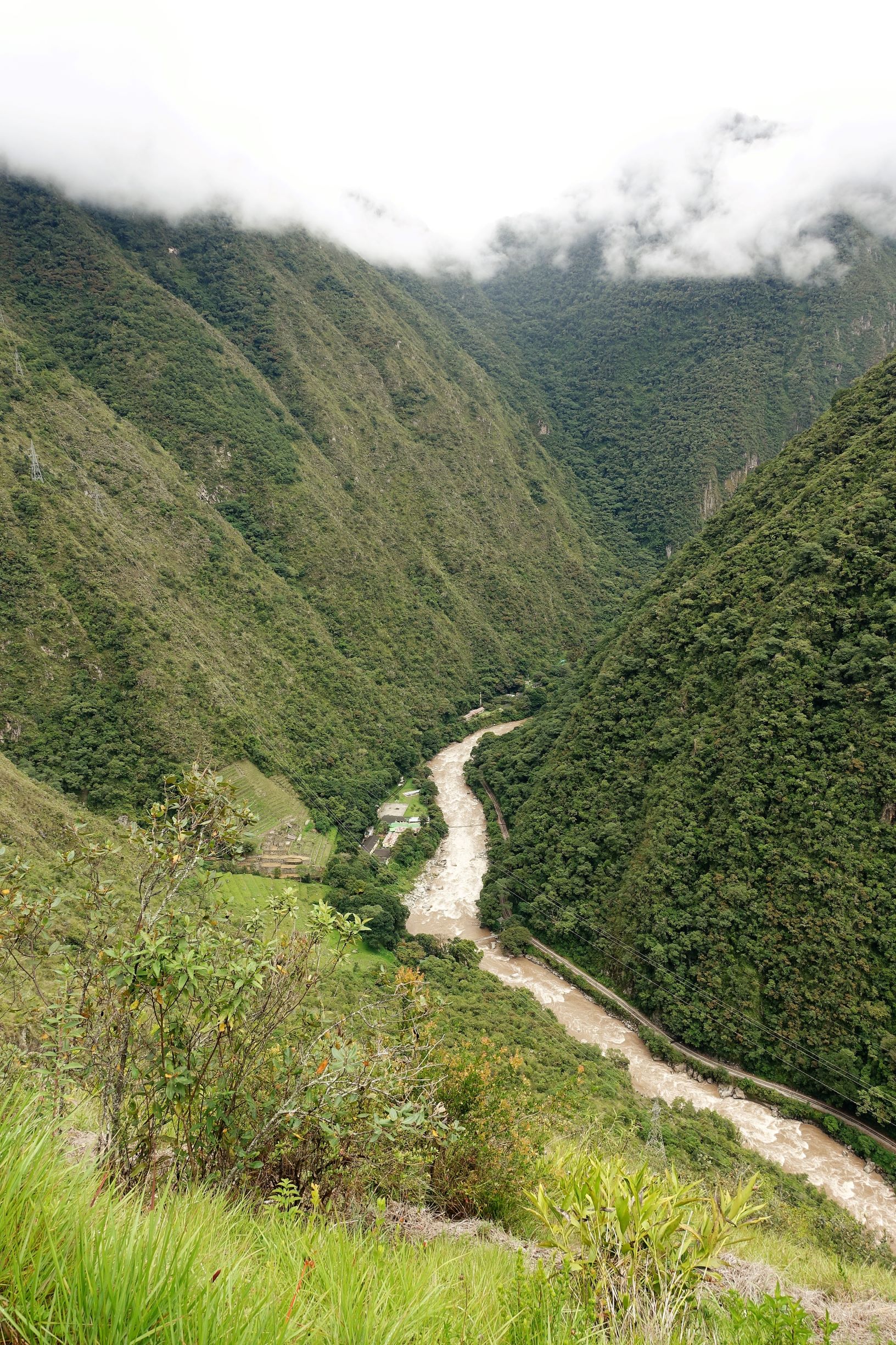
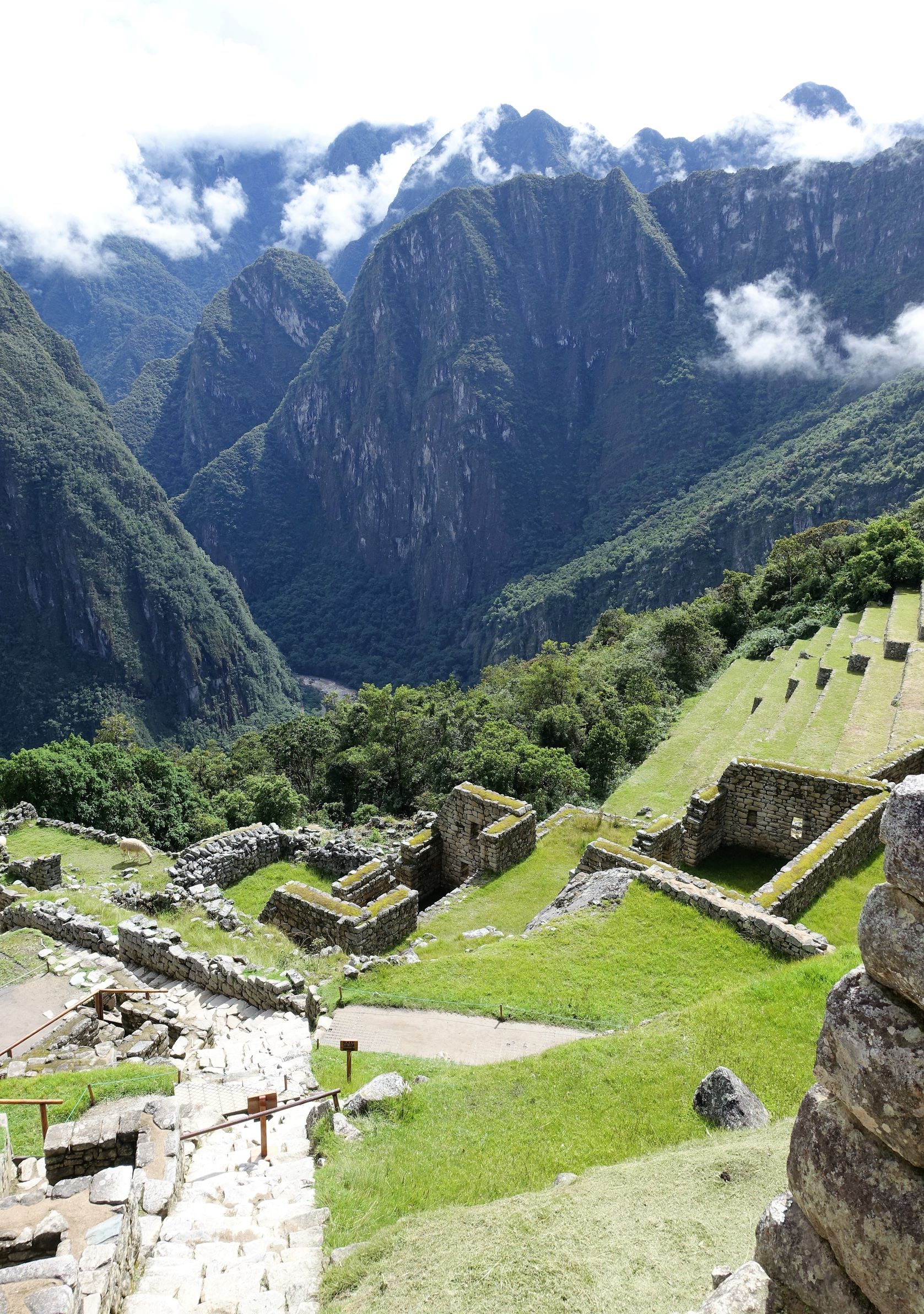
Looking back down at the valley floor from the trailThis set of stairs is so steep the safest way to climb them is using hands as well as feetTaking a break at the bottom of Winay Wayna, before tackling the 300 stairs to the topThe Incans managed to cut these stone blocks so that they could fit them together using no mortar – and without leaving gaps!Winay Wayna from abovePast the Sun Gate and the goal is in sight!
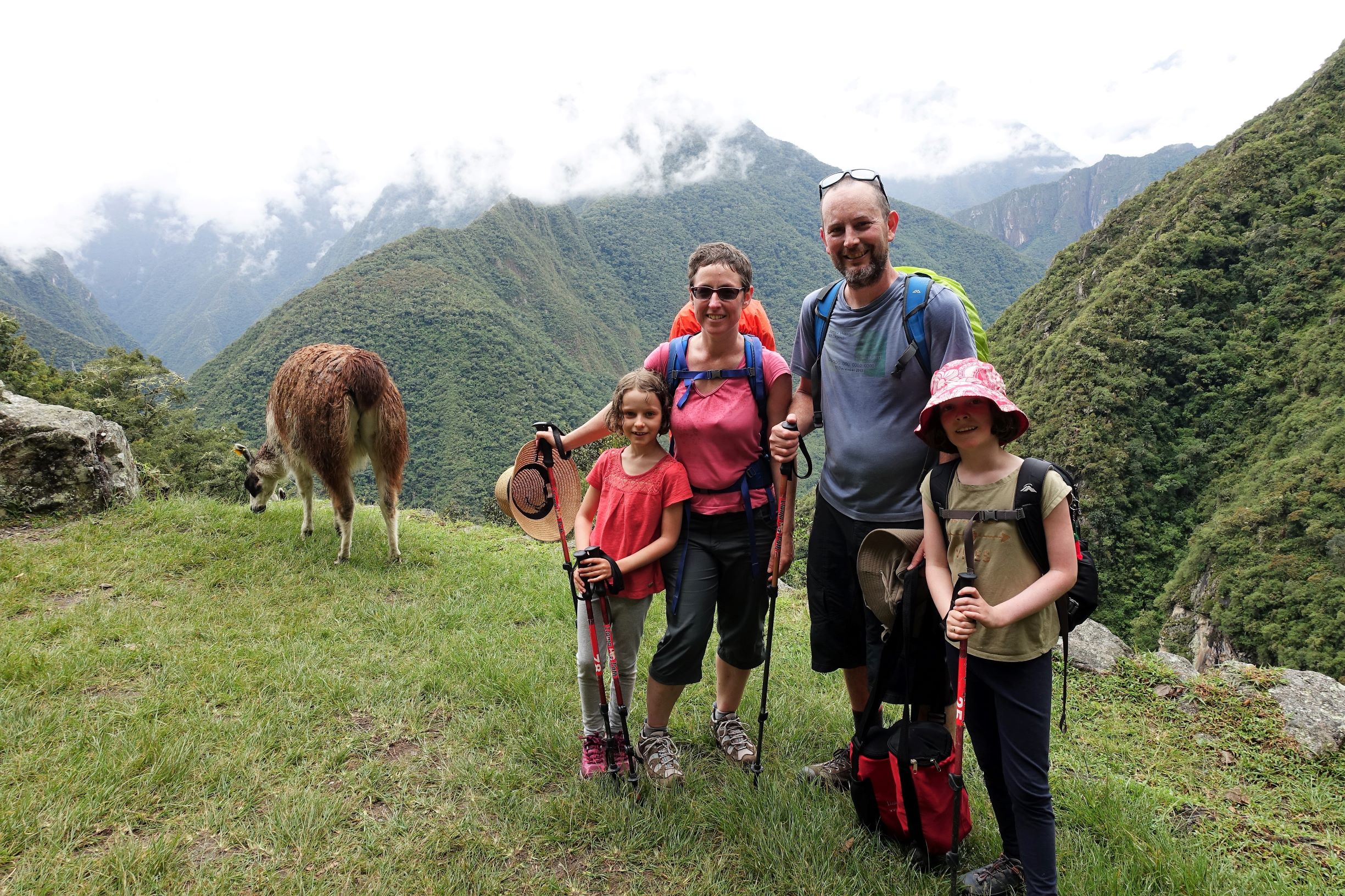
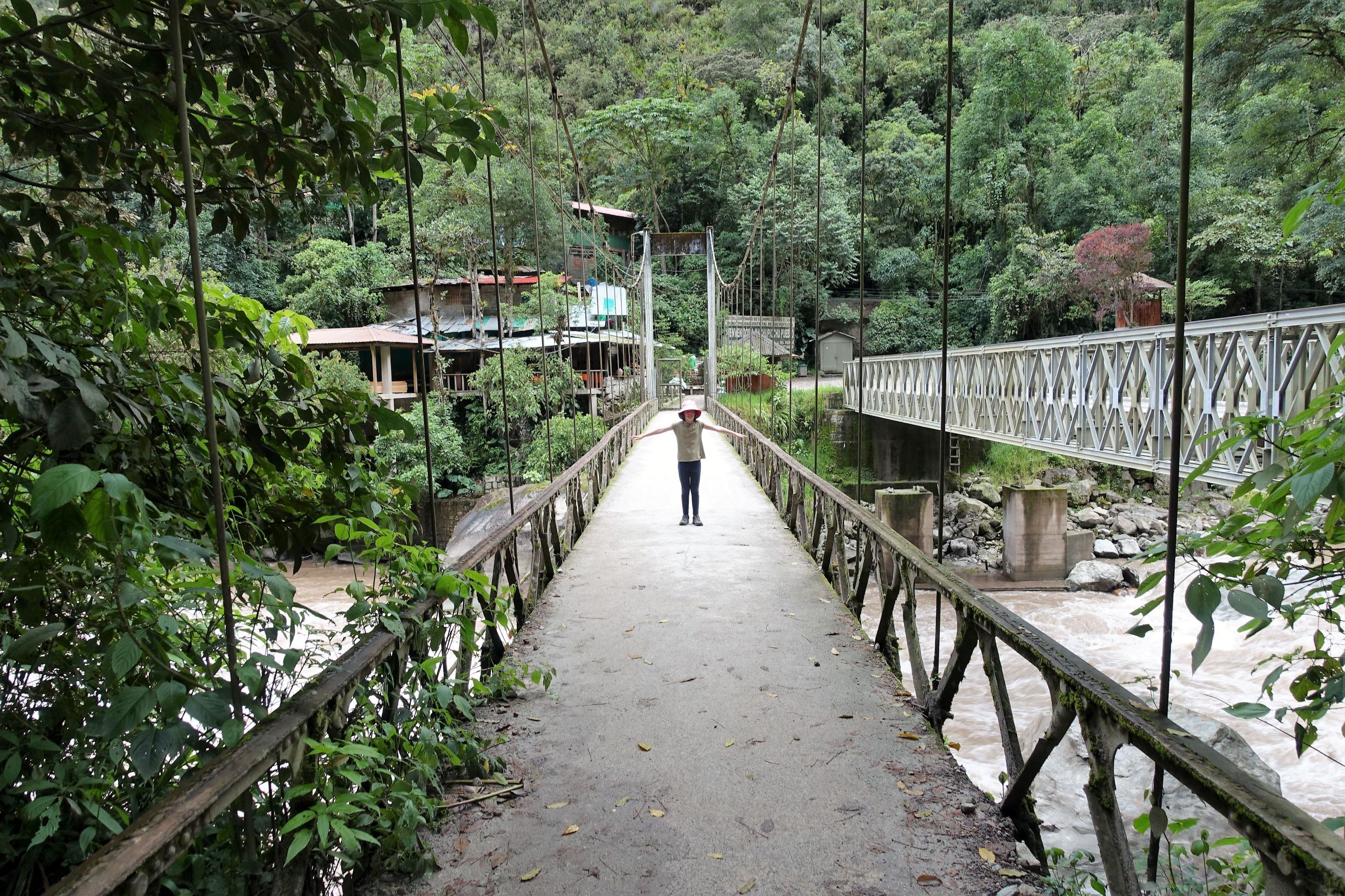
The 2-day Inca trail trek is a bit of a misnomer. It actually involves one long day of trekking – either 10km to Machu Picchu, from where you can take a bus the rest of the way – or 16km all the way to Machu Picchu Pueblo. The last 6km includes almost 5kms of steps – all going down. This trek was a new challenge for Eliane and Maille: the longest trek they have done in one day. 10kms was quite enough for Maille, on arrival at Machu Picchu she was keen to take the bus. But Eliane was equally keen to continue for the full 16kms. She achieved this with no problems whatsoever – even giving up her hiking pole on the way down to a fellow trekker whose legs were giving way beneath him.
Bridge to Machu Picchu Pueblo
After a delicious celebratory dinner with our friendly group, which included some other novice trekkers relieved to have made it all the way, and a great night’s sleep in our very comfortable hotel, it was another early start.
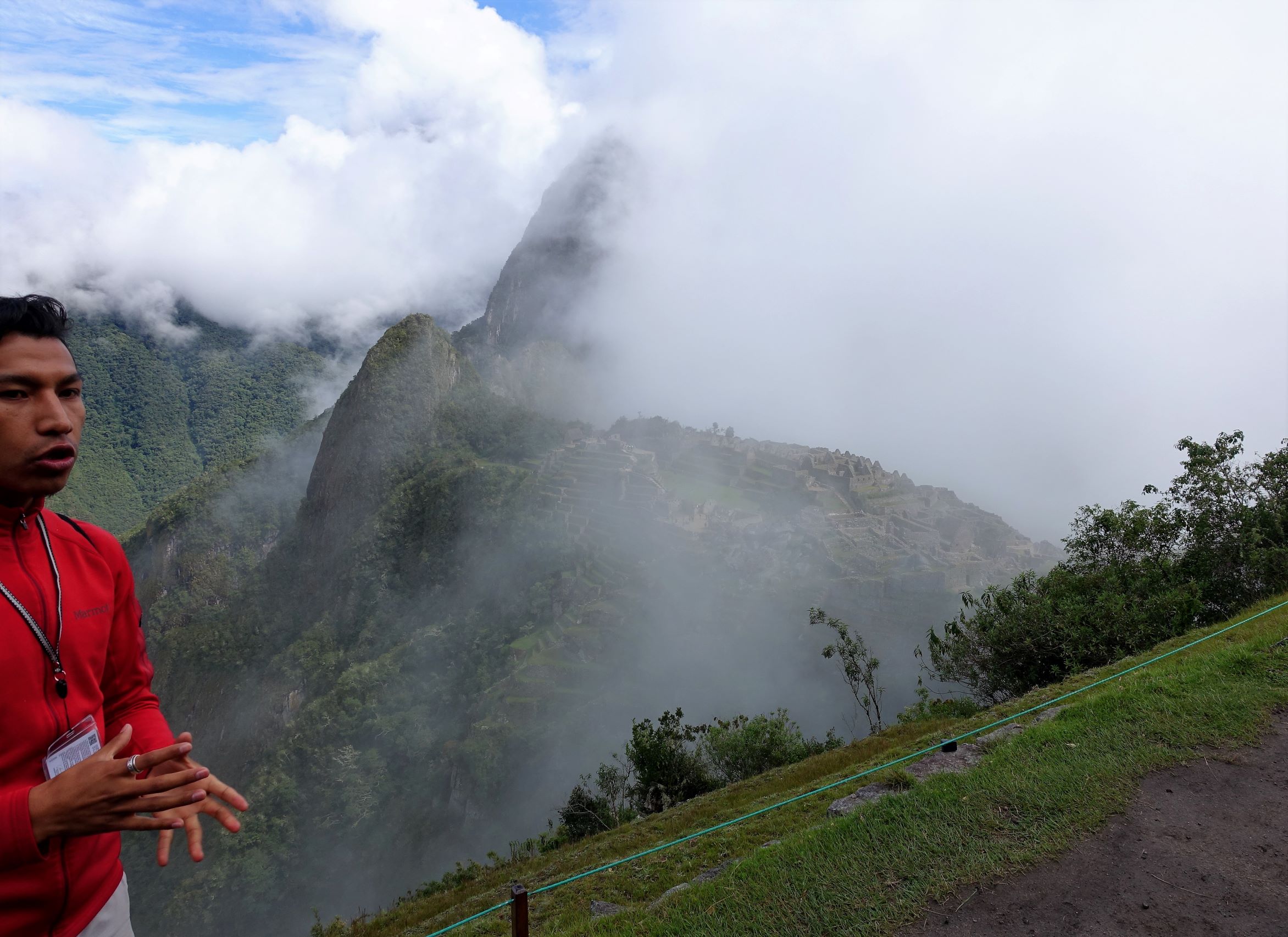
The second day of the tour/trek involves a 3 hour guided tour of Machu Picchu. We learnt so much from Will about not just the site and its history, but the beliefs and culture of the Quechua people. For instance, the word Inca refers to the Quechuan rulers – the King and Queen – although it’s now commonly used to refer to the pre-colonial Quechuan empire and its people. Will was passionate and very knowledgeable on his subject, having studied the history of his country at University. He identified strongly with the Quechuan spiritual beliefs and world view and I was impressed – again – by how intact the Quechuan indigenous culture appears to be.
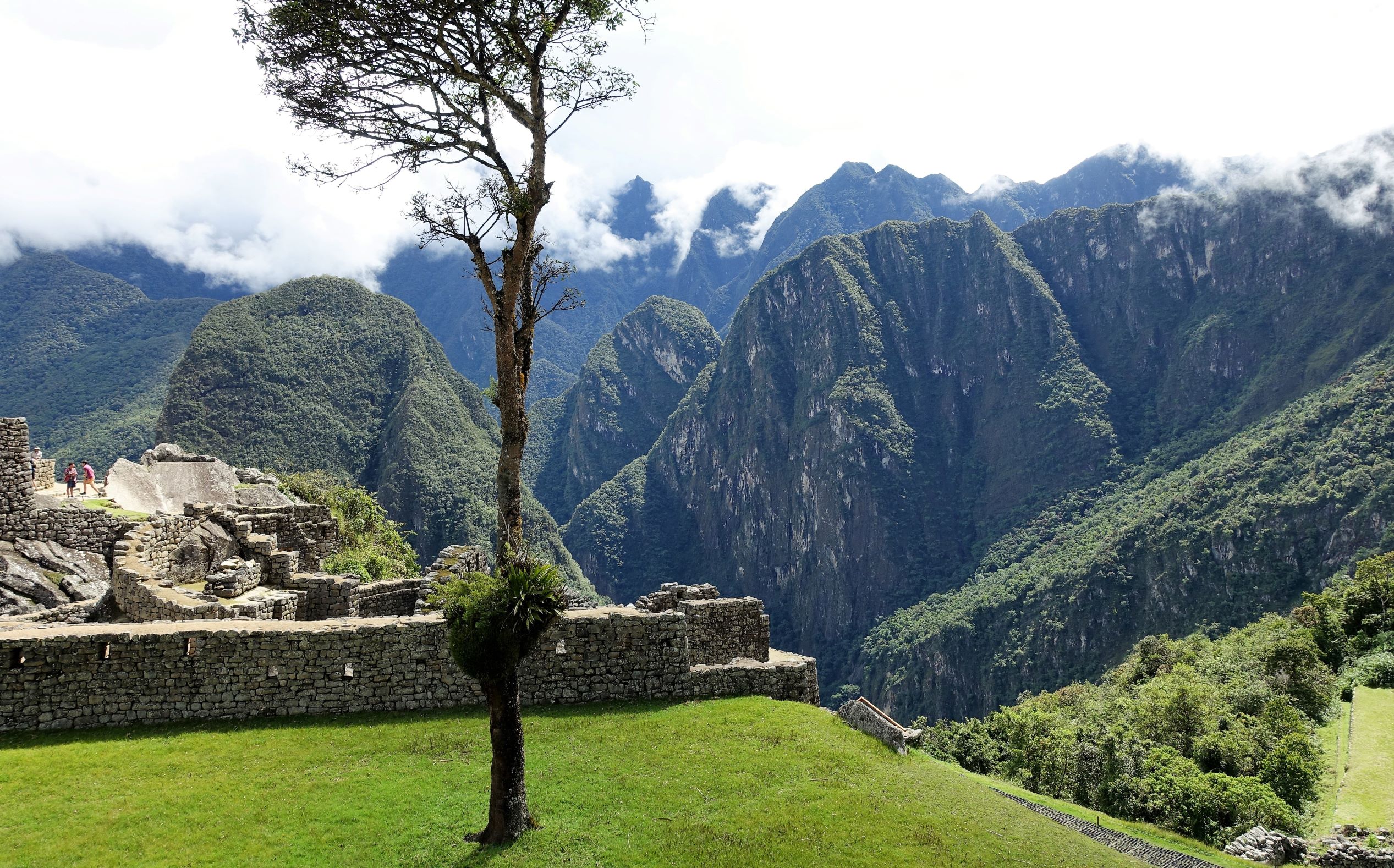
Will lecturing in front of a slowly emerging view of Machu PicchuFinally revealed in all its glory, Machu Picchu is truly impressive
These pictures don’t show it, but there are hordes of people visiting Machu Picchu at any one time and it’s easy to get stuck in a slowly moving conga line of people, snaking its way around the site, before being spat out at the exit.
In our view the 2-day Inca Trail Trek was well worth the money. It enabled us to experience the magic of discovering Machu Picchu through our own efforts, following in the footsteps of the Incas.
Isla Amantani was one of the most relaxing islands I’ve ever been to. It is very quiet and peaceful because it is not modernised and there are no cars. It is a small island, less than 10km around but still has lots of things to see and do since it is on Lake Titicaca.
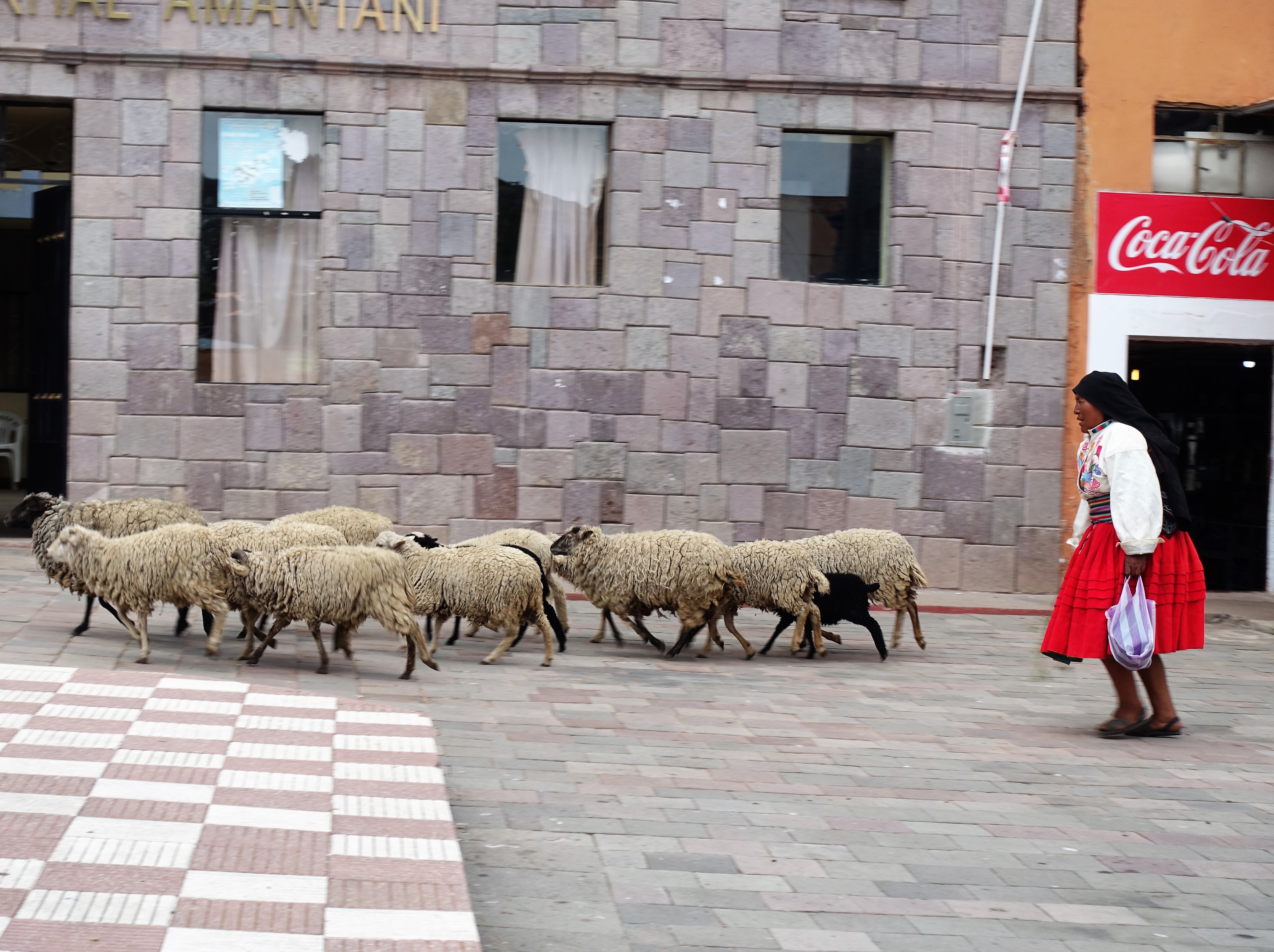
front of housechasing the sheep through the plaza
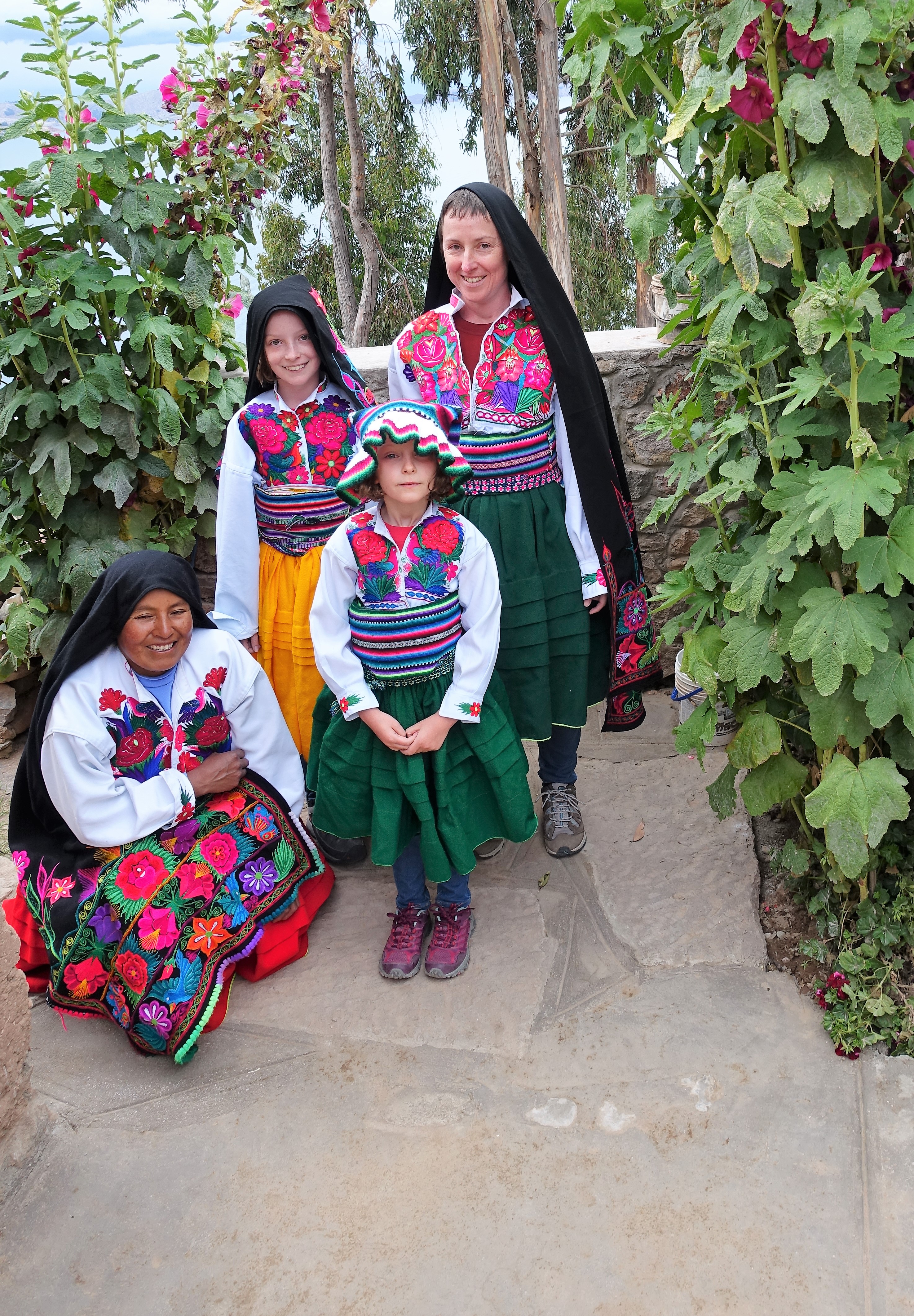
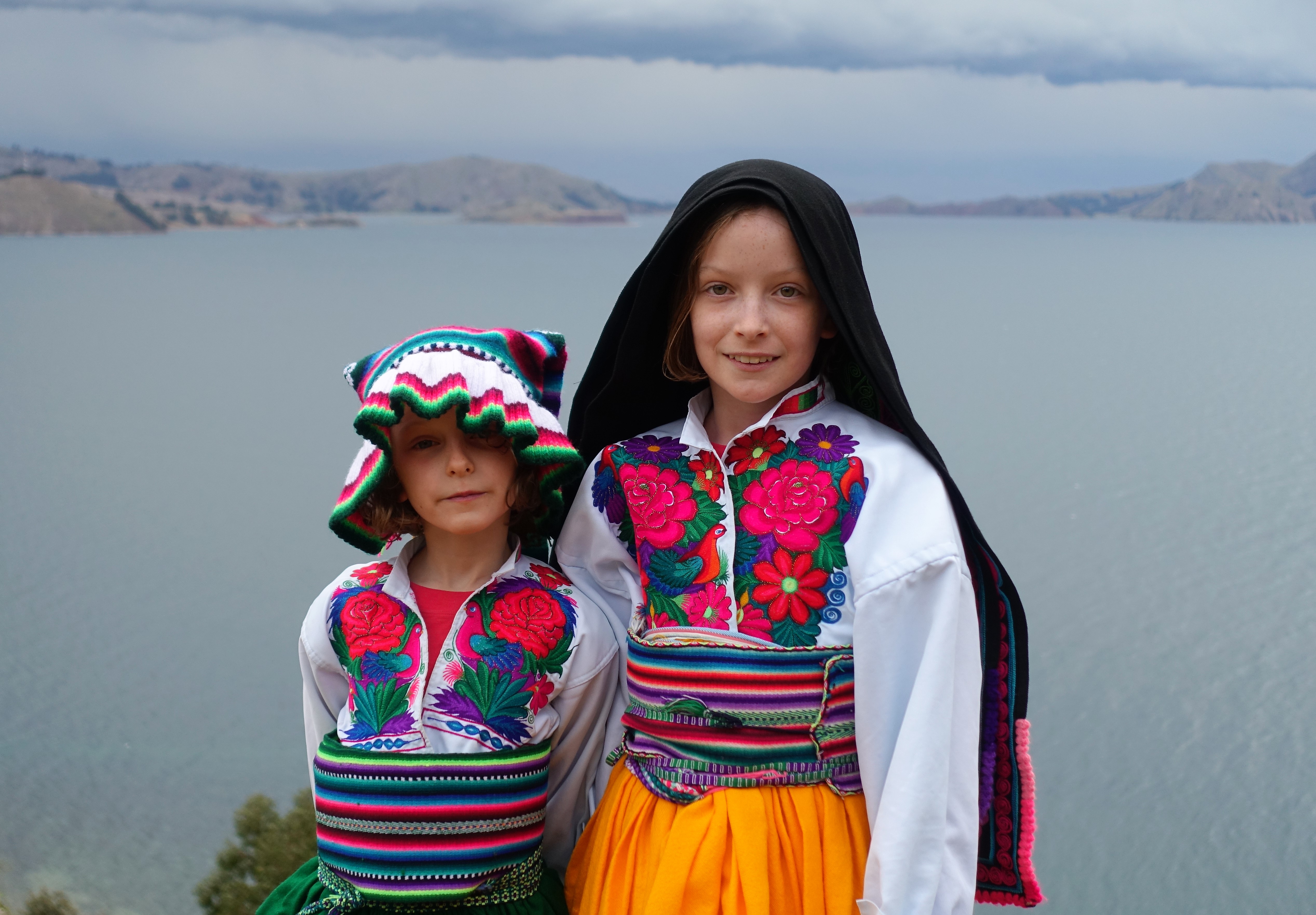
I love the people there because they were very friendly. The people we stayed with (Maryluz and Henry) are exceptionally nice.They even dressed us up!
Maryluz taught me how to knit. She knits headbands, bags, beanies and more! She is an excellent teacher so if you’re interested in going there I recommend them. Henry was also very helpful and always happy to go out of his way to show us around.
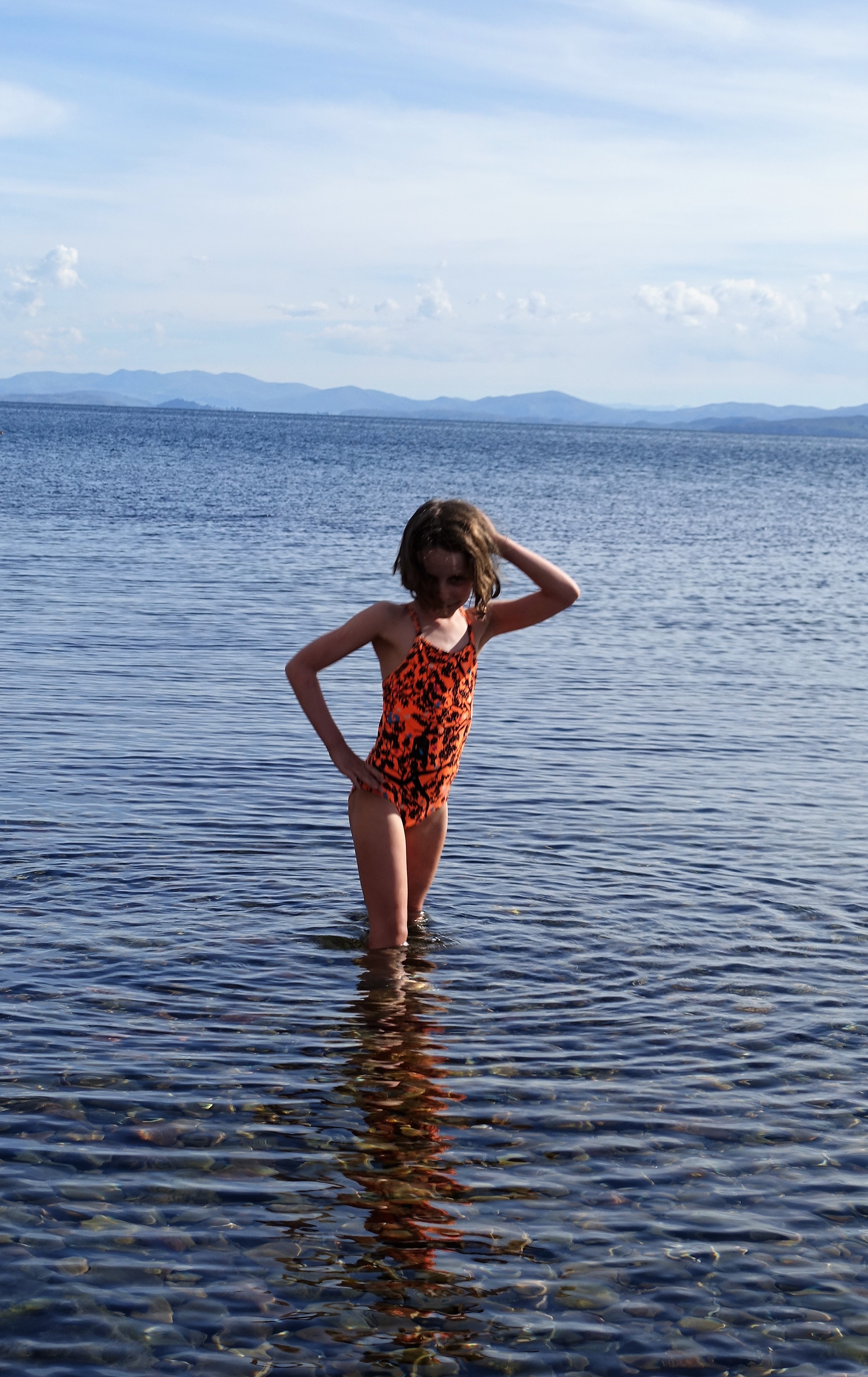
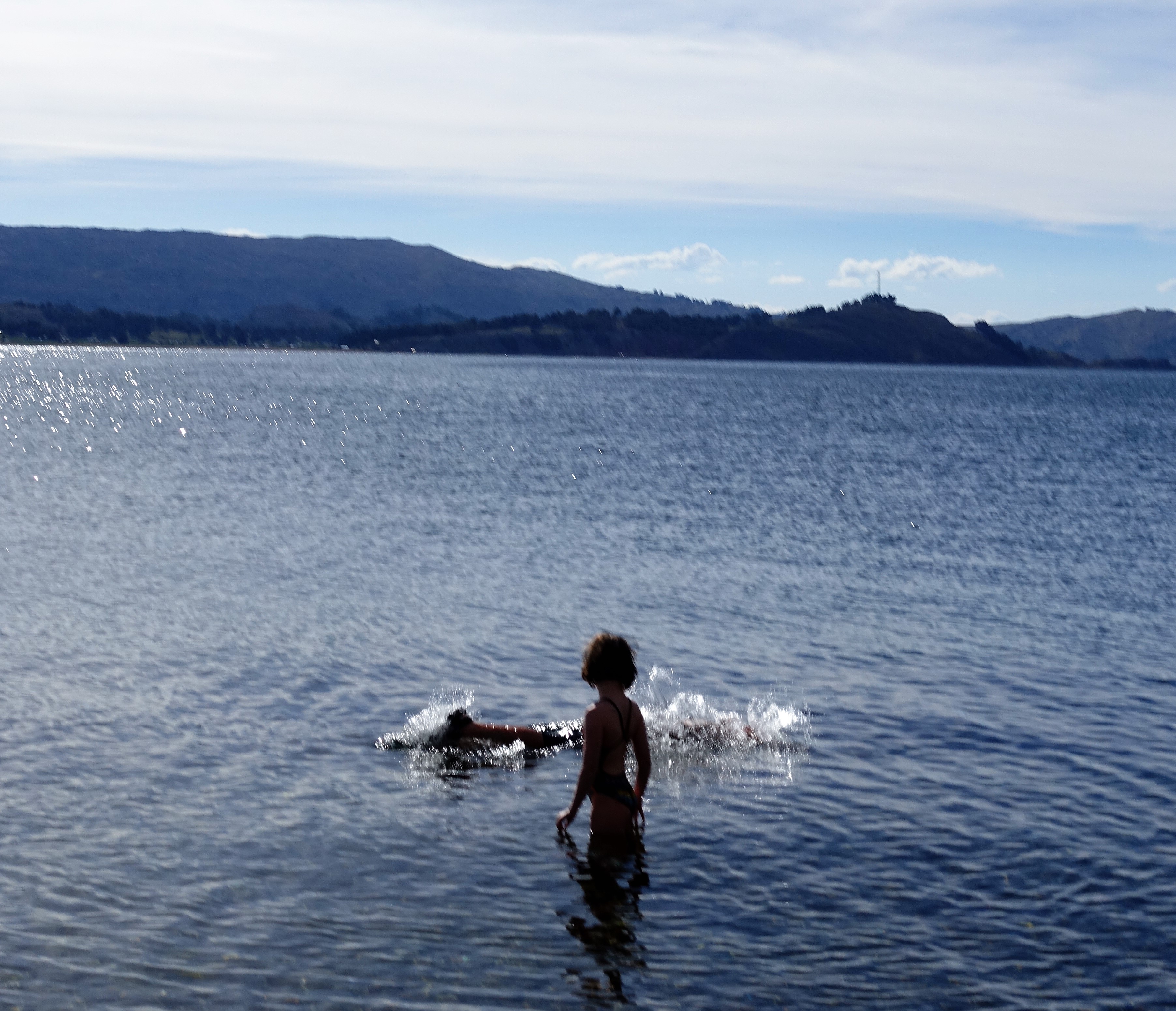
The first day we went swimming in Lake Titicaca the highest navigable lake in the world, of 4063metres above sea level. The temperature of the water was 14 degrees so it took us a little while before we put our heads under. It was freezing, but I bet Maille found it fun watching me hallucinate.
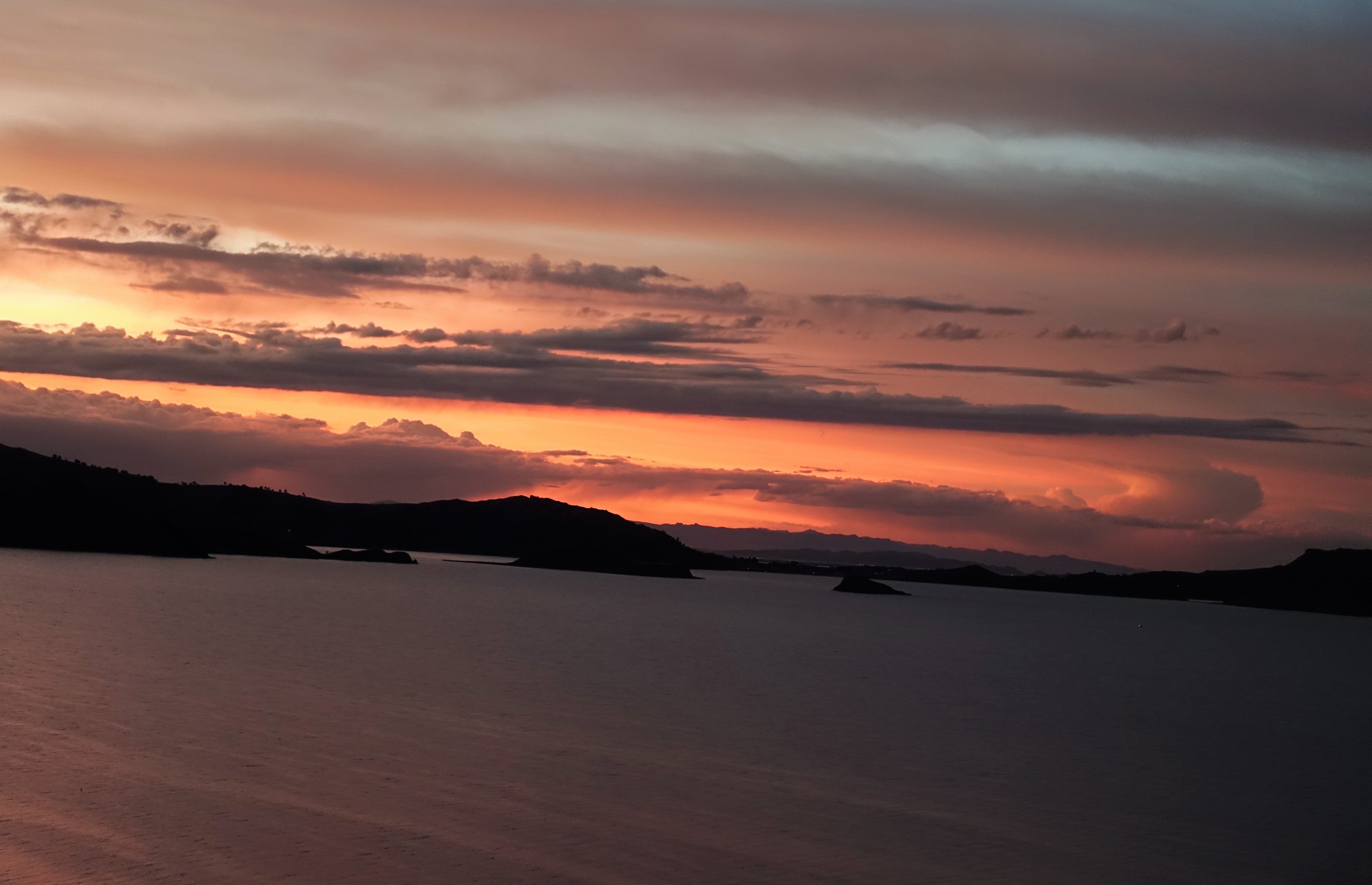
sunset from the terrace
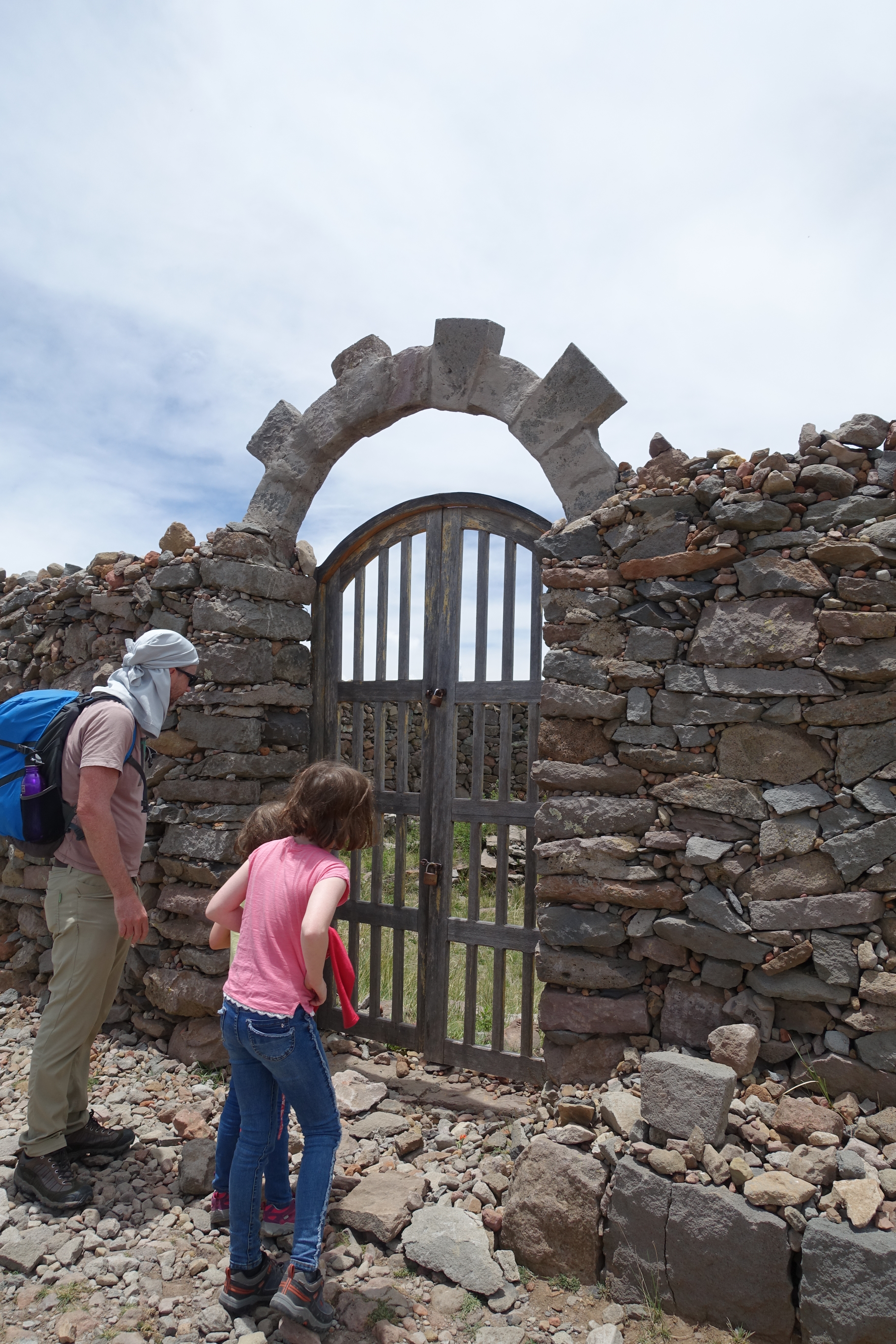
We went on a hike up to Pachamama, an old pre-Incan temple on the highest point. It is used to worship Pachamama, Mother Earth.
I would love to go back to Isla Amantani. It is definitely a place for me.






















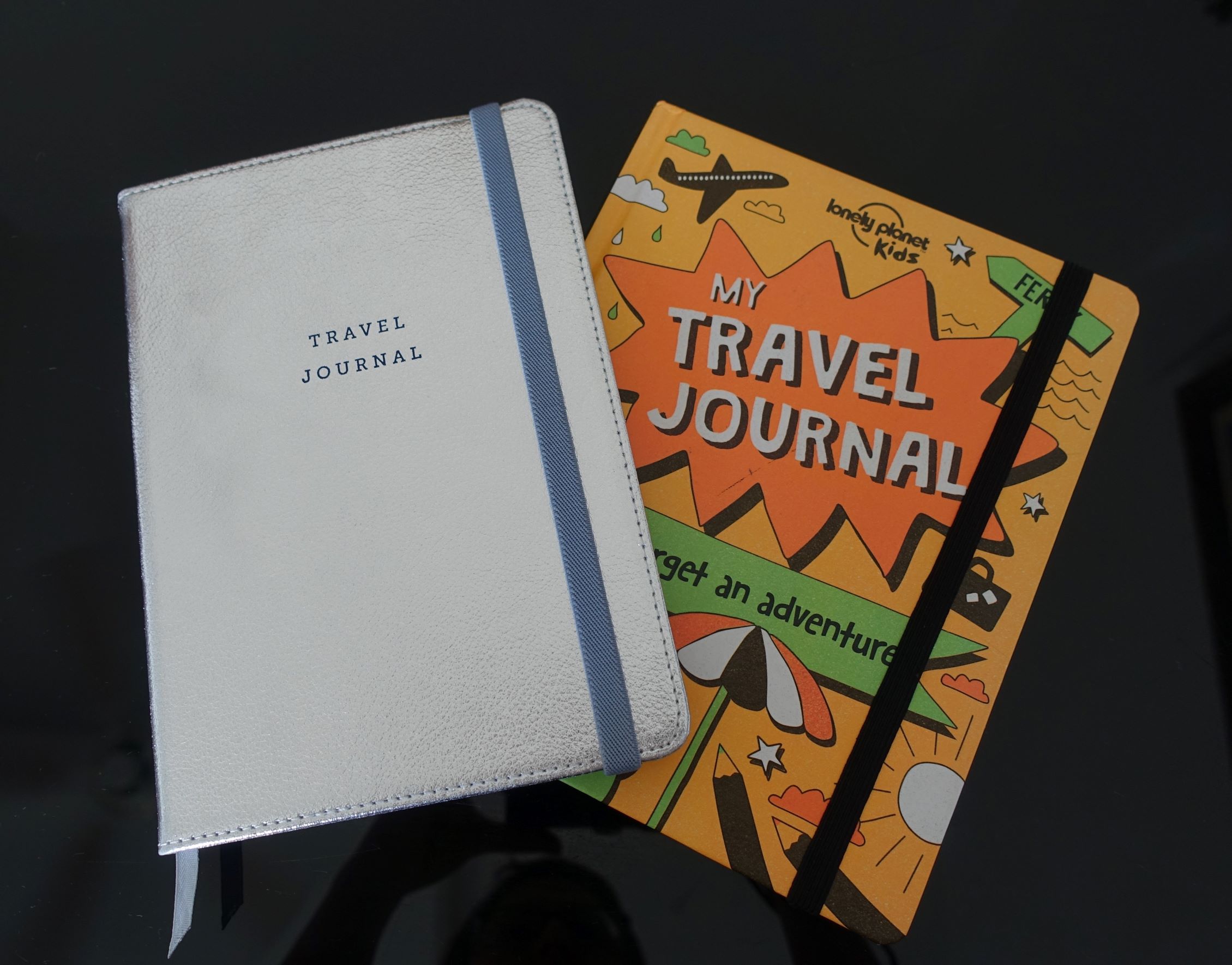






 There and back again